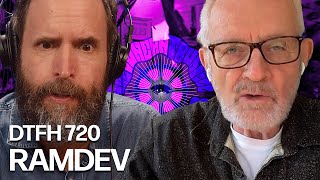
About this episodeRamdev and Duncan explore the concept of compassion as a state of being rather than an emotion, arguing that t…AI summary
Ramdev and Duncan explore the concept of compassion as a state of being rather than an emotion, arguing that true compassion requires grounding in the lower chakras to handle the vulnerability of the heart. They introduce the 'Tantric Three-Step' method for processing difficult emotions like anger, which involves embodied mindfulness, compassionate relationship to suffering, and recognizing all energy as awakened. The conversation emphasizes that facing death and fear directly is essential for living authentically and avoiding emotional numbness.
Key takeaways 5
Compassion is defined not as an emotion but as a state of consciousness where the heart remains open during suffering, distinct from empathy which can lead to emotional overwhelm or manipulation.
The 'near enemy' of compassion is self-interest disguised as caring; true compassion requires distinguishing between wanting someone to stop suffering because it helps them versus helping because it relieves your own discomfort.
Emotional processing requires a foundation in the first three chakras (grounding, movement, and self-worth) before accessing the heart chakra; without this base, attempts at compassion often fail due to unprocessed fear, guilt, or shame.
The 'Tantric Three-Step' framework: 1. Embodied mindfulness (feeling sensations without narrative), 2. Compassionate relationship (opening heart to self and other), 3. Tantric understanding (recognizing all content as awakened energy/non-dual).
Numbing out due to world events leads to exhaustion; the antidote is 'embodied mindfulness'—letting go of concepts and narratives to experience raw sensation, which reveals that resistance causes suffering, not the event itself.
Notable quotes 5AI-generated: wording and quote attribution may be wrong. Use the play link to verify.
“Compassion is not an emotion. Compassion is a state of being.”
▶ 12:24Ramdev redefines compassion away from fleeting feelings toward a stable state of consciousness.
“Cancer does not cause suffering. Divorce does not cause suffering. Resistance to cancer. Resistance to divorce causes suffering.”
▶ 1:16:41Ramdev explains the Buddhist concept that suffering arises from our reaction to events, not the events themselves.
“The near enemy of love is attachment... True love... you love them if they're crying or not crying... if they turn into teenagers and are crying, you don't love them quite as much.”
▶ 48:11Distinguishing between pure love and attachment-based love which is conditional on the other person's behavior.
“Being angry at Pete Hegseth is not wrong. It's not bad. Being lost in the emotion, becoming the emotion, closing down because of the emotion.”
▶ 1:07:17Ramdev validates strong emotions like anger while cautioning against identification with them.
“No mud, no lotus. No Judas, no Jesus.”
▶ 1:00:45Ramdev illustrates that difficult roles and emotions are necessary parts of the whole spiritual and human experience.
Chapters & Sections (39)▼
0:00Confronting Death and the Fear of Dyingchapter5
2:09The Fear of Death and Its Impact on Human Life
4:43Managing Fear and Anxiety for a Fulfilling Life
6:32Parental Fear of Child Injury and Illness
9:26The Dangers of Over-Emotionalizing Childhood Injuries
11:04The Insidious Nature of Subtle Selfishness
12:44Defining Compassion and Its Relationship to Lovechapter1
15:07The Nature of Compassion and Awakening
18:46The Misunderstood Nature of Compassionchapter1
21:11The Relationship Between Empathy and Compassion
23:49Embracing Compassionate Boundaries in Relationshipschapter2
25:34Critiquing Historical Figures with Flaws
27:25The Importance of Heart and Mind Balance
29:21The Heart Approach to Dealing with Traumachapter2
31:05The Importance of Embodied Mindfulness in Meditation
32:45The Importance of Grounding and Centering Practices
35:28Chakra Misconceptions and Emotional Blockageschapter1
38:10Healing Properties of Amanita Mushrooms
40:54Chakras and Energy Evolution in Childrenchapter2
42:31The Importance of Heart Center Location in Meditation
44:07The Power of Inhabiting the Belly
45:42The Practice of Compassion and Emotional Resiliencechapter1
49:31The Shadow in the Leader and the Self
51:09The Power of Spiritual Revolutionchapter1
53:55The Nature of Effort and Surrender in Spiritual Growth
56:42The Authenticity of Spiritual Leaderschapter2
59:10The Nature of Suffering and Human Desires
1:01:08The Benefits of High-Quality Socks
1:03:17The Challenge of Compassion in Politicschapter2
1:05:14Managing Emotions and Avoiding Emotional Overwhelm
1:06:54The Nature of Emotions and Awakening
1:08:51Managing Anger for Effective Activismchapter2
1:11:05The Limitations of Numbing Down Emotions
1:12:40Criticism of Government Spending and Priorities
1:14:50Managing Stress and Suffering through Mindfulnesschapter1
1:16:29Overcoming Suffering through Tantric Mindfulness
1:19:07Embodied Mindfulness in Spiritual Practicechapter2
1:21:35The Power of Mantras in Spiritual Practice
1:23:10Conscious Dying and Living with Non-Duality
 1h 25m⏭ 4
 2h 52m⏭ 4
 1h 48m⏭ 4
 1h 52m⏭ 2
 1h 44m⏭ 3
 1h 6m⏭ 3
 2h 22m⏭ 6
 2h 31m⏭ 2
 1h 25m⏭ 4
 1h 44m⏭ 3
 1h 36m⏭ 4
 2h 16m
 2h 6m⏭ 1
 1h 24m⏭ 2
 1h 25m
 2h 28m
 1h 42m
 4h 26m⏭ 3
 1h 37m⏭ 3
 1h 6m⏭ 2
 1h 53m⏭ 2
 1h 3m
1h 3m 1h 24m⏭ 1
 56m
56m 1h 0m⏭ 1
 11h 23m⏭ 1
 33m
33m 46m
46m 3h 54m⏭ 7
 3h 59m⏭ 5
 54m⏭ 1
 1h 13m
 58m⏭ 5
 25m
25m 45m⏭ 2
 1h 16m⏭ 2