Results for “status”
Transcript mentions 5,158
See all ›
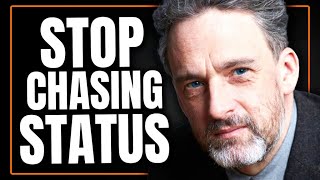
How to Stop Comparing Yourself to Others | Will Storr | Ep. 552
0:06i i did read the book and i really enjoyed it i think uh status is a it's a funny thing to write about0:25the worst the more you act like you don't give a crap about status the more for sure you're obsessed with it and you think about it non-stop and lay awake at0:37even saying that is a status claim because you're saying i'm above you i'm better than you because i just don't
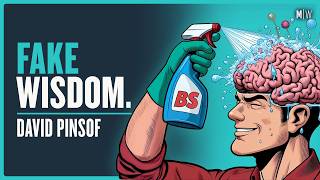
This is Your Brain on Bullsh*t - David Pinsof
0:57status, praise, inclusion in groups, all this stuff that would have correlated with biological fitness and ancestral8:51uh status, belonging to a cohesive group, uh sex, food, um you name it,17:12people who don't. I'm trying to uh make the people who like McDonald's gain status uh over the people who don't. And

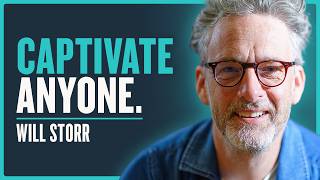
How To Tell Stories That Move People - Will Storr
7:37tribe, we kind of earn status within it. And so and so to earn state connection to that group, we've got to believe8:01beliefs, what are the bad beliefs, what is status. Um u you know, so so so me and you share a story and a lot your we8:19The brain is motivated motivated to make us want to collect with like-minded people and earn status from those people
Topics & chapters 2,719
See all ›
AI summaries 1,549
See all ›Toby Stuart (on social status) | Armchair Expert with Dax Shepard
Toby Stewart explains that social status is an innate, evolutionary mechanism used to navigate information-poor environments by relying on pedigree and expert validation rather than direct evaluation.summaryHe details how status creates cumulative advantages (the 'big shift') that skew rewards far beyond merit, and discusses how AI may disrupt these dynamics by equalizing output quality while potentially reinforcing reliancsummaryStatus functions as a cognitive shortcut in 'information-poor' environments (e.g., choosing a doctor, investing in a startup, buying art) where consumers cannot evaluate quality directly, leading them to rely on the stattakeaway
This is Your Brain on Bullsh*t - David Pinsof
The speakers argue that human behavior is driven by evolutionary incentives (status, food, sex) rather than the pursuit of happiness, which is merely a mechanism for recalibrating expectations after prediction errors.summaryThey redefine opinions as covert campaigns to manipulate social norms for personal status, and identify arguing as a tool for intimidation and silencing opponents rather than truth-seeking.summaryThe conversation concludes by analyzing 'deepities' and vague language as low-risk status-signaling tactics that create illusions of insight.summary
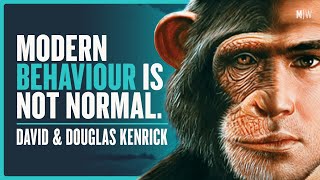
Evolved Psychology Vs The Modern World - David & Douglas Kenrick
Douglas Kenrick and David discuss an evolutionary psychology framework where human motives are hierarchical, prioritizing survival, status, mating, and kin care over self-actualization.summaryThey argue that modern existential crises and unhappiness stem from an 'evolutionary mismatch' where ancient drives for social connection and status are overwhelmed by digital technology and global competition.summaryRevised Hierarchy of Motives: Unlike Maslow's pyramid which ends in self-actualization, Kenrick's model places mating and kin care at the top. Self-actualization (e.g., art) is viewed as a byproduct of status-seeking andtakeaway
The Real Reason Birth Rates Are Falling - Lyman Stone
The discussion analyzes the structural, economic, and cultural drivers of declining fertility, arguing that housing design, male economic status relative to fathers-in-law, and social media-driven status hierarchies are summaryThe conversation concludes that fertility is highly contagious through social networks and can be influenced by altering status incentives, as demonstrated by a successful intervention in Georgia.summaryMale Economic Status and Marriage: Young men's marriage prospects depend on their income relative to the women's fathers they grew up with, not just the women themselves. Women seek 'insurance' against income volatility takeaway
How To Tell Stories That Move People - Will Storr
He demonstrates how successful campaigns like Apple's '1984' and 'Think Different' worked by appealing to identity and status rather than product features, while failures like the 'Lemmings' ad or Gillette's campaign alisummaryThe core takeaway is that to persuade, one must align with the audience's desired social identity and status within their group, as facts are subservient to the stories we tell ourselves.summaryThe brain is an 'evidence-finding machine' that prioritizes group connection and status over objective truth; people believe stories first and find data to support them later.takeaway