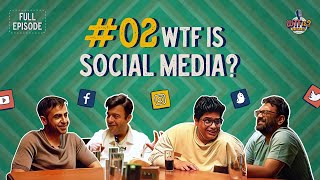
About this episodeThe hosts analyze the historical evolution of news from ancient Roman gossip to modern partisan media, arguing…AI summary
The hosts analyze the historical evolution of news from ancient Roman gossip to modern partisan media, arguing that fake news is an inherent part of journalism dating back to the Revolutionary War and Vietnam. They contend that the repeal of the FCC's Fairness Doctrine in 1987 and the rise of social media have eroded journalistic standards, creating a 'post-truth' society where entertainment and opinion supersede factual reporting.
Key takeaways 5
Fake news is not a modern phenomenon but originated with the 'Acta Diurna' in 59 BCE and was used strategically by figures like Benjamin Franklin during the Revolutionary War and the US government during the Gulf of Tonkin incident (Vietnam War).
The repeal of the FCC's Fairness Doctrine in 1987 removed the requirement for broadcasters to present fair and balanced coverage of controversial issues, which the hosts identify as a pivotal moment leading to modern partisan cable news.
Social media has blurred the lines between news and opinion, with 62% of US adults getting news from social media (71% from Facebook), leading to a 'post-truth' environment where emotion and belief outweigh objective facts.
Journalistic standards have declined due to the shift from subscription-based models (which enforced accountability to readers) to ad-supported internet models (which prioritize clicks and sensationalism).
The Covington High School incident serves as a prime example of how edited videos and rapid social media sharing can lead to widespread misinformation and libel before full context is available.
Notable quotes 4AI-generated: wording and quote attribution may be wrong. Use the play link to verify.
“News basically started as gossip when we were in a grenarian society... news originated with fake news yeah because when anything's in the hands of the people yeah i mean people are just gonna lie”
▶ 6:36Explaining the historical roots of misinformation in pre-literate societies.
“The fairness doctrine which basically was the fcc saying hey babe you got to try to be fair you got to try to be objective and you got to talk about stuff that has national interest... but then reagan got rid of that [ __ ] in 87”
▶ 15:50Describing the regulatory change that allowed for partisan cable news.
“Post-truth is defined as relating to or denoting circumstances in which objective facts are less influential in shaping public opinion than appeals to emotion and personal belief”
▶ 31:30Defining the current media landscape where facts are subordinate to political viewpoints.
“It should be illegal to write about a case that does not have a verdict yet... because then that you don't have to worry about swaying a jury”
▶ 36:03Arguing for legal restrictions on pre-trial media coverage to protect due process.
Chapters & Sections (43)▼
0:00History of News and Entertainmentchapter5
0:00History of News and Media Discussion
1:31News has become entertainment and gossip
2:48Comedian Discusses Motivation and Fake News
3:58Ancient Rome and Greece Historical Events Discussion
 1h 17m⏭ 3
 1h 14m⏭ 5
 1h 11m⏭ 1
 1h 7m⏭ 1
 1h 12m⏭ 4
 49m
49m 1h 12m⏭ 1
 1h 10m⏭ 1
 1h 17m⏭ 3
 45m⏭ 1
 1h 12m⏭ 3
 1h 17m⏭ 3
 11h 54m
 36m
36m 11h 54m
 3h 52m⏭ 2
 1h 26m⏭ 3
 9h 4m⏭ 12
 1h 32m
 2h 42m
 2h 13m⏭ 3
 2h 43m
 2h 32m⏭ 2
 2h 1m
2h 1m 1h 43m⏭ 4
 1h 0m⏭ 1
 11h 54m⏭ 8
 33m
33m 6h 26m
 3h 54m⏭ 7
 3h 59m⏭ 5
 9h 11m
 46m
46m 54m⏭ 1
 7h 50m