Results for “morality”

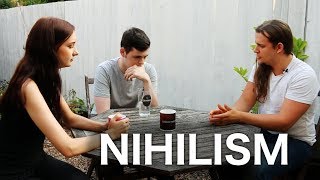
Should We All Be Nihilists? (Feat. Rationality Rules and Rachel Oates)
Stephen argues that strict epistemological nihilism leads to moral and existential nihilism, while Rachel and Stephen contend that practical life operates within a 'game' of scientific objectivity where purpose and moralsummaryThe 'Chess Game' Analogy: Philosophical questions about the 'rules outside the game' (absolute truth) are meaningless if we are confined to the 'game' (scientific/objective reality). Within the game, moves (actions/moraltakeaway
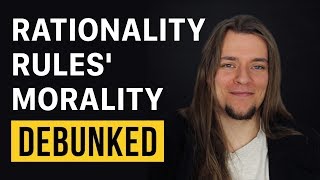
Rationality Rules – Debunked
Alex critiques Stephen's attempt to establish objective morality through 'Axiomatic Oughts,' arguing that Stephen conflates the psychological fact of believing an obligation exists with the moral truth of that obligationsummaryEvolutionary Basis of Morality: The innate feeling that we 'ought' to survive or protect our children is explained by natural selection and genetics (we survived because we wanted to), but this evolutionary origin does ntakeaway

Why Be A Christian? Justin Brierley and Alex O'Connor | Cosmic Skeptic Podcast #5
Justin Brierly and Alex O'Connor debate the grounding of morality, the existence of free will, and the rationality of belief.summaryBrierly argues that objective moral values require a theistic foundation (Imago Dei), while O'Connor contends that morality can be grounded in subjective well-being and evolutionary psychology without needing a transcendsummary


How Science Can Give Us Morality - Sam Harris
Sam Harris argues for an objective science of morality based on the well-being of conscious creatures, asserting that suffering and flourishing are real, measurable facts rather than mere preferences.summaryWell-being as a 'Suitcase Term': Harris uses 'well-being' as a broad term encompassing all states that matter to conscious beings, from physical pain to spiritual bliss, arguing that morality is about navigating toward ptakeaway


Debating Morality With Philosophical Legends
This panel discussion explores the foundations of morality through four distinct philosophical lenses: utilitarianism (Singer), divine command theory (Swinburne), emotivism (O'Connor), and emergent ethics (Frasier).summaryRichard Swinburne posits that morality is grounded in divine command and general principles like promise-keeping, arguing that obligations exist independently of whether they produce beneficial outcomes.takeaway

38 - Chrissy the Hun is WILD!!!!
Nature is Amoral: The hosts contend that nature is brutal and amoral (predator eats prey), and morality is a human invention. They argue that human survival has historically depended on imitating animal behaviors (huntintakeaway“Morality is invented by Humanity because we have imagination and we requested order for ourselves.”quote

History Hyena Is WILD! | ep 14 - History Hyenas
The hosts discuss the brutal nature of the animal kingdom, specifically highlighting Komodo dragons and hyenas as psychopathic killers, to argue that nature is inherently violent and that human morality is a unique constsummaryThe hosts argue that humans are the only species capable of creating 'rule of law' and morality, distinguishing us from the brutal reality of nature where predators are smarter than prey.takeaway

Chrissy the Hun is WILD! | ep 38 - History Hyenas
Nature's Brutality: The hosts argue that nature is amoral and brutal (predator/prey dynamics), suggesting that human morality is an invention and that survival historically required imitating animalistic traits.takeaway“In nature there is no god... morality is invented by humanity because we have imagination and we requested order for ourselves.”quote
The Macabre Mind of Bill Moseley: Horror, Philosophy & the Spirit of Darkness| Ep 228 HTBITY
Horror movies function as modern morality plays where characters who engage in 'bad' behavior (premarital sex, drugs) are punished, providing a structured, safe way for audiences to process fear.takeaway“If life is crazy... your life is crazy enough. So... people love to be scared... it's a journey. And a lot of times they used to be in like the 50s and 60s morality plays... you would get these... bad girl and the bad gquote