Results for “exoplanets”
Transcript mentions 102
See all ›

Nancy Grace Roman Space Telescope Science Overview News Conference (Aug. 29, 2026)
9:33not only going to be measuring millions of stars, we're going to be discovering a host of new exoplanets up to 40 times more than are known today. So think9:49find the weird, the rare, and the unusual discovery of things like exoplanets with disks, isolated black holes and neutron stars in our galaxy,11:42stars as well. We can't yet take pictures like this of earth like exoplanets, but that's one of NASA's most

All About The New Telescope NASA Just Launched, with Jason Rhodes
20:36exoplanets, planets outside of our solar system. And what it does is it creates an artificial eclipse and it eclipses26:03Can we Can we join this launch? Yeah. I mean, what how did how did exoplanets show up in the portfolio here?26:15Maybe we'll talk about that later to find a bunch of exoplanets. But when you talk about and that was always a plan for Roman since the very beginning. But
Topics & chapters 29
See all ›


AI summaries 8
See all ›
Nancy Grace Roman Space Telescope Postlaunch News Conference
The mission aims to study dark matter, dark energy, and exoplanets using a field of view 100 times larger than Hubble, with first light expected before the winter holidays.summaryRoman Telescope Specifications: The telescope has a field of view at least 100 times that of Hubble and a scan rate over 1,000 times faster, designed to discover up to 100,000 new exoplanets and map billions of galaxies.takeaway“Roman has a field of view at least 100 times that of Hubble, and over a thousand times the scan rate. So the telescope will provide a vast new atlas of the universe, potentially revealing more than 100,000 new exoplanetquote
Nancy Grace Roman Space Telescope Science Overview News Conference (Aug. 29, 2026)
The mission features a coronagraph instrument designed to block starlight to image exoplanets 100 million times fainter than their stars, serving as a technological stepping stone for future Earth-like planet detection.summaryThe Coronagraph Instrument uses active deformable mirrors with ~1,400 pistons per mirror to correct optical errors at the atomic level, aiming to detect Jupiter-twin exoplanets in reflected visible light, which are 100 mtakeaway
Are We Closer Than Ever to Finding Aliens? | Ancient Aliens (S20, E14) | Full Episode
Key developments include the detection of potential biosignatures on exoplanets, the investigation of mysterious radio signals and megastructures, and Harvard's Galileo Project searching for physical evidence of alien prsummaryThe James Webb Space Telescope is enabling the detection of chemical signatures like dimethyl sulfide on exoplanets (e.g., K2-18 b), which are created only through organic processes, suggesting potential life.takeawayThe concept of 'superhabitable' planets has emerged, with 24 exoplanets identified as potentially more suitable for life than Earth due to factors like age and size.takeaway
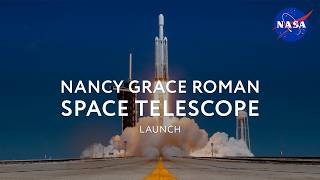
Nancy Grace Roman Space Telescope Launch
NASA successfully launched the Nancy Grace Roman Space Telescope aboard a SpaceX Falcon Heavy rocket, marking the beginning of a mission to map the universe's dark matter and dark energy while discovering up to 100,000 nsummaryExoplanet Discovery Goals: Roman aims to discover approximately 100,000 new exoplanets, including about 1,000 found via microlensing. This method allows detection of cold, rocky planets and those in habitable zones that takeaway