Results for “Writing”
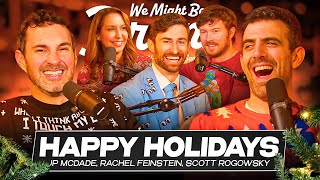
JP McDade - Rachel Feinstein - Scott Rogowsky : Holi-daze with Mark Normand and Sam Morril
The hosts discuss holiday traditions, travel experiences, and the challenges of writing for high-profile comedy events like the Golden Globes.summaryWriting for award shows requires rigorous testing in comedy clubs; jokes that work in clubs may be cut or changed for the final broadcast, as seen with Rachel Feinstein's Golden Globes writing process.takeawayComedy writing is described as a collaborative but high-pressure environment where pitching jokes that fail in front of other comedians is particularly painful.takeaway
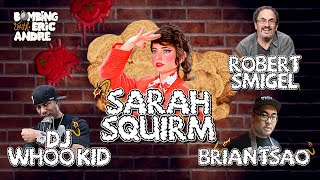
A DEI Mess w/ Sarah Squirm, Robert Smigel, DJ Whoo Kid, Chef Brian Tsao & Derrick Beckles
The 'Table Read' Bomb: Derek Beckles describes the unique humiliation of writing a sketch, working all night, and then having it rejected by peers and colleagues at the SNL table read, creating a cycle of self-doubt whertakeawayCultural Pressure in Writing: Beckles highlights the pressure placed on minority writers to 'speak for' their entire demographic in sketches, creating an unfair burden and potential for offense.takeaway“You have all night writing a sketch on Tuesday night... Wednesday is the table read... you're so hungry that you eat your own [ass].”quote

Authenticity drives audience connection: Jen realized that audiences can detect inauthenticity, leading her to shift from impersonating other comedians (like Amy Schumer or Eliza Coupe) to embracing her true self, which takeawayRoast comedy requires specific writing skills: Jen explains that roast jokes must be concise and impactful, often relying on impressions of the target's voice or mannerisms to land effectively without crossing into genuitakeawayComedy writing is a transferable skill: Jen's ability to mimic voices and understand social dynamics, partly due to being neurodivergent, allows her to successfully ghostwrite for other comedians and TV writers.takeaway
Dan Brown
He reveals his writing methodology, which treats storytelling like musical composition, emphasizing structure, parallel plotlines, and the importance of writing what you want to learn rather than what you already know.summaryWriting Process: Brown writes the ending first to establish tonal and rhythmic structure, then rewinds to point A, ensuring the middle contains creative obstacles that solve the path between start and finish.takeaway
John Cleese in conversation with Eric Idle at Live Talks Los Angeles
Autobiographies are most effective when focusing on childhood or early life, as adults often struggle with objectivity and ego when writing about their current selves.takeaway“It's much easier to write about your childhood because that's not really yourself anymore... people can be more objective about themselves when they were kids and then when they start writing about what they're doing noquote“There was no better group I've ever come across to give material to get feedback from it was very honest too... there's a great honesty in writing comedy you really do want to know when it stops being funny”quote

Felicia Day with Wil Wheaton
They share personal anecdotes about childhood trauma, generational disconnects, and the value of writing memoirs to process past experiences and find healing.summaryThe power of objectivity in memoir writing: Felicia Day explains that writing her memoir helped her process trauma by allowing her to view her life objectively rather than emotionally. This distance helped her identify ptakeaway
Scott Turow in conversation with Paul Levine at Live Talks Los Angeles
He reflects on his transition from criminal defense lawyer to novelist, sharing insights on writing processes, the moral complexities of defending guilty clients, and his opposition to capital punishment based on systemisummaryTurow's writing process involves extensive background research and character history creation that often does not make it into the final draft, providing the story with 'imaginary fullness' and coherence.takeaway
Denis Leary in conversation with Peter Tolan at Live Talks Los Angeles
Leary shares anecdotes about his early career, the influence of George Carlin, and his rapid writing process for his book, while emphasizing comedy's role as a tool for challenging power structures.summaryLeary's transition from stand-up to writing was catalyzed by watching Richie LaGravenese improvise on the set of 'The Ref', leading to a collaborative writing partnership with Peter Tolan.takeaway

Dave Barry in conversation with Alan Zweibel at Live Talks Los Angeles
Alan Zweibel and Dave Barry discuss their collaborative writing process, the arbitrary nature of Hollywood development, and personal anecdotes ranging from Jewish circumcision traditions to humorous encounters with bandmsummaryThe conversation highlights the contrast between the controlled environment of writing and the chaotic reality of Hollywood notes, while also touching on profound personal experiences like Dave Barry’s daughter’s illnesssummaryCollaborative writing across distances (1,500 miles) is feasible through alternating chapters and internet communication, though it requires flexibility when one partner makes drastic narrative changes (e.g., killing maitakeaway
Scott Turow in conversation with Brian Dennehy at Live Talks Los Angeles
He also details his writing process, the ethical dilemmas of defense work, and his advocacy for copyright protection in the digital age.summaryTurow's writing process is non-linear and research-driven: he spends months creating character histories and writing scenes out of order before sequentially arranging them, relying on discipline (writing daily) rather thtakeaway
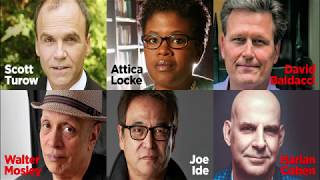
David Baldacci, Scott Turow, Harlan Coben, Walter Mosley, Attica Locke, Joe Ide at Live Talks LA
This panel discussion with six acclaimed crime fiction authors explores the intersection of genre writing, literary merit, and social commentary, emphasizing that compelling storytelling transcends rigid genre boundariessummaryWriting is defined by the daily act of writing itself, not by external validation or academic study; consistency and prose quality are more critical than having a 'great idea'.takeaway
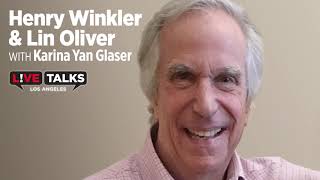
Henry Winkler & Lin Oliver in conversation with Karina Yah Glaser at Live Talks Los Angeles
Henry Winkler and Lin Oliver discuss their collaborative writing process for the 'Alien Superstar' book series, highlighting how their background in television informs their pacing and structure.summaryCollaborative Writing Method: The authors meet in person (bringing coffee/pastries), discuss ideas, and then Henry dictates while Lin types, followed by rigorous editing and rewriting. This mirrors the television writingtakeawayScreenwriting Techniques in Prose: The authors apply TV screenwriting principles to their novels, such as maintaining fast pacing, avoiding excessive interior monologue, and using scene changes to hold the young audiencetakeaway
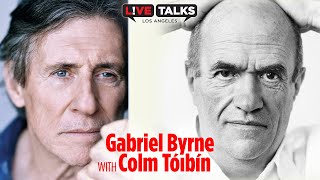
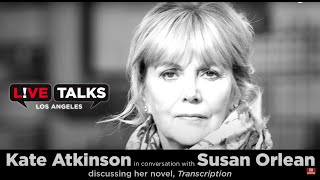
Kate Atkinson in conversation with Susan Orlean at Live Talks Los Angeles
Kate Atkinson discusses her novel 'Transcription,' revealing how a declassified MI5 operation inspired the plot and exploring her character-driven approach to writing across genres.summaryShe details her disciplined writing routine, including daily word counts and extensive revision, while explaining her structural techniques for managing multiple timelines and her philosophy on the melancholy nature of hsummaryWriting Discipline: She enforces a strict daily word count (1,000 words) and revises previous work at the start of each session to overcome the 'blank page' anxiety, crediting revision heavily in her daily progress.takeaway