Results for “Jesus”
Guests 9
See all ›




Transcript mentions 13,026
See all ›
DEBATE: Did Jesus Claim to be God? - David Wood vs Alex O'Connor
0:06the title of the debate is, "Did Jesus claim to be God?" We're going to have opening statements. We're going to have3:50precautions. We don't want to lose Alex. By the way, are you guys starting to miss Jesus over there in the UK? Seems3:56like you should be missing Jesus by now. Speaking of Jesus, did Jesus claim to be

Jesus DID Claim to be God: The Evidence
0:00your book Jesus and divine Christologology. Christology of course being the study of the nature of Jesus.0:12Jesus claims to be God as a historical figure. Your book is about that topic0:32two related fields of study. One of them would be the field of historical Jesus research which is its own area of


Topics & chapters 766
See all ›
AI summaries 366
See all ›Jesus DID Claim to be God: The Evidence
The guest argues that the historical Jesus made implicit divine claims during his lifetime, resolving the scholarly paradox of how early Jewish Christians quickly developed high Christology.summaryBy analyzing specific synoptic passages—such as forgiving sins, walking on water, and demanding supreme love—the guest demonstrates that Jesus acted with divine prerogatives in a Jewish apocalyptic context, which led to summaryThe Paradox of Christology: Historical Jesus research traditionally assumes Jesus did not claim divinity, while early Christian scholarship recognizes immediate high Christology. The guest posits that Jesus's own divine takeaway
Lee Strobel – The Case for Christmas: Evidence of Jesus’ Birth & Biblical Prophecy | SRS #265
Linguistic Correction: The Greek word 'katalyma' in Luke 2:7 translates to 'guest room,' not 'inn.' In first-century Jewish homes, the family lived in the main area and animals were kept in a lower section; Jesus was bortakeawayOrigin of December 25th: Early Christians did not celebrate birthdays. The date was calculated based on the belief that Jesus was conceived and died on March 25th (the anniversary of creation), making his birth nine monttakeawayTheological Significance of Magi Gifts: The gifts of gold (royalty), frankincense (priesthood), and myrrh (burial/embalming) foreshadowed Jesus' roles and his death. The presence of Gentile Magi signified that salvation takeaway
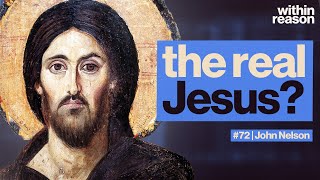
Why Don’t The Gospels Describe Jesus’ Appearance?
John Nelson explains that the Gospels deliberately omit Jesus' physical appearance to emphasize his paradigmatic character and universal relatability, contrasting with ancient biographical norms that linked physical traisummaryHistorical and textual analysis suggests Jesus was a Middle Eastern man with short hair, likely of average or short stature, whose depiction as white, tall, or muscular is a later cultural construct rather than historicasummaryAncient biographies (10:55-16:13) typically described subjects' physical appearance to reveal character (physionic consciousness), but the Gospels are unique in omitting this, likely to present Jesus as an emulatable figtakeaway
The Most Mysterious Man in the Bible - Who is John the Baptist?
The discussion challenges traditional narratives by highlighting Jesus's likely role as a disciple of John, the political reasons for John's execution, and the existence of non-Christian Gnostic traditions that revere JosummaryJohn the Baptist was more famous and influential in his time than Jesus, with many contemporaries believing he was the Messiah or Elijah.takeawayGnosticism likely originated from circles around John the Baptist rather than Jesus, evidenced by the Mandaeans (a surviving Gnostic group) who revere John but reject Jesus.takeaway
DEBATE: Did Jesus Claim to be God? - David Wood vs Alex O'Connor
David Wood argues that Jesus claimed to be God by identifying himself as one of the 'two powers in heaven,' a concept present in first-century Judaism where divine authority was shared between Yahweh and a secondary divisummaryAlex O'Connor counters that Jesus' claims were misunderstood or metaphorical, suggesting he acted as an ideal human agent endowed with God's name and authority rather than claiming ontological identity with Yahweh.summaryThe 'Two Powers in Heaven' theory: First-century Jews struggled with Old Testament passages showing two divine figures (e.g., Yahweh sending Yahweh, the Angel of the Lord being identified as God). Wood argues Jesus entertakeaway