Results for “Japanese”
Transcript mentions 3,863
See all ›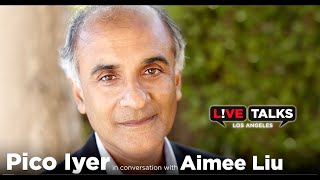

Imperial Japan’s Unit 731 was Horrifying | History Hyenas
0:00Guys, we have got an excellent episode. We're going to be talking to you about Japanese Imperial Unit 731 from the0:12maybe were worse than the Nazis. We're going to tell you about a general who was the Japanese equivalent of Adolf Hitler and it's probably something2:25all about the Japanese Hitler and we're going to talk to you about a little thing called Unit 731 that you've
The Samurai & PACMan Jones | History Hyenas
0:56[Applause] cuz Japanese just sounds like you're lifting boxes and you threw out your1:02back it it's what it is cuz and even though I do love and support the Japanese culture make absolutely zero1:14the Japanese in World War II and I won't disrespect him by using Chopsticks but I do really like the food cuz make no

Why Japan is Preparing for War With China
0:06Who's coming at me? Who's coming at me? This is me training with the Japanese Army. I'm here to get a closer look at Japan's military0:51- [Participant] Biggest military buildup since World War II. (woman speaking in Japanese)4:39Yeah, let's get back to training with the Japanese Army. (patriotic music)
Topics & chapters 567
See all ›

AI summaries 134
See all ›Pico Iyer in conversation with Aimee Liu at Live Talks Los Angeles
Pico Iyer discusses his dual books 'Autumn Light' and 'Beginner's Guide to Japan', explaining how they capture the contradictory nature of Japanese culture through contrasting perspectives.summaryJapanese culture embraces 'unified contradictions' where multiple identities coexist; for example, people may visit Christian churches for Christmas concerts, Buddhist temples for New Year's purification, and Shinto shritakeawayThe concept of 'silence' is central to Japanese social harmony; Iyer notes that Japanese society values non-verbal communication and listening, often preferring silence to maintain group cohesion rather than using words takeaway
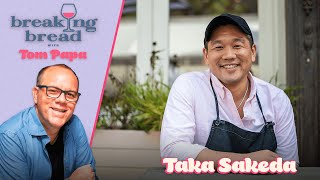
Breaking Bread with Taka Sakaeda
Chef Taka Sakayeda discusses his journey from a Long Island upbringing to becoming the head chef of Naminori, highlighting the evolution of Japanese cuisine in New York from 'all-you-can-eat' starter kits to high-art dinsummaryEvolution of Japanese Food: Early exposure to Japanese food in New Jersey often involved 'all-you-can-eat' sushi, which served as a cultural entry point but lacked nuance. Modern establishments like Naminori represent thtakeawayKnife Skills Philosophy: In Japanese culinary culture, the phrase 'how sharp is your arm' is used instead of 'how sharp is your knife.' This emphasizes that personal skill and technique are more critical than the tool ittakeaway

Steve Aoki | Armchair Expert with Dax Shepard
Key themes include the cultural impact of Benihana as an Americanized Japanese experience, the DIY ethos of the punk/hardcore scene that shaped his career, and his transition into mainstream success while maintaining a ssummaryBenihana's success was driven by Americanizing Japanese culture through showmanship (hibachi grills, French hats) rather than traditional authenticity, making it accessible and appealing to Western audiences in the 1960stakeawayRocky Aoki was a marketing pioneer who adopted an American 'showman' persona, engaging in stunts like hot air balloon flights and offshore racing to build brand recognition, contrasting with traditional Japanese modesty.takeaway

KT #745 - JAMES MCCANN + JEFF DYE
This Kill Tony episode features a diverse lineup of comedians, highlighted by Kai Yasuda's extended interview where he reveals his mixed Korean-Japanese heritage, brings frozen ramen from Toronto, and discusses navigatinsummaryKai Yasuda's background involves a complex identity: born in Japan to a Korean father and Japanese mother, raised in Philadelphia, and now living in Canada, leading to unique cultural observations and stereotypes.takeaway“Most of the fentinel was manufactured in Japan... police in Japan would never realize if Japanese people are high on fentinel or just being really really respectful.”quote
Imperial Japan’s Unit 731 was Horrifying | History Hyenas
The hosts discuss the atrocities of Japanese Imperial Unit 731, a biological warfare program in WWII that conducted lethal human experiments on Chinese, Soviet, and Allied prisoners.summaryThe estimated death toll of Unit 731 experiments is 12,000, though the actual number is likely higher due to the destruction of records by the Japanese before surrender.takeawayThe Japanese military viewed Chinese citizens as 'Maruta' (logs), dehumanizing them to justify experiments such as freezing limbs, testing flamethrowers, and dropping infected fleas on villages.takeaway