About this episodeComedian D-Ray Davis returns to Sway in the Morning to discuss the complexities of comedy, free speech, and pu…AI summary
Comedian D-Ray Davis returns to Sway in the Morning to discuss the complexities of comedy, free speech, and public perception, specifically addressing the backlash against Michael Che and the double standards in the music industry regarding Megan Thee Stallion. Davis also debuts his new music under the alias Super Boots, receiving positive feedback from the host and listeners for his versatility as an artist.
Key takeaways 5
Comedians face a 'fine line' between freedom of speech and social responsibility; Davis argues that while jokes about sensitive topics (like Simone Biles or Larry Nassar) can be offensive, the context and intent matter, and comedians must accept that being a public figure opens them to all types of commentary.
There is a perceived double standard in the music industry where male artists' controversial statements are often overlooked or forgiven, while female artists like Megan Thee Stallion face intense scrutiny and judgment for similar or lesser controversies.
Davis emphasizes the importance of community support over 'cancel culture,' suggesting that the Black community should give each other chances and counsel rather than immediate cancellation, comparing their relationship to a marriage that requires work.
Davis demonstrates artistic versatility by transitioning from stand-up comedy to rap, noting that rhythm and timing are shared elements between comedy and music, allowing him to succeed in both fields independently.
The 'Super Boots' persona allows Davis creative freedom without the constraints of his comedy brand, enabling him to explore different lyrical themes and styles that might not fit his stand-up routine.
Notable quotes 5AI-generated: wording and quote attribution may be wrong. Use the play link to verify.
“We give more cancel than we do council. End of the day we get more instead of being like oh then they gain meaning like that we do but we do that at home it's a doodle or a woman at home being abused and they get that [ __ ] eight nine chances but they hear somebody say something like uh i'll cancel him i cancel her no no”
▶ 7:06Davis critiques the tendency to cancel public figures for jokes while ignoring serious domestic issues, arguing for a more supportive community approach.
“It's a relationship you know what i'm saying they say we're in love we married to each other mentally emotionally so if that's the case you give chances you give slides you give whatever”
▶ 7:30Davis uses a marriage metaphor to explain why the Black community should be more forgiving and supportive of each other's mistakes.
“When it comes down to it what about the joe jackson jokes beat this [ __ ] out it's a kid getting beat on him and abused and we like all right go joe jackson on him it's funny as [ __ ] now go ride the king on them still when [ __ ] getting killed by the police we're rodney king because what there's enough time he's not alive you know what joke is okay it's who's making the judgments it's who's saying it”
▶ 10:11Davis highlights the inconsistency in what society finds acceptable to joke about, contrasting jokes about historical abuse with current police brutality.
“I'm sick of this [ __ ] you see me walking in my [ __ ] tastes good and [ __ ] didn't put it like it's the same [ __ ] ain't no nicki in it because and i want to tell people we're not hating on y'all we telling you to find your goddamn anita baker find your sade find your jay-z find your that that voice that's your [ __ ]”
▶ 16:42Davis criticizes female artists for copying male rappers' styles instead of finding their own unique voice, urging them to be authentic.
“I don't want to be trapped about me not having a label it makes it more comfortable by me being able to shoot my own video it makes me more comfortable i love the power of note i learned that from harrison ford he was like yo i was a carpenter so i didn't have to take certain jobs”
▶ 32:46Davis explains how his comedy success gives him financial independence and creative control in his music career.
Chapters & Sections (27)▼
0:00D-Ray Davis Returns to the Showchapter4
0:00D-Ray Davis Returns to the Show
1:42Fame and Personal Branding Challenges
2:49Legacy Impact of Public Statements
4:09Comedians Walking Fine Line with Jokes
5:43Comedian's Freedom of Speech vs. Social Responsibilitychapter3
5:43Comedian's Perspective on Cancel Culture
7:49Dark Humor and Parental Disgust
9:00Comedian Discusses Cancel Culture and Hypocrisy
10:29Celebrity Jokes and Judgmentschapter3
10:29Oprah's Judgments and Wendy Williams Jokes
12:32Argument Over Financial Trust and Relationship
14:09Comedian Discusses Joke Controversy and Performance
16:22Feminism and Double Standards in the Music Industrychapter3
16:22Feminism and Double Standards in Music Industry
17:46D-Ray Performance and Audience Interaction
19:27Conversational Rap Music Discussion and Inspiration
20:52Music Review and Discussion of New Songchapter2
20:52Music Review and Discussion of New Song
22:26Music Career and Legacy Discussion
25:46Morning Radio Show with D-Raychapter2
25:46Hip Hop Radio Show Discussion
27:32Celebrity Endorsement and Music Industry Discussion
30:20Artist Appreciation and Growth Mindsetchapter3
30:20Artist Appreciation and Growth in Hip-Hop
32:13Artist Discusses Creative Freedom and Inspiration
33:46Celebrity Interview and Comedy Show Discussion
 1h 19m
 49m
49m 58m
58m 43m
43m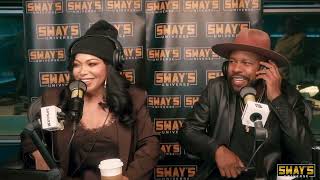 39m
39m 54m
54m 39m
39m 46m
46m 36m
36m 36m⏭ 1
 30m
30m 29m
29m
 2h 30m⏭ 1
 1h 32m
 1h 42m
 1h 49m⏭ 2
 1h 7m
1h 7m 1h 6m
1h 6m 1h 9m⏭ 2
 2h 12m
 1h 41m⏭ 1
 1h 16m⏭ 5
 1h 53m⏭ 1
 1h 3m
1h 3m 11h 23m⏭ 1
 33m
33m 1h 0m⏭ 1
 46m
46m 3h 54m⏭ 7
 3h 59m⏭ 5
 54m⏭ 1
 1h 13m
 1h 16m⏭ 2
 58m⏭ 5
 25m
25m 38m
38m