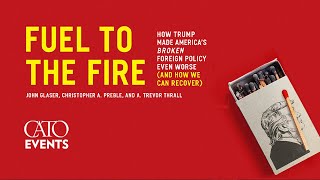
About this episodeMonica Tov and Trevor Thrall analyze the surge in US military interventions since 1999, attributing it to unde…AI summary
Monica Tov and Trevor Thrall analyze the surge in US military interventions since 1999, attributing it to underfunded diplomacy, hubris post-Cold War, and reliance on low-risk technologies like drones and special operations forces. They argue that this interventionist approach often creates more security problems than it solves, particularly in Africa and the Middle East, and call for a strategic shift toward diplomacy, development aid, and offshore balancing.
Key takeaways 7
Intervention Rate: More than one-third of all US military interventions have occurred since 1999, with the rate accelerating post-2001.
Tool Disparity: The US has ambassadors in only about one-third of the world's countries, yet special operations forces operate in three-quarters of them, highlighting a severe imbalance between diplomatic and military tools.
Root Causes: The increase in interventions is driven by three factors: underfunding of the State Department (making force the only perceived tool), post-Cold War hubris, and the belief that technology (drones/special ops) allows for risk-free intervention.
Unintended Consequences: Military interventions often create new problems or extend existing conflicts; for example, killing terrorists can radicalize their families and communities, creating more enemies.
Budget Reality: The base defense budget is approximately $550 billion, but total spending including intelligence and overseas contingent operations reaches nearly $1.3 trillion.
Public Awareness: Most Americans are unaware that the US is actively engaged in seven conflicts simultaneously.
Strategic Shift Needed: The US should move away from trying to rebuild foreign societies (which it failed to do even in its own Civil War Reconstruction) and instead focus on development aid and working with regional partners.
Notable quotes 5AI-generated: wording and quote attribution may be wrong. Use the play link to verify.
“More than one-third of all interventions in American history have happened since 1999”
▶ 0:40Establishes the scale and recency of US interventionism as a critical data point.
“If it's the only tool you have you're going to start seeing screws as nails”
▶ 14:52Monica Tov explains how underfunding diplomacy makes military force the default solution for all international problems.
“We have ambassadors to about a third of the world's countries and we have special ops forces operate against three-quarters of them”
Highlights the stark disparity between diplomatic presence and military deployment.
“If we can't even think of had our own house and how to order it what makes us think we can go into these societies and do it”
▶ 18:51Trevor Thrall uses the US Civil War Reconstruction as an analogy for the difficulty of nation-building abroad.
“If you kill somebody right that chances are their brother their mother their sister their father are not going to take a liking to us”
▶ 26:48Explains how drone strikes and special ops can inadvertently radicalize local populations.
Chapters & Sections (27)▼
0:00US Interventionism and Economic Securitychapter3
0:00US Foreign Policy and Military Intervention
2:05Importance of Economics in National Security
3:36US Economic Security and Foreign Policy
5:00Debate on Economic Power and National Securitychapter3
5:00US Economic Power and National Security Debate
7:02US National Security and Trade Interdependence
8:16US Intervention Debate and Quantification
10:36Rise in Military Interventions Post Cold Warchapter2
10:36Disproportionate Interventions Since the End of Cold War
11:57US Foreign Policy and Military Intervention
15:17US Foreign Policy After the Cold Warchapter2
15:17US Foreign Policy After the Cold War
17:54US Intervention in Foreign Countries
19:25US Foreign Policy Prioritization and Military Spendingchapter2
19:25US Foreign Policy Prioritization and Military Spending
21:25US Foreign Policy and Threat Perceptions
23:28US Response to Terrorism Post 9/11 Attackschapter5
23:28US Response to Terrorism and Surveillance
25:03US Intervention and Potential Unintended Consequences
27:14Counter Terrorism Strategies and Western Bias
28:47US Military Special Operators in Africa
30:38Concerns about Military Intervention and Drone Use
 1h 18m
 1h 25m
 1h 17m
 1h 28m
 1h 31m
 1h 26m
 24m
24m 1h 24m
 23m
23m 1h 24m
 59m
59m 1h 1m⏭ 1
 2h 58m⏭ 2
 4h 5m⏭ 1
 1h 19m
 2h 39m⏭ 3
 42m
42m 4h 12m⏭ 4
 1h 58m
 43m⏭ 1
 2h 47m⏭ 4
 2h 48m
 2h 48m⏭ 1
 2h 47m
 33m
33m 1h 0m⏭ 1
 3h 54m⏭ 7
 54m⏭ 1
 3h 59m⏭ 5
 6h 26m
 54m⏭ 2
 46m
46m 1h 13m
 1h 16m⏭ 2
 9h 11m
 1h 26m