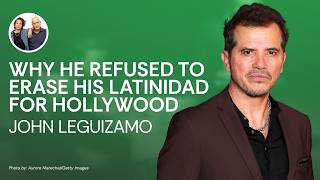
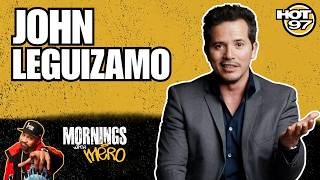
About this episodeJohn Leguizamo discusses his journey from a disruptive student in 1970s New York to a pioneering Latin actor a…AI summary
John Leguizamo discusses his journey from a disruptive student in 1970s New York to a pioneering Latin actor and playwright, emphasizing the importance of creating one's own opportunities when Hollywood gatekeepers fail to represent diverse voices. He highlights the emotional challenges of breaking male stereotypes, the necessity of authentic representation in children's media, and the spiritual power of storytelling to preserve cultural memory.
Key takeaways 5
Hollywood's lack of Latin representation is systemic and fear-based; executives make decisions based on box office safety rather than artistic nuance, leading to a 'Juan Crow' system where Latin actors are relegated to stereotypes like drug dealers or murderers.
Creating independent theater work (like his one-man shows) allowed Leguizamo to bypass gatekeepers, represent Latin culture authentically, and gain validation from industry legends who were drawn to genuine storytelling rather than stereotypical roles.
Male emotional vulnerability is often suppressed in favor of 'toughness' or anger because anger is perceived as an easier, more socially acceptable emotion for men to display, whereas showing vulnerability requires significantly more courage.
The absence of Latin representation in children's books (less than 5% of picture books feature Latin children) creates a 'scar' on self-worth for young Latin readers, necessitating active efforts by creators to fill this void with positive role models.
Leguizamo’s ADHD and action bias, which often lead to mistakes in personal life, translate into a creative superpower in acting by allowing him to make primal, instinctual choices rather than overthinking or censoring himself.
Notable quotes 5AI-generated: wording and quote attribution may be wrong. Use the play link to verify.
“If we can make penicillin out of moldy bread, we can do something with you. Please use your comedy for good. Why don't you become a comedian?”
▶ 0:06A math teacher who recognized Leguizamo's disruptive energy and redirected it toward comedy, serving as a pivotal mentorship moment.
“It was Jim Crow or for Latin people Juan Crow. So it would say white lead, white romantic lead, white doctor, white lawyer... and then eventually every five months it'd be like Latin drug dealer, Latin murderer.”
Leguizamo describing the systemic racism and limited casting options he faced early in his career at NYU and in Hollywood auditions.
“To be able to walk away from a fight, to be able to say you're sorry, takes a lot more courage than it is to knock somebody out.”
▶ 0:21Leguizamo reflecting on the difference between performative toughness and true emotional maturity and masculinity.
“Latin children are the least represented in children's picture books... less than 5% of them have Latin children. You're more likely to see the face of an animal than you are of a Latin child.”
▶ 20:16Data cited by Scholastic that motivated Leguizamo to write his children's book 'Kiki in the Can' to address the lack of representation.
“Hollywood's fear-based. Everybody's afraid of losing their job. So they're all making decisions to protect their job.”
▶ 31:22Leguizamo explaining why the industry struggles with diversity and nuance, attributing it to risk aversion among executives rather than just artistic vision.
Chapters & Sections (22)▼
0:00Childhood imagination and parental education valueschapter4
2:34New York childhood games and street life
3:44Parental emphasis on education and rebellious youth
6:35Teacher mentorship and parental resistance to acting
8:35Navigating Hollywood Rejection and Audition Success
10:46Creating Own Latin Theater Roleschapter2
12:24Overcoming Hollywood Stereotypes and Typecasting
14:10Validation from Theater Legends
16:00The Odyssey Experience and Children's Book Creationchapter1
18:37IMAX Filming and Children's Book Creation
21:23Latin Representation and Creative Decision Makingchapter2
24:00Latin Representation Progress and Disparities
25:34Impulse Acting and Industry Bias
30:56Hollywood's Fear-Based Industry and Male Emotional Vulnerabilitychapter2
33:04Acting as Emotional Catharsis
34:30Anger as Easy Male Emotion
36:36Moral Compass, Legacy, and Spiritual Creativitychapter2
38:26Wife as Moral Compass and Grounding Force
39:55Legacy, Memory, and Spiritual Creativity
42:26Death, Playwriting Legacy, and Nostalgic Memorieschapter2
 48m
48m 50m⏭ 1
 1h 0m⏭ 2
 48m⏭ 2
 42m
42m 48m
48m 47m
47m 36m
36m 50m
50m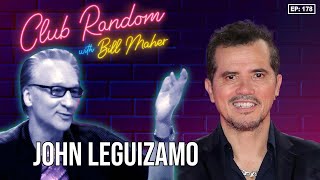
 2h 20m
 57m⏭ 4
 2h 19m⏭ 4
 50m
50m 2h 0m⏭ 3
 1h 57m⏭ 1
 1h 20m
 2h 35m⏭ 2
 1h 0m
1h 0m 32m
32m 40m
40m 1h 10m
 11h 23m⏭ 1
 33m
33m 1h 0m⏭ 1
 46m
46m 3h 54m⏭ 7
 48m⏭ 2
 3h 59m⏭ 5
 1h 16m
 54m⏭ 1
 1h 13m
 38m
38m 54m⏭ 2