About this episodeThe episode analyzes the geopolitical and economic risks of the Trump administration's 'Economic D-Day' sancti…AI summary
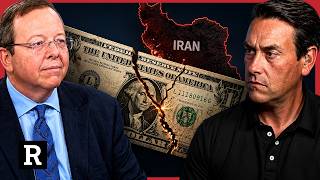
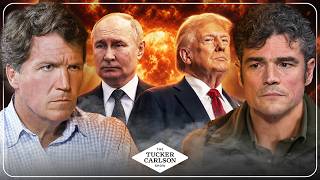
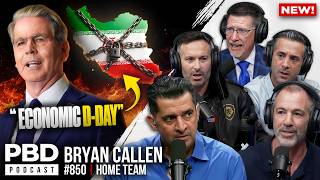
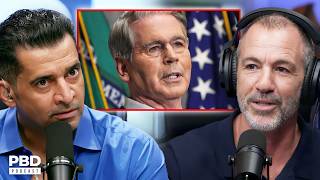
The episode analyzes the geopolitical and economic risks of the Trump administration's 'Economic D-Day' sanctions against Iran, with guests Joe Kent and Robert Pape arguing that these measures will likely escalate conflict rather than deter it, while also exposing a loophole allowing Israel to fund Ted Cruz's podcast. The discussion highlights the fragility of US infrastructure, the potential for false flag operations to rally public support, and the accelerating erosion of the US dollar's global dominance.
Key takeaways 8
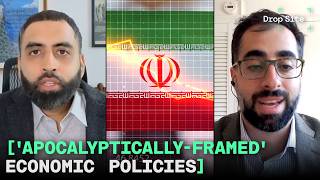
Economic Sanctions as Escalation Traps: Robert Pape argues that historical precedents (WWI Germany, WWII Japan, Iraq 1990s, Russia 2022) show that maximum pressure sanctions do not cause regime collapse but instead harden resolve and lead to increased military force. The current 'Economic D-Day' against Iran is predicted to trigger Iranian retaliation in the Strait of Hormuz, driving up gas prices and forcing US military escalation.
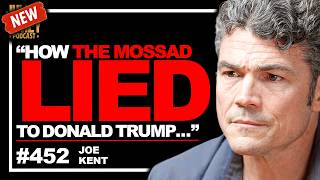
Blending of War Fronts: Joe Kent warns that the Iran conflict and the Russia-Ukraine war are merging, with Iranian drones supporting Russia and Ukrainian strikes hitting Iranian vessels. This creates a risk of a broader global conflict where nuclear thresholds could be crossed if Israel uses nuclear weapons in response to Iranian escalation.
False Flag Preparation: The speakers suggest that the media narrative is being crafted to prepare the public for a 'false flag' event similar to Pearl Harbor or 9/11 to justify further wars. They note that independent media voices are being suppressed in the UK and Canada, predicting similar moves in the US.
US Infrastructure Vulnerability: Joe Kent points out that while the US focuses on foreign wars, domestic infrastructure (power grid, cyber networks, air traffic control) is deteriorating. He cites recent unreported air traffic control outages as evidence of systemic fragility that could be exploited by terrorist groups inspired by US foreign policy.
Ted Cruz Podcast Sponsorship Loophole: Connor Eckles from Responsible Statecraft reveals that Israel is funding Ted Cruz's podcast through iHeartMedia, with payments going directly to his Super PAC (Truth and Courage PAC). This exploits a legal loophole where foreign nationals cannot directly fund campaigns, but can fund media platforms that then pay independent political entities.
Economic D-Day Self-Harm: Joe Kent notes that Treasury Secretary Scott Bessent admitted he is hesitant to apply secondary sanctions because it would 'tank the entire world economy,' suggesting the administration knows these sanctions will hurt the US more than Iran, especially as China strengthens its position as an alternative economic power.
Syria Policy Hypocrisy: Joe Kent draws a parallel between the US acceptance of Ahmed Al-Shara (a former Al-Qaeda leader) as Syria's leader and the potential for similar diplomatic engagement with Iran, arguing that if peace is possible with Shara, it should be pursued with Iran to avoid a '20-year quagmire.'
Venezuela Oil Risks: The hosts discuss the dangers of attempting to extract Venezuelan oil, noting it is 'sluggish oil' requiring dangerous civilian contractor operations in unstable regions, and that much of the revenue from existing sales disappears into money laundering operations.
Notable quotes 5AI-generated: wording and quote attribution may be wrong. Use the play link to verify.
“I think we're in a very dicey situation right now... I fear that if we see some kind of escalation because of President Trump's frustration... that Israel escalates and uses some form of a nuclear weapon which would essentially then greenlight Putin using a nuclear weapon in Ukraine.”
▶ 7:03Joe Kent discussing the risk of nuclear escalation if the Iran conflict spirals out of control.
“The pattern is not just a pattern historically but politically... these harsh economic sanctions and blockade are going to inflict more pain on the Iranian people... as that pain is felt... they are likely going to lash back... And that's how you end up moving people toward the war.”
▶ 58:18Robert Pape explaining why economic D-Day plans historically lead to more military force rather than diplomatic off-ramps.
“We have no obligation whatsoever at this point to trust our government. I think a big reason... is that a lot of what you know I think this generation of young male voters... was that hey we we do question everything.”
▶ 13:23Joe Kent explaining why young men are losing faith in Trump after he abandoned his anti-war stance.
“If we're really going to go through with the secondary sanctions, we're going to hurt ourselves like way more than we're going to hurt the Iranians. That's why I kind of think I'm glad that we're not escalating anymore militarily.”
▶ 17:48Joe Kent on the self-inflicted economic damage of secondary sanctions.
“He said, 'Well, I want to issue a warning first because I don't want to break down the whole world financial system.' He said, 'Blow it up.' Yeah. I don't want to blow up blow up the world. Our $40 trillion in debt... This is already that was before the Iran war. This is going to be much much much worse.”
▶ 1:02:24Host quoting Treasury Secretary Scott Bessent regarding the catastrophic risk of his own sanctions policy.
Chapters & Sections (37)▼
0:00Economic Warfare and Iran Sanctionschapter7
1:54Rumble Wallet Advertisement
3:28Iran Strait of Hormuz Mines and Sanctions
4:47Assessing World War III Status
6:08Blending Middle East and Ukraine Conflicts
7:47Media Fear-Mongering and War Consensus
9:34War Propaganda and Narrative Crafting
11:03False Flag War Propaganda Concerns
13:15Iran War Risks and False Flag Concernschapter1
16:44Ineffectiveness of Economic Sanctions on Iran
19:57US Infrastructure Vulnerabilities and War Blowbackchapter4
21:48Cyber Warfare and Infrastructure Neglect
23:28Domestic Priorities vs Iran War Blowback
25:25US Syria Policy and Iran Peace Prospects
27:53US Policy Shift and Peace with Iran
29:39Economic D-Day, War Economy, and Foreign Fundingchapter1
 2h 34m
 59m
59m 1h 6m⏭ 1
 1h 4m⏭ 5
 59m⏭ 1
 38m⏭ 2
 1h 3m⏭ 4
 1h 8m⏭ 1
 27m⏭ 1
 1h 2m⏭ 2
 1h 7m⏭ 2
 26m⏭ 1
 3h 53m⏭ 2
 2h 0m⏭ 2
 2h 5m⏭ 4
 1h 6m⏭ 2
 4h 5m⏭ 1
 1h 51m
 3h 2m⏭ 2
 3h 5m⏭ 1
 11h 54m
 4h 16m⏭ 4
 1h 23m
 2h 25m⏭ 2
 26m⏭ 2
 25m
25m 19m⏭ 2
 1h 14m⏭ 4
 11h 23m⏭ 1
 33m
33m 1h 0m⏭ 1
 46m
46m 3h 54m⏭ 7
 48m⏭ 2
 3h 59m⏭ 5
 1h 16m
 54m⏭ 1
 1h 13m
 38m
38m 54m⏭ 2