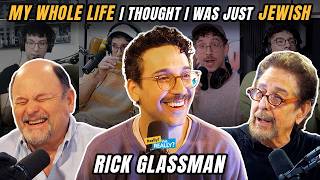
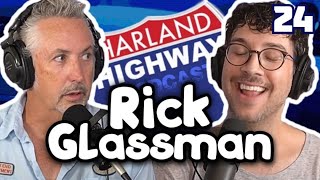
About this episodeComedian Rick Glassman discusses his late autism diagnosis, revealing how it explains his social navigation an…AI summary
Comedian Rick Glassman discusses his late autism diagnosis, revealing how it explains his social navigation and direct communication style. He shares insights on his standup origins, the importance of authenticity in comedy, and his career highlights, including playing basketball against LeBron James and his grandfather's work with Ray Charles.
Key takeaways 6
Glassman was diagnosed with autism at age 46 (2010), which helped him understand lifelong social obstacles and patterns he previously couldn't name.
He views his autism as a 'superpower' for comedy because it allows for direct, honest communication without the social manipulation neurotypical people often use to appear palatable.
Glassman's grandfather, Sid Feller, was a primary arranger and producer for Ray Charles, working on albums from 1959 onwards.
He played high school basketball against LeBron James and has a personal connection to the Cleveland Cavaliers, having received a practice jersey from Desagana Diop.
Glassman's comedy philosophy centers on 'being present' and accepting nervousness rather than fighting it, which he learned through years of performing.
He emphasizes the value of community and collaboration in acting and podcasting over the solitary validation of standup.
Notable quotes 4AI-generated: wording and quote attribution may be wrong. Use the play link to verify.
“I think if you have that number in the back of your head allocated [of black friends], you might be bashing turtles in the woods or redneck.”
▶ 8:48Glassman explains why quantifying friendships by race is a red flag for genuine connection, referencing a conversation with a friend about racial identity.
“I'm not manipulating them into seeing us. We're manipulating them into them thinking we're something that we're not so they could be more palatable or so we could be more palatable.”
Discussing how neurotypical people often mask their true selves to fit social norms, contrasting it with the directness of autistic communication.
“I'm a nervous guy. I'm supposed to be nervous. At least today. That's what my life experience has brought me to.”
▶ 30:24Glassman describes his breakthrough in accepting stage fright as an inherent part of his identity rather than something to hide.
“You've met one person with autism, you've met one person with autism.”
A doctor's quote Glassman uses to emphasize the diversity of experiences within the autism spectrum.
Chapters & Sections (48)▼
0:00Podcast Production and Ray Charles Family Historychapter1
3:35Stevie Wonder Anecdotes and Sign Language Debate
5:11Autism Diagnosis, Family Memories, and Racial Friendshipschapter3
7:07Grandparents and Racial Friendship Dynamics
8:56Defining Closest Asian Friend
10:07College Rapping and Autism Discussion
12:58Autism Communication and Social Normschapter2
14:30Autistic Directness vs Social Manipulation
16:11Hair Glossing and Autism Awareness
18:41Autism, Standup Comedy Origins, and Teen Open Micschapter1
22:00First Jokes and Early Impressions
24:29Cleveland Improv Career and Standup Philosophychapter4
26:25First Comedy Gigs and Early Bits
28:16Accepting Nerves and Being Present
30:47Mindfulness and Presence in Performance
32:48Female Fear and Performance Distraction
34:43Comedian Wealth, Specials, and Movie Impressionschapter1
36:23Promoting Dates and Movie Impressions
38:36Comedy Tour Dates and Industry Etiquettechapter1
41:35Comedy Set Behavior and Sobriety
43:44Comedy Performance, Acceptance, and Egochapter1
46:24Comedian Ego and Validation Needs
48:59Cavaliers Top Five Lists and Player Favoriteschapter2
51:06Cavs Top Five Lists and Player Favorites
52:42NBA Player Name Pronunciations and Favorites
53:55Comedy Bits, Harold Ramis, and Acting Philosophychapter2
55:35Harold Ramis Acting and Collaboration
58:45Acting for Money and Housing Goals
1:00:07Baywatch Casting and Science Teacher Rescue Fantasychapter1
1:03:15Ted Lasso Origin and Lifeguard Fantasy
1:04:40George Carlin's 9/11 Prediction and Comedy Store Achievementchapter2
1:06:08George Carlin's HBO Special and 9/11 Context
1:07:23Comedy Store Name Achievement and Podcast Guests
1:09:24Podcasting, Comedy Influences, and Embarrassing Storieschapter3
1:10:32Podcasting as Social Life and Comedy Influences
1:11:43Will Smith Comedy Influence and Childhood Loneliness
1:13:20Embarrassing Podcast Recording and Bodily Functions
1:15:50Sopranos slang, Game of Thrones, and masturbationchapter2
1:17:12Masturbation as intimacy tool
1:18:18Oligarchy commentary and LeBron impressions
1:19:52Comedy Sketches, Fertility Issues, and Social Etiquettechapter3
1:22:01Ray Charles Music and Fertility Discussion
1:23:31Varicocele Impact on Fertility and Relationships
1:24:37Misconceptions, Social Etiquette, and Neurodivergence
1:26:37Game of Thrones Discussion and Homeless Charity Promotionchapter3
 1h 12m⏭ 3
 1h 7m⏭ 1
 1h 28m
 1h 16m⏭ 1
 1h 8m
1h 8m 1h 21m
 47m
47m 1h 6m⏭ 1
 1h 31m
 1h 7m
1h 7m 1h 15m
 1h 6m
1h 6m 1h 9m⏭ 2
 1h 53m
 1h 28m⏭ 3
 1h 49m⏭ 3
 1h 0m
1h 0m 1h 24m⏭ 3
 1h 7m⏭ 1
 1h 15m⏭ 3
 1h 47m
 2h 28m⏭ 4
 1h 37m⏭ 2
 1h 14m⏭ 3
 1h 14m⏭ 4
 43m⏭ 1
 45m
45m 1h 23m
 1h 42m⏭ 1
 23m
23m 25m
25m 2h 1m
2h 1m 1h 9m
1h 9m 29m
29m 1h 32m
 1h 24m
 11h 23m⏭ 1
 1h 0m⏭ 1
 33m
33m 46m
46m 3h 54m⏭ 7
 3h 59m⏭ 5
 48m⏭ 2
 56m
56m 1h 13m
 38m
38m 40m
40m 54m⏭ 2