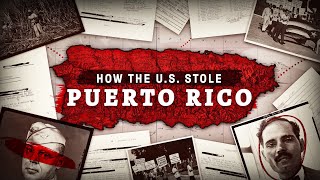
About this episodeThe video features an interview with journalist Gary F. Gonzo regarding his documentary on Puerto Rico's syste…AI summary
The video features an interview with journalist Gary F. Gonzo regarding his documentary on Puerto Rico's systemic corruption, focusing on the mismanagement of FEMA funds and the power grid crisis. The discussion highlights how the Financial Oversight and Management Board (La Huna) and private contractors have profited from the island's bankruptcy while infrastructure remains unrepaired, drawing parallels to historical exploitation and modern crony capitalism.
Key takeaways 6
The Financial Oversight and Management Board (La Huna), established by the PROMESA Act in 2016, functions as a shadow government with sovereign immunity, allowing it to supersede local laws and control all financial disbursements without accountability.
Of the $13 billion FEMA obligation for power grid repairs, less than 22% has been utilized due to Puerto Rico's bankruptcy status preventing upfront contractor payments and systemic misallocation by the oversight board.
The crisis is rooted in decades of issues, including PREPA union corruption, political sabotage, and the 1990s privatization efforts that failed to mitigate grid damage before Hurricane Maria.
LUMA Energy, a joint venture between Canadian utility ATCO and Houston-based Quantis Services (with holdings from BlackRock and JP Morgan), replaced PREPA in 2021 but resulted in higher costs and persistent power issues.
Specific financial incentives drive corruption: La Huna Executive Director Robert Moika earns $625,000 annually (34x the typical Puerto Rican income), while bankruptcy advisor David Brownstein earns $850,000 monthly ($28,000/day).
The conversation draws a parallel between Puerto Rico's situation and Somalia's debt crisis, suggesting that cultural tribalism and lack of institutional integrity lead to systemic graft and reliance on foreign aid.
Notable quotes 4AI-generated: wording and quote attribution may be wrong. Use the play link to verify.
“Corruption in Puerto Rico can be summarized as the marriage between state socialism and rampant capitalism. Capitalists take advantage of a socialist system. It's quite literally the worst of both worlds.”
▶ 16:34Gary F. Gonzo explains the structural incentive for corruption where government oversight creates opportunities for private profit without accountability.
“David Brownstein makes $850,000 a month. That means he makes... $28,000 a day. That's more than the typical median Puerto Rican family makes in a year.”
Highlighting the extreme disparity between the compensation of bankruptcy advisors/officials and the local population.
“When you create an incentive structure to be corrupt, people are going to be corrupt. When you have no accountability, people are going to game that system.”
▶ 18:25A core thesis of the documentary regarding why the $13 billion FEMA fund has not solved the power grid crisis.
“I essentially anytime we go on a job I always think okay I'm okay with dying. I'm okay with going to jail. I'm okay with getting maimed. I'm okay with really anything bad happening because if I don't go into it with that, I'm not going to be willing to go all the way.”
▶ 50:32Gary F. Gonzo describing his journalistic philosophy and willingness to take extreme risks to expose truth.
Chapters & Sections (156)▼
00:00Government Corruption and Inefficiency in Puerto Ricochapter2
00:00Corruption and Power in Government Institutions
01:08Corruption and Power in Puerto Rican Government
03:13Government Corruption in Puerto Ricochapter3
03:13Puerto Rico's Cultural Identity and Corruption
03:44Puerto Rico Oversight Board and US Control
04:10Government Corruption in Puerto Rico
04:36Puerto Rico's Power Grid Funding Mismanagementchapter3
04:36Puerto Rico's Power Grid Funding Mismanagement
05:24Government Power to Override Signed Legislation
05:54Misallocated Funds in Puerto Rico's Bankruptcy
06:48Causes of Puerto Rico's Financial and Power Grid Crisischapter2
06:48Causes of Puerto Rico's Financial Bankruptcy
08:01Puerto Rico's Power Grid Maintenance and Privatization
 1h 20m⏭ 1
 1h 15m
 1h 1m
1h 1m 1h 11m⏭ 1
 1h 11m⏭ 1
 0m
0m 1h 41m
 41m
41m 1h 22m
 31m
31m 40m
40m 1h 37m
 59m⏭ 2
 1h 9m⏭ 1
 1h 23m⏭ 1
 1h 22m⏭ 2
 1h 4m⏭ 1
 1h 51m
 1h 32m⏭ 3
 1h 43m⏭ 2
 2h 20m⏭ 1
 2h 23m⏭ 2
 2h 3m⏭ 5
 18m
18m 2h 32m
 25m
25m 58m
58m 2h 35m
 11h 23m⏭ 1
 1h 0m⏭ 1
 46m
46m 3h 54m⏭ 7
 33m
33m 3h 59m⏭ 5
 48m⏭ 2
 37m⏭ 2
 38m
38m 56m
56m 54m⏭ 2