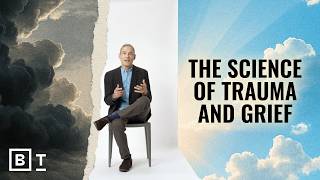
About this episodeDr. Amy Delano and host Luke Story discuss the biological and neurological roots of trauma, addiction, and chr…AI summary
Dr. Amy Delano and host Luke Story discuss the biological and neurological roots of trauma, addiction, and chronic illness, arguing that time does not heal trauma but rather accumulates damage in the body's physiology. They outline a framework for healing that integrates intellect, somatic nervous system regulation, biological repair, and spiritual purpose, emphasizing that safety must be established before deep emotional work can occur. The conversation highlights the importance of pacing, self-awareness, and addressing the body's stress response to break cycles of avoidance and disease.
Key takeaways 7
Time does not heal trauma; it accumulates damage. Stored trauma manifests as predictable biological footprints (immune imbalance, thyroid issues, oxidative stress) that compromise capacity and emotional regulation.
Addiction and avoidance coping mechanisms (including 'healthy' ones like biohacking or excessive work) are often strategies to avoid feeling grief, sadness, or shame. Anger or hyper-functionality can feel more empowering than the vulnerability of grief because they offer a sense of agency.
Repression (unconscious avoidance) causes more health damage than suppression (conscious avoidance). The body holds memory even when the mind tries to bury it.
Healing requires integrating four layers: Intellect (understanding the mechanics), Soma/Nervous System (creating a felt sense of safety), Biology (repairing inflammation/mitochondrial function), and Spirit (purpose/meaning). Focusing on only one layer leads to being stuck.
The 'Five Core Skills' for resilience are: 1) Can I feel? 2) Can I shift my state when overwhelmed? 3) Can I track my nervous system? 4) Can I pace myself? 5) Can I choose a different response?
Pacing is critical: Exceeding one's current capacity, even with positive activities like exercise or therapy, causes overwhelm. Capacity fluctuates based on biological safety (nutrient status, toxin load) and emotional resources.
The 12-step model provides powerful connection and spiritual principles but lacks a somatic component to address the nervous system dysregulation caused by addiction, creating a 'ceiling effect' on recovery capacity.
Notable quotes 5AI-generated: wording and quote attribution may be wrong. Use the play link to verify.
“Time doesn't heal anything. It only accumulates the damage.”
▶ 0:04Dr. Delano explains how stored trauma creates biological footprints that persist and worsen over time if not addressed.
“The physiology is actually quite clear... Stress plus rest. And of course, we know that the rest is actually more important than the stress in order for that growth to happen.”
▶ 49:54Distinguishing between healthy stress (which leads to growth with rest) and trauma (which leads to freeze/overwhelm without completion).
“Our only option for surviving it was to just retreat within yourself and push through... It's like having our foot on the gas pedal and the emergency brake on at the same time.”
▶ 49:32Describing the physiological state of trauma where the nervous system is stuck in a high-energy fight/flight response while simultaneously shutting down (freeze).
“It's not about feeling the feelings. It's about making it safe to feel the feelings.”
Dr. Delano clarifies that the primary work is establishing somatic safety so that buried emotions can surface without causing overwhelm.
“You can't use your mind right because it's the mind that has become self-delusional.”
▶ 1:06:02Explaining why intellectual analysis alone fails in addiction recovery; the mind that created the problem cannot solve it through rumination.
Chapters & Sections (43)▼
0:00Foster Parenting Trauma and Attachmentchapter2
2:33Adoption Journey and Attachment Parenting
4:38Nervous System Programming and Unconscious Trauma Responses
7:05Trauma, Addiction, and Avoidance Copingchapter2
9:21Anger as Empowerment Against Trauma Avoidance
11:06Insidious Nature of Avoidance Coping
13:05Physiological State, Coping, and Grief Processingchapter2
14:47Repression vs Suppression in Grief
17:13Grief and Physical Exhaustion
18:41Integrating Intellect, Body, and Spirit in Trauma Recoverychapter1
20:39Intellect, Body, and Spirit in Trauma
24:54Integrating Mind, Body, and Spirit for Healingchapter2
26:37Biohacking and Spirituality Catch-22
29:19Addressing Trauma Through Physical Health
30:55Precision Nervous System Healing Frameworkchapter1
33:44Identifying Trauma Patterns in the Nervous System
 1h 50m⏭ 4
 2h 39m⏭ 5
 2h 4m⏭ 5
 3h 14m
 2h 16m⏭ 4
 2h 37m⏭ 4
 2h 9m⏭ 7
 2h 40m⏭ 6
 2h 29m⏭ 5
 1h 52m⏭ 5
 3h 23m⏭ 4
 1h 45m⏭ 7
 1h 47m⏭ 2
 2h 24m⏭ 3
 1h 55m⏭ 1
 1h 32m⏭ 4
 1h 28m⏭ 3
 1h 46m⏭ 2
 2h 10m
 4h 5m⏭ 4
 2h 18m⏭ 3
 1h 24m
 1h 37m
 2h 31m⏭ 5
 11h 23m⏭ 1
 33m
33m 3h 54m⏭ 7
 46m
46m 1h 0m⏭ 1
 48m⏭ 2
 1h 16m
 3h 59m⏭ 5
 1h 13m
 25m
25m 54m⏭ 1
 25m
25m