About this episodeThis transcript analyzes the rapid expansion of data centers in Loudoun County, Virginia, driven by AI demand.…AI summary
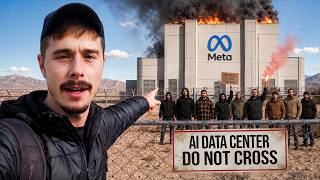
This transcript analyzes the rapid expansion of data centers in Loudoun County, Virginia, driven by AI demand. While early data centers provided economic benefits like lower taxes, the current scale has reached a tipping point where infrastructure strain—specifically energy grid capacity and noise pollution—is causing significant resident backlash. The situation serves as a national test case for how communities balance technological infrastructure needs with quality of life and environmental concerns.
Key takeaways 4
Loudoun County, Virginia, hosts the world's largest concentration of data centers, creating a unique 'test bed' scenario for other US counties as they face similar infrastructure strain.
The primary conflict is not ideological opposition to technology, but a 'tipping point' where second-order effects—specifically energy grid capacity limits, transmission line easements via eminent domain, and noise pollution—become impossible for residents to ignore.
Early data centers (dot-com era) provided significant economic benefits, including lower property taxes and higher real estate values, leading to a divided community where many residents still support the industry despite current grievances.
Generative AI is accelerating the need for compute capacity, forcing data centers to use noisier natural gas turbines and diesel generators when grid connections are delayed, exacerbating environmental and quality-of-life issues.
Notable quotes 4AI-generated: wording and quote attribution may be wrong. Use the play link to verify.
“"The cloud basically is data centers... AI also needs data centers and because they require so much compute they need more and more capacity than cloud did in the past."”
▶ 4:14Explains the fundamental shift in scale driven by AI compared to previous internet eras.
“"It's basically eminent domain. So since these are, you know, public utilities, if they say this is a project that is necessary to do, um, then they can basically take land through eminent domain in order to do it."”
▶ 12:18Clarifies the legal mechanism allowing utility companies to bypass resident objections for infrastructure projects.
“"I think it's the fact that you know they're running up against just the total capacity that their county can handle and it's just becoming, you know, more of a nuisance than it has been in the past."”
▶ 21:26Summarizes the core resident grievance: it's not anti-tech sentiment, but a capacity crisis.
“"We live near Dulles airport. We're used to some amount of noise. Um, but planes take off and they land and the data center noise can be pretty consistent."”
▶ 15:35Highlights the specific nature of the disturbance: constant industrial noise versus intermittent transportation noise.
Chapters & Sections (9)▼
0:02Data Centers: Definition, Evolution, and Local Impactchapter1
2:04Data Centers: Definition, Evolution, and Local Impact
5:32Data Center Community Impact and Zoningchapter2
7:26Data Center Noise and Generator Impact
9:36Loudoun County By-Right Zoning History
12:08Eminent Domain and Community Impact of Data Centerschapter1
14:42Noise Pollution and Community Division
17:38Community Split on Data Center Expansionchapter1
 1h 34m⏭ 2
 1h 40m⏭ 2
 1h 39m⏭ 5
 1h 31m⏭ 2
 41m⏭ 3
 1h 29m
 24m⏭ 1
 29m⏭ 2
 35m⏭ 3
 1h 43m⏭ 2
 2h 13m⏭ 3
 1h 40m⏭ 2
 1h 40m⏭ 1
 34m⏭ 1
 3h 24m⏭ 3
 1h 11m⏭ 4
 1h 35m
 1h 34m
 1h 3m⏭ 1
 1h 37m
 1h 57m⏭ 1
 2h 47m
 11h 23m⏭ 1
 33m
33m 3h 54m⏭ 7
 1h 0m⏭ 1
 46m
46m 48m⏭ 2
 1h 16m
 3h 59m⏭ 5
 1h 13m
 25m
25m 25m
25m 45m⏭ 2