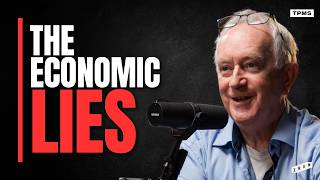
About this episodeTerrence McNally discusses his book '1929', revealing how he humanized complex economic history by uncovering …AI summary
Terrence McNally discusses his book '1929', revealing how he humanized complex economic history by uncovering hidden archives and analyzing the psychological motivations of financial leaders. He draws parallels between the 1920s and today, warning of speculative bubbles in AI and crypto, while arguing that systemic bailouts are necessary to prevent total economic collapse despite political unpopularity.
Key takeaways 6
Research Methodology: McNally bypassed the pandemic archive restrictions by hiring students to photograph unindexed boxes in libraries, discovering that the most valuable historical details are often in non-indexed materials.
Psychological Driver of Success: McNally argues that insecurity is the primary driver for most successful individuals, who are often trying to prove something to a parent or figure from their past, creating a 'chip on their shoulder'.
Speculation vs. Innovation: Speculation is described as the 'twin of innovation'; while leverage is dangerous, avoiding speculation entirely stifles the technological shifts (like SpaceX or Tesla) that drive progress.
2008 Bailout Defense: McNally defends the 2008 bank bailouts as a necessary medical procedure to pump blood into the system's arteries, arguing that direct aid to individuals would have been too slow and that the system ultimately recovered and repaid taxpayers.
AI Productivity Paradox: If AI creates massive productivity gains, it may lead to significant unemployment, raising the question of how the economy functions if consumers no longer have jobs to buy products.
Crypto Manipulation: McNally shares a personal anecdote where his 14-year-old son was offered $50,000-$100,000 in a memecoin (Sorcin) to influence him, highlighting the manipulative nature of modern crypto markets similar to 1920s investment pools.
Notable quotes 5AI-generated: wording and quote attribution may be wrong. Use the play link to verify.
“Speculation is the twin of innovation. It is. And so you you need you want some semblance of speculation in the system.”
▶ 30:40McNally explains why society cannot simply eliminate speculation, as it is tied to the risk-taking required for major technological breakthroughs.
“Most successful people I know are driven by some form of insecurity. That's what I actually think is the single sort of driving force behind most people who have shot the moon.”
▶ 10:02McNally's theory on the psychological profile of high achievers in business and finance.
“The lesson in a crisis oddly is to actually flood the system with money which often means that you actually have to um effectively reward the arsonists.”
▶ 23:07McNally's justification for bailing out banks during the 2008 financial crisis, comparing it to pumping blood into a clogged system.
“I'm still clearly trying to prove myself to my mother.”
▶ 58:17McNally's personal admission about his own driving motivation, linking back to his theory about successful people.
“We will have a crash. I just can't tell you when and I can't tell you how deep.”
▶ 34:17McNally's final prediction regarding the current economic climate, comparing it to the 1999 dot-com bubble.
Chapters & Sections (49)▼
0:00Author's Path to Storytelling and Humanizing Complex Ideaschapter2
0:00Author's Path to Becoming a Storyteller
2:27Origins of the 1929 Stock Market Crash
5:04Researching During the Pandemic and Archival Challengeschapter3
 1h 23m
 1h 9m
1h 9m 23m
23m 1h 9m
1h 9m 1h 7m
1h 7m 1h 16m
 1h 10m
 1h 2m
1h 2m 1h 28m
 1h 1m
1h 1m 1h 14m
 52m
52m 2h 53m⏭ 1
 2h 57m⏭ 2
 3h 4m⏭ 1
 1h 55m⏭ 6
 1h 43m⏭ 1
 2h 5m⏭ 7
 2h 29m⏭ 2
 21m⏭ 1
 3h 3m⏭ 3
 24m⏭ 1
 1h 2m
1h 2m 2h 48m⏭ 4
 1h 0m⏭ 1
 33m
33m 46m
46m 3h 54m⏭ 7
 3h 59m⏭ 5
 54m⏭ 1
 1h 13m
 54m⏭ 2
 58m⏭ 5
 45m⏭ 2
 1h 16m⏭ 2
 1h 26m