About this episodeThe video analyzes a flash flood event at the Grand Canyon where radar estimated rainfall rates up to five inc…AI summary
The video analyzes a flash flood event at the Grand Canyon where radar estimated rainfall rates up to five inches per hour, highlighting the dangers of rapid water accumulation in mountainous terrain. Experts explain that erosion is driven by both natural forces (water, wind, heat-induced cracking) and human activity (trail widening, machinery), with recovery taking hundreds to thousands of years. Hikers are advised to avoid trails immediately after rain to prevent safety hazards and trail damage, and to monitor weather trends rather than relying on specific forecast numbers.
Key takeaways 5
Rainfall Intensity: Radar estimated rainfall at the Grand Canyon reached five inches per hour at peak times, meaning one inch of total accumulation could occur in just 10-30 minutes.
Erosion Mechanics: Soil erosion involves detachment, transport, and deposition. Human disturbance (walking, machinery) creates channels that make soil more vulnerable to water and wind erosion.
Recovery Timeline: Soil formation takes hundreds to thousands of years; therefore, significant erosion events like flash floods cause long-term damage that is difficult to reverse.
Heat and Hydrophobicity: Intense heat and wildfires can create hydrophobic (water-repellent) soil conditions. When rain hits this soil, it does not infiltrate but instead creates rapid, high-volume runoff leading to flash floods.
Forecasting Trends: Weather forecasts for mountainous areas should be viewed as trends rather than exact numbers. The focus should be on identifying where heaviest rain is expected (e.g., southeast Arizona) rather than specific inch totals for a single day.
Notable quotes 4AI-generated: wording and quote attribution may be wrong. Use the play link to verify.
“At the heaviest time of this rainfall at the Grand Canyon, it was estimating five inches an hour... it could have done an inch in a very quick period of time.”
▶ 0:29Explaining the rapid accumulation of water during the flash flood event.
“Soil loss is something we really try to prevent because the formation of soils takes hundreds to thousands of years... Landforms essentially form over time due to erosive processes... but if when you have it happening really fast... then it becomes a bigger problem.”
▶ 11:55Guest expert Emmanuel Salifu on the irreversibility of rapid erosion and the geological timescale of soil formation.
“You don't have anywhere to hide. You don't want to be under a tree... You even have to watch weather ahead of time... Look at that storm there and say, that's a little too close. Maybe we go back down.”
▶ 4:18Host discussing lightning safety for hikers on mountain tops above tree line.
“There's also a condition called hydrophobicity or water repellency that occurs in soils... When that happens and you get a rainfall, you don't have much of that rainfall being infiltrating into the soil... Instead, they basically converge and form into runoff very quickly.”
▶ 23:10Explaining how heat and wildfires contribute to flash floods by preventing water absorption.
Chapters & Sections (8)▼
0:00Grand Canyon Flash Flood Analysis and Hiking Safetychapter1
3:21Hiking Safety and Storm Preparedness
4:59Erosion Causes and Trail Impactchapter1
9:18Soil Recovery and Erosion Control
13:39Erosion Control and Hiking Safety After Rainchapter3
 59m⏭ 1
 59m
59m 22m
22m 25m
25m 23m
23m 29m⏭ 1
 28m
28m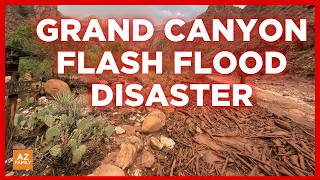 25m
25m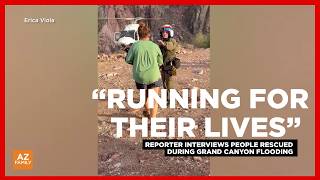 29m⏭ 1
 23m
23m 1h 1m
1h 1m 1h 0m
1h 0m 20m
20m 20m
20m 1h 12m⏭ 7
 1h 3m⏭ 1
 2h 53m⏭ 1
 1h 34m⏭ 3
 1h 50m⏭ 1
 1h 33m⏭ 1
 2h 57m⏭ 2
 2h 48m⏭ 2
 2h 42m⏭ 3
 2h 47m⏭ 4
 11h 23m⏭ 1
 1h 0m⏭ 1
 33m
33m 46m
46m 3h 54m⏭ 7
 3h 59m⏭ 5
 1h 13m
 54m⏭ 1
 25m
25m 45m⏭ 2
 1h 16m⏭ 2
 58m⏭ 5