About this episodeAndrew Callahan discusses the realities of independent journalism, the psychological drivers of political radi…AI summary
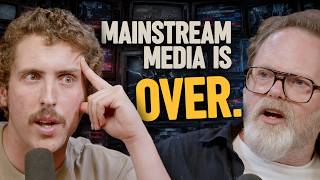
Andrew Callahan discusses the realities of independent journalism, the psychological drivers of political radicalization, and the financial mechanics of his content business. He provides a critical analysis of media bias, arguing that consumers must actively recognize their own biases rather than expecting unbiased reporting. The conversation also covers his personal experiences with cancellation, the structural issues in the housing market, and the specific production techniques used to maintain authenticity in documentary filmmaking.
Key takeaways 7
Media Bias and Consumer Responsibility: Callahan argues that no journalist is truly unbiased; everyone is conditioned by their upbringing and experiences. He asserts that the responsibility lies with the consumer to understand the spectrum of media bias and consume content critically rather than expecting objective truth from any single source.
Two Types of Radicalization: He categorizes radicalization into 'conservative' (driven by core need collapse and a desire to return to a mythologized past) and 'liberal' (driven by over-fulfilled needs and a guilt complex leading to overcompensation for privilege).
The Tech Industry's Impact on Urban Housing: Callahan details how Amazon's presence in Seattle led to the demolition of affordable housing for corporate apartments, followed by a pullout due to remote work, resulting in high vacancy rates and increased homelessness without solving the root cause.
Production Aesthetic Strategy: The 'low quality' video look is intentional to feel journalistic and realistic, but audio quality must be perfect. He notes that bad audio immediately signals amateurism, whereas vintage video creates an authentic vibe.
Financial Model of Independent Media: Callahan's income is primarily driven by Patreon (approx. 30,000 patrons at $5/month) rather than YouTube ad revenue, which is often suppressed by 'edgy' content. This model allows for independence from corporate advertisers.
Housing Market Reality: Buying a home is often financially inferior to renting for the average person due to hidden costs like property taxes, insurance, and maintenance. He cites a Los Angeles example where owning costs ~$100k/year in overhead versus $8k/month for rent.
The 'Sidekick Syndrome': Callahan identifies a pattern where close associates become resentful of his success and plot against him, often revealing themselves during crises or contractual disputes. He advises maintaining professional distance rather than deep personal bonds with collaborators.
Notable quotes 5AI-generated: wording and quote attribution may be wrong. Use the play link to verify.
“Once you stop believing that journalists are unbiased understand the spectrum of media bias and be a responsible consumer it'll work itself out sometimes the truth hurts”
▶ 0:36Callahan explains why viewers cannot rely on media outlets for pure objectivity and must take ownership of their information diet.
“Most people are good but money corrupts always everything bad that I've seen happen is because someone is trying to either get money out of somebody or get someone elected”
▶ 0:47A summary of his observations on human nature derived from his extensive interviewing experience.
“The microphone is kind of like a magnet for people who just want to say something already”
▶ 0:07Explaining why strangers open up so readily during his street interviews.
“If you're a reasonable level-headed person you know when to cut somebody off unless you're just trying to ruin their life which some people look at as good content”
▶ 31:59Discussing the ethical line between documenting reality and exploiting intoxicated or vulnerable individuals for views.
“Conservatism is based upon a celebration of the past... Liberalism is about a utopian future... Both can agree that things suck right now”
▶ 54:33His framework for understanding the fundamental differences between conservative and liberal worldviews.
Chapters & Sections (84)▼
0:00Journalist Discusses Media Bias and Human Naturechapter2
0:00Journalist and Documentary Filmmaker Discusses Profession
2:14Clickbait and Homelessness in Las Vegas
5:18Homelessness and Shame in America's Tunnelschapter2
5:18Homelessness and the Human Experience
6:59Las Vegas AVN Expo Interview Experiment
9:31Hitchhiking Experiences and Safety Considerationschapter3
9:31Hitchhiking Experiences and Safety Considerations
11:27Hitchhiking Risks and Cultural Differences
13:00Mental Health and Polygamy Discussion
14:50Production Style and Quality Discussionchapter2
14:50Production Style and Quality Discussion
16:31TV Show Production and Creator Disagreement
19:18Replacing a Host's Impact on Audiencechapter2
19:18Replacing a Host's Impact on Audience
22:11Conspiracy Theorist's Family Intervention Documentary
25:18Changing Habits in Young Adultschapter4
25:18Changing Habits in Young Adults
27:25Kelly's father's extreme right-wing radio influence
29:04Balancing Empathy and Boundaries in Conversations
30:25Concerns about Digital Footprint and Consent
32:16Privacy in the Digital Age Discussionchapter2
32:16Privacy Expectations in Public Spaces
34:25Social Embarrassment and Shame Culture
36:21Discussing Interviewing Controversial Figures and Free Speechchapter2
 1h 59m⏭ 3
 2h 20m⏭ 4
 1h 38m⏭ 5
 1h 30m⏭ 3
 2h 34m⏭ 4
 2h 7m⏭ 3
 1h 50m⏭ 4
 2h 10m⏭ 3
 1h 44m
 2h 11m⏭ 3
 1h 46m⏭ 1
 1h 56m⏭ 5
 1h 26m⏭ 3
 44m⏭ 3
 1h 55m⏭ 2
 27m
27m 1h 48m⏭ 3
 1h 44m⏭ 4
 1h 6m⏭ 1
 1h 12m⏭ 3
 1h 20m⏭ 1
 59m
59m 2h 0m⏭ 1
 1h 5m
1h 5m 1h 26m⏭ 2
 1h 7m⏭ 1
 1h 1m⏭ 1
 1h 42m
 1h 28m⏭ 2
 59m
59m 29m⏭ 1
 1h 36m⏭ 2
 1h 43m⏭ 4
 1h 0m⏭ 1
 11h 54m
 11h 54m⏭ 8
 6h 26m
 33m
33m 3h 54m⏭ 7
 3h 59m⏭ 5
 9h 11m
 46m
46m 54m⏭ 1
 7h 50m