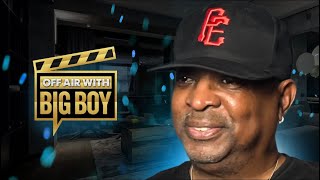
About this episodeChuck D reflects on Public Enemy's 50-year legacy, emphasizing the importance of collective action over indivi…AI summary
Chuck D reflects on Public Enemy's 50-year legacy, emphasizing the importance of collective action over individual stardom and the cultural power of hip-hop to unite people against divisive government narratives. He details the industry's shift from groups to solo artists for easier contract negotiations, the historical roots of hip-hop in New York's resilience, and the need for dignified presentation and mentorship in the modern era.
Key takeaways 8
Public Enemy's base was London, not New York, evidenced by the album 'It Takes a Nation of Millions' opening with 'Welcome to London' and their early success there before conquering the US.
Record labels shifted from signing groups to solo artists in the 90s because negotiating with multiple members (like X-Clan or Public Enemy) was logistically difficult; they preferred dealing with one person.
LL Cool J was the first true soloist in hip-hop, proving that one person could fill an hour-long set without a crew, which influenced the industry's structure.
Hip-hop has global impact, such as stopping a day of fighting between Serbs and Croats in Croatia/Yugoslavia during a tour featuring Public Enemy and Ice-T.
The term 'Rhythm and Blues' was coined by Billboard's Jerry Wexler in the 1950s to replace 'Race Records' due to growing pride among Black musicians post-WWII.
Chuck D criticizes the arrogance of assuming US hip-hop is superior, noting that African artists are often more sophisticated multilingual rappers.
Public Enemy maintained brotherhood and civility on tour by teaching younger artists to respect local communities ('take off your shoes') before engaging with venues or people.
The standard for MCs in the early days was extremely high; DJs would switch beat speeds unpredictably, and if an MC couldn't adapt, they were cut off immediately.
Notable quotes 5AI-generated: wording and quote attribution may be wrong. Use the play link to verify.
“Individually the only movement you can have is a bowel movement... a collective to me is what a movement is.”
▶ 0:52Chuck D explains his preference for collective action over individual accolades, framing individualism as limited compared to group power.
“Culture is diametrically opposed to government which like to split you up categorize you... Governments could do a better job so your brother rushed the show.”
▶ 4:35Chuck D contrasts the unifying nature of hip-hop culture with government tactics of division and control.
“You can keep art to yourself... but the process of getting art out of your ass into a business means that you gotta work it out with people.”
Chuck D discusses how commercializing art requires collaboration and cooperation, unlike private artistic expression.
“The arrogance of the United States of America is to think that we automatically is the best... it's some [ __ ] African look at you side facing like what the [ __ ] makes you better.”
▶ 26:49Chuck D critiques American exceptionalism in hip-hop, highlighting the sophistication of international artists.
“Fight the Power... was a song that's why the key in back in the day you had New York talk radio... Samuel L Jackson's character... was DJ Love that was communicating to the people.”
Chuck D clarifies that 'Fight the Power' was tied to Black talk radio and community communication in Spike Lee's 'Do the Right Thing', not just a standalone anthem.
Chapters & Sections (49)▼
0:00Chuck D on Public Enemy and Hip-Hop Legacychapter3
0:00Chuck D Discusses Public Enemy and Hip-Hop
1:57Hip-Hop's History and Cultural Significance Discussed
3:16Public Enemy's Impact on Hip-Hop Culture
5:35Public Enemy's Rise to Fame in the USchapter4
5:35Rappers Share Tour Bus Experiences
6:56Public Enemy's Early Tour and International Reception
8:31LL Cool J Discusses Early Hip Hop Era
10:33Music and Sports Discussion
12:02New York City's Resilience and Cultural Significancechapter2
12:02New York City's Resilience Amidst Challenges
13:22Early Days of Hip-Hop in New York
16:10Hip-Hop Origins and Social Media Impactchapter2
16:10Hip-Hop Origins and Social Media Impact
18:15Racial Tensions and Nightlife in 1950s America
20:34Hip-Hop's Evolution and Industry Impactchapter2
20:34Hip-Hop Industry Changes and Impact
22:29Hip Hop's Impact on Global Politics and Culture
25:09Racial Supremacy and Hip-Hop's Global Rootschapter2
25:09Racial Supremacy and Hip-Hop in Africa
27:28Hip-Hop Tours and Brotherhood in the 90s
29:51Hip-Hop's Dignified Artistic Legacy and Curationchapter2
29:51Hip-Hop as Artistic Expression and Legacy
31:50Hip-Hop's Impact on Lifestyle and Health
34:29Discussing Music and Language in Hip-Hopchapter3
34:29Discussing Music and Language in Hip-Hop
36:35Early Days of Def Jam and Public Enemy
38:07MCs and DJs in the Old Days
39:26LL Cool J and Def Jam Early Dayschapter3
39:26LL Cool J and Early Def Jam History
41:10Hip-Hop History and Dr. Dre's Contributions
42:55Hip-Hop Industry Contracts and Experimentation
44:40LL Cool J Discusses Def Jam and Public Enemychapter3
44:40LL Cool J Discusses Def Jam and Public Enemy
46:10Lyrics Under Scrutiny and Fight the Power
47:30Elvis and John Wayne in Hip-Hop Context
49:48Elvis's Musical Influences in the 1950schapter2
49:48Elvis Influences from Black Music and Culture
51:56Hip-Hop's Evolution and Changing Social Norms
54:18Hip-Hop's Impact on the Worldchapter4
54:18Impact of Hip-Hop on Global Culture
55:37Chuck D Discusses Hip-Hop and Social Consciousness
57:32Hip-Hop Enthusiast Discusses Music Appreciation
58:47Celebrating the Legacy of Don Cornelius
1:00:33Protecting Young Rappers on Tourchapter4
1:00:33Hip-Hop Memories and Mentorship
1:02:14Biggie Smalls and Chuck D's Memories
1:03:46Songwriting Disputes and Sample Usage
1:05:06Public Enemy Reunion Discussion and Upcoming Projects
 1h 19m
 49m
49m 58m
58m 43m
43m 39m
39m 54m
54m 39m
39m 46m
46m 36m
36m 36m⏭ 1
 30m
30m 29m
29m 2h 29m
 1h 20m
 48m
48m 1h 44m
 47m⏭ 4
 1h 12m⏭ 1
 2h 57m
 1h 8m
1h 8m 1h 53m
 1h 22m
 4h 20m
 2h 8m
2h 8m 3h 12m
 1h 1m⏭ 3
 5h 13m⏭ 4
 1h 26m
 1h 0m⏭ 1
 33m
33m 3h 54m⏭ 7
 54m⏭ 1
 3h 59m⏭ 5
 54m⏭ 2
 46m
46m 6h 26m
 1h 13m
 1h 16m⏭ 2
 9h 11m
 1h 26m