About this episodeWalter Jones, the original Black Ranger, reveals that the Power Rangers cast was severely underpaid, earning l…AI summary
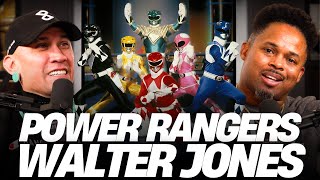
Walter Jones, the original Black Ranger, reveals that the Power Rangers cast was severely underpaid, earning less than $1,200 per episode despite the show generating $1 billion in its first year, with no merchandise royalties. He details the cast's failed attempt to unionize and strike for better treatment, leading to their removal from the franchise and a subsequent drop in the movie's success. Jones emphasizes the importance of standing up for fair compensation and union protection, noting that while he regrets not securing the movie deal, he stands by his decision to prioritize dignity over exploitative contracts.
Key takeaways 7
The original Power Rangers cast earned less than $1,200 per episode in a show that generated $1 billion in revenue in its first year, highlighting a massive disparity between creator profit and actor compensation.
The cast was denied any percentage of merchandise sales (0% initially, later mentioned as 1% total split), which Jones calculated would have made him a multi-millionaire had they received even 1% of the billion-dollar revenue.
The original cast attempted to negotiate a union (SAG) contract for the movies but fractured; three actors (Jones, Austin St. John, Thuy Trang) walked off set while others stayed, resulting in the original cast being replaced and the movie underperforming compared to expectations.
Jones argues that the production company's greed prevented fair negotiation, stating that losing $6 million from the $993 million profit to pay actors fairly would have been reasonable and prevented the loss of the original cast's chemistry.
The show's initial contract was predatory, threatening to fire any actor who hired a lawyer or agent to negotiate terms, forcing young, inexperienced actors to accept unfair conditions.
Jones notes that non-union status allowed producers to cut costs on costumes and sets, resulting in lower-quality production values compared to the Japanese source material (Sentai series).
The departure of the original cast devastated fans and hurt the franchise's momentum, with Jones noting that fans ripped down posters and that the replacement cast could not replicate the original chemistry.
Notable quotes 5AI-generated: wording and quote attribution may be wrong. Use the play link to verify.
“The show made a billion dollars the first year. We were making less than 1,200 an episode.”
▶ 4:26Jones highlighting the extreme disparity between the show's financial success and the actors' compensation.
“If that would have left him with 96%. But 1% all of the original actor... I would be a multi-millionaire. Multi-millionaire easily.”
▶ 5:57Jones calculating the potential wealth if the cast had received even a small percentage of merchandise sales.
“It wouldn't have hurt him to lose 6 million out of his 993 million to make the rest of us happy, his stars. You know what I mean? Greed.”
Jones criticizing the producer's decision-making as greedy rather than shrewd business.
“They told us then, listen, you can take this to your mind. Like after two weeks of auditioning... 'the first person that comes back to wants to negotiate or change anything, we'll fire you, hire somebody new.'”
▶ 21:22Details on the coercive nature of the initial contracts that prevented professional legal representation.
“I try not to live being like hateful about that situation. It is what it is. It's been 32 years. I've learned to deal with what it is. And I just choose to be grateful for what I do have.”
▶ 6:43Jones expressing his personal philosophy on handling past injustices.
Chapters & Sections (56)▼
0:06Power Rangers' Impact on Representation in Mediachapter3
0:06Power Rangers' Impact on Representation in Media
2:35Power Rangers Production Challenges and Low Pay
3:51Power Rangers' Unfair Pay and Working Conditions
5:31Power Rangers Actors' Unfair Pay and Working Conditionschapter2
5:31Power Rangers Actors' Unfair Pay and Treatment
7:25Power Rangers Cast's Unfair Treatment and Strike
10:08Power Rangers Cast Treatment and Contract Issueschapter2
10:08Power Rangers Cast Treatment and Contract Issues
12:05Power Rangers Cast's Unfair Treatment and Pay
14:34Power Rangers Cast Members' Departure and Treatmentchapter2
14:34Power Rangers Cast Members' Experiences with Unfair Treatment
18:04Exploitation of Child Actors in TV Productions
19:21Power Rangers Cast's Unfair Pay and Treatmentchapter2
 2h 15m
 1h 20m
 2h 49m
 2h 12m
 2h 55m
 1h 53m
 2h 38m
 1h 24m
 1h 43m
 1h 45m
 2h 1m
2h 1m 1h 17m
 1h 8m
1h 8m 1h 8m⏭ 1
 1h 37m⏭ 2
 2h 23m⏭ 2
 2h 25m⏭ 1
 1h 4m
1h 4m 2h 55m⏭ 3
 2h 20m
 1h 10m⏭ 2
 1h 45m
 1h 37m
 1h 9m⏭ 2
 33m
33m 1h 0m⏭ 1
 3h 54m⏭ 7
 46m
46m 6h 26m
 54m⏭ 1
 3h 59m⏭ 5
 1h 16m⏭ 2
 54m⏭ 2
 9h 11m
 1h 26m
 11h 54m