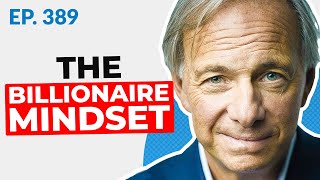
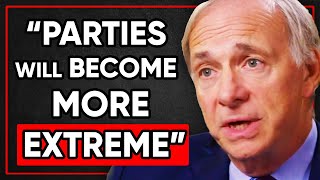
About this episodeRay Dalio identifies the current AI investment climate as the biggest bubble in American history, driven by ex…AI summary
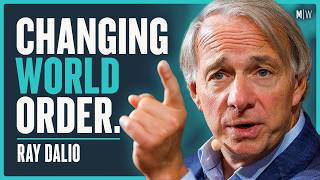
Ray Dalio identifies the current AI investment climate as the biggest bubble in American history, driven by excessive leverage and disconnect between price and value. He argues this bubble is part of a larger 80-year 'big cycle' characterized by high debt, wealth inequality, and geopolitical conflict between the US and China, leading to inevitable economic downturns and political instability.
Key takeaways 6
AI Bubble Mechanics: The bubble is fueled by leverage (borrowing against asset value) and the issuance of new stock. When interest rates rise or external shocks occur, investors must sell assets to pay debts, causing a cascade where falling prices reduce collateral value, forcing more selling.
The 'Big Cycle' Framework: Economic history follows an ~80-year cycle involving the rise and fall of world powers. Current indicators (high debt, wealth gaps, internal political conflict, and geopolitical rivalry with China) suggest the US and UK are in the late-stage decline phase of this cycle.
AI's Impact on Labor: AI is replacing physical tasks (like tractors replaced oxen) and is now moving to replace cognitive tasks. This shifts revenue share from workers to capitalists, exacerbating wealth inequality. The 'new jobs' narrative is often pushed by those benefiting from the technology.
Geopolitical Shift: The US is losing its dominant global power status relative to China. The US lacks the political will to sustain long-term military engagements (e.g., Iran, Asia), leading to a shift toward regional power blocs rather than a single global superpower.
UK as a Cautionary Tale: The UK exemplifies the late-cycle problem with high indebtedness, low productivity, and political instability (six prime ministers in seven years), making it a risky environment for business despite pockets of innovation.
Wealth Tax Mechanics: Implementing wealth taxes forces the sale of assets, which can prick bubbles. Furthermore, taxing wealth reduces capital available for productive investment, potentially harming long-term economic productivity.
Notable quotes 5AI-generated: wording and quote attribution may be wrong. Use the play link to verify.
“This is I think the biggest investment bubble in American history.”
▶ 3:31Dalio's assessment of the current AI market conditions.
“It is the those who... are also most adaptable... It is not the most intelligent people... that are the most successful.”
▶ 51:38Advice on career strategy, emphasizing adaptability over raw intelligence or hard work in a rapidly changing AI world.
“You can't spend wealth. You have to sell the wealth to get money because you can only spend money.”
▶ 5:07Explaining the mechanical difference between paper wealth (stock value) and liquid cash, and how this distinction drives bubble bursts.
“The strength of each country will be how they take care of themselves... how they educate their population... those will determine the relative powers of those countries.”
▶ 1:18:20Dalio's view on what determines national power in the current geopolitical cycle.
“A smart rabbit has three holes.”
▶ 1:10:08Dalio's advice for entrepreneurs to not rely on a single geographic location or market due to increasing global instability.
Chapters & Sections (36)▼
0:00AI Bubble Mechanics and Economic Collapsechapter1
2:14AI Bubble Mechanics and Historical Parallels
7:02AI Bubbles, Debt Cycles, and Political Conflictchapter1
9:12Stock Valuation, Debt Cycles, and Political Conflict
12:27Identifying and Preparing for Economic Bubbleschapter2
14:20Signs of Market Bubbles and AI Strategy
16:20Inflation Risk of Holding Cash
20:24Asset Diversification and Career Strategychapter1
24:03AI Impact on Income and Skill Valuation
26:55Bitcoin, Gold, and AI Impactchapter1
29:38Bitcoin Privacy, Gold Safety, and AI Job Disruption
32:33AI Disruption and Economic Inequalitychapter1
34:58AI Disruption and Unemployment Dynamics
38:25Economic Cycles and Wealth Gapschapter2
40:04Short-Term Debt Cycle Mechanics
41:47Capitalism, Wealth Gaps, and Historical Cycles
44:03Wealth Gaps and AI Impact on Human Valuechapter2
46:39Sponsor Segments: Whisper Flow and Ketones
48:43Aligning Passion, Nature, and Financial Security
51:09Navigating Career Uncertainty and AI Adaptabilitychapter2
52:50Maximizing Usefulness Through AI and Self-Knowledge
55:12Wealth Inequality and Systemic Failure
56:57Productivity, Wealth Taxes, and Government Efficiencychapter1
1:00:04Productivity vs Consumption and Business Efficiency
1:02:59UK Debt Cycle and Bipartisan Solutionschapter1
1:07:07Bipartisan Commission for Economic Reform
1:08:49Global Business Strategy and Wealth Tax Debatechapter1
1:11:26Wealth Tax Debate and Implementation Challenges
1:13:57Global Cycles and US-China Relationschapter3
1:15:51Resolving Disagreements and Power Dynamics
1:17:39Domestic Strength Determines Global Power
1:19:26US-Iran War and Global Conflict
1:21:19US Power Erosion and Global Shiftschapter3
1:24:36Challenges of Military Occupation and Control
 2h 48m⏭ 3
 1h 20m⏭ 3
 2h 11m⏭ 4
 2h 22m⏭ 4
 2h 31m⏭ 3
 2h 28m⏭ 2
 2h 11m⏭ 4
 1h 5m⏭ 3
 2h 1m⏭ 3
 1h 49m⏭ 2
 1h 52m⏭ 2
 3h 34m⏭ 2
 1h 37m
 1h 24m
 1h 22m
 1h 26m⏭ 4
 29m
29m 3h 9m
3h 9m 1h 5m
1h 5m 1h 0m⏭ 1
 2h 15m
 2h 34m⏭ 2
 2h 23m⏭ 4
 1h 8m
1h 8m 19m⏭ 1
 23m
23m 56m
56m 1h 0m⏭ 1
 33m
33m 46m
46m 3h 54m⏭ 7
 3h 59m⏭ 5
 1h 13m
 54m⏭ 1
 54m⏭ 2
 58m⏭ 5
 25m
25m 45m⏭ 2
 1h 16m⏭ 2