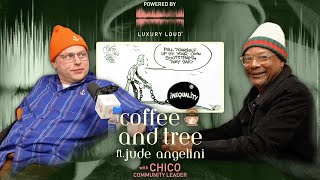
About this episodeChico, a retired Detroit high school teacher with 30 years of experience, discusses the systemic failures in e…AI summary
Chico, a retired Detroit high school teacher with 30 years of experience, discusses the systemic failures in education, the impact of generational trauma and poverty on students, and the complexities of race relations in America. He argues that public schools often act as babysitters due to parental abdication of responsibility, while administrators prioritize testing over genuine education. The conversation highlights the emotional toll of losing students to violence and homelessness, and Chico proposes a return to foundational liberal arts education and honest historical teaching to empower marginalized communities.
Key takeaways 6
Parental Abdication: Public schools entered the role of primary educator in the late 1800s/early 1900s, causing parents to step back; without parental involvement in education, the system is fundamentally broken.
Teacher Dedication vs. Systemic Neglect: 95% of teachers are deeply dedicated, often spending their own money to feed and clothe students, but are hindered by administrators focused on test scores and per-pupil funding rather than student development.
Generational Trauma: Many Detroit students are third-generation victims of crack cocaine addiction and systemic poverty, leading to behavioral issues, low literacy, and a lack of foundational discipline that teachers must navigate.
Educational Reform Proposal: Chico advocates for a return to the 'OGs' liberal arts (arithmetic, geometry, music, astronomy, logic, rhetoric, grammar) and teaching US history truthfully, including the realities of slavery and industrialization, rather than using textbooks biased toward white culture.
Language and Cultural Relevance: In diverse areas like Detroit, Spanish should be a core second language due to the large Latin population, and history must be taught in a way that resonates with all cultural backgrounds rather than alienating them.
Systemic Bias in History: The discussion challenges standard narratives about slavery and the Civil War, arguing that chattel slavery was distinct in its brutality and that the Civil War was primarily about preserving the Union and industrial lifestyle rather than just abolition.
Notable quotes 5AI-generated: wording and quote attribution may be wrong. Use the play link to verify.
“It's not the state's job to educate your child it's your job without that without that shi once that shift happened it was done”
▶ 3:11Chico explains how the historical shift of parents relying on public schools for education has led to a breakdown in family responsibility for child-rearing.
“I think they're more concerned with uh passing tests and and that's what it seems like to me yeah and keeping keeping kids in so they get paid per head”
▶ 5:32Chico critiques school administrators for prioritizing financial metrics and test scores over the actual educational needs of students.
“I would say this man if it wasn't for the the pandemic I I would probably still be teaching because I did love my job I I came back to Detroit uh once I graduated from Howard University I came back here for this for this specific reason that is to reach my community”
▶ 10:28Chico shares his personal motivation for teaching in Detroit and his emotional connection to his students.
“I would try to use some some of the more I guess brighter kids or something like that and more well- behaved kids to help out I would give them certain position so to speak in class as my assistant”
▶ 23:26Chico outlines his hypothetical 'magic wand' solution for classroom management, suggesting peer mentoring to help struggling students.
“The books that they printed is printed for basically white culture yeah okay and you trying to teach a black kid or or a Puerto Rican kid uh Dominican kid about some [ __ ] about this they all [ __ ] up because their whole their whole way of of learning was on some white [ __ ] that was put in this book”
▶ 24:38Chico argues that current educational materials are culturally biased and fail to resonate with or accurately represent minority students.
Chapters & Sections (63)▼
0:04Discussion on Education and Cultural Exchangechapter4
0:04Conversation about Chico and Education System
2:14Challenges in Detroit Public Education System
4:16Challenges of Motivating Students in Detroit
5:38Abuse of Power in Public Schools
7:42Challenges of Teaching Older Studentschapter2
7:42Challenges of Teaching Older Students
9:38Overcoming Challenges in a Broken Home
11:59Teacher's Emotional Connection with Studentschapter2
11:59Teacher's Emotional Connection with Students
14:19Teacher Burnout and Systemic Challenges
16:47Lost Students to Gun Violence and Homelessnesschapter4
16:47Lost Students to Gun Violence and Homelessness
 1h 30m
 1h 20m
 46m
46m 1h 12m
 1h 37m⏭ 1
 50m
50m 57m
57m 54m
54m 45m
45m 50m
50m 58m
58m 48m
48m 1h 0m⏭ 2
 1h 22m
 3h 2m
3h 2m 1h 29m
 2h 50m
 2h 26m⏭ 1
 22m⏭ 1
 1h 39m
 1h 30m⏭ 3
 1h 47m⏭ 1
 1h 25m⏭ 2
 4h 2m
4h 2m 1h 0m⏭ 1
 33m
33m 3h 54m⏭ 7
 54m⏭ 1
 3h 59m⏭ 5
 54m⏭ 2
 46m
46m 6h 26m
 1h 16m⏭ 2
 9h 11m
 1h 13m
 1h 26m