About this episodeGeorge Clinton discusses his new book and album, reflecting on his career as a pioneer of funk music and its i…AI summary
George Clinton discusses his new book and album, reflecting on his career as a pioneer of funk music and its influence on hip-hop. He details his ongoing legal battle to reclaim copyright ownership of his master recordings from former lawyers and record labels, highlighting the systemic exploitation of artists. Clinton also shares insights on musical innovation, collaboration, and the importance of adapting to new media like YouTube to reach modern audiences.
Key takeaways 5
Musical Evolution and Sampling: Clinton explains that funk is the DNA of hip-hop, noting that James Brown's music was sampled extensively because it contained multiple distinct rhythmic elements ('ten times in other words') that could be chopped and looped. He emphasizes that artists like Public Enemy and Eminem create 'organized noise' by arranging samples into cohesive tracks rather than just looping.
Copyright Advocacy: A major theme is the fight for artists' rights under the 1978 Copyright Act, which allows creators to recapture their works after 35 years. Clinton reveals he is taking his case to the Supreme Court to reclaim 'One Nation Under a Groove' and 'Knee Deep' from lawyers who allegedly stole them, describing the industry as an 'underworld type stuff' involving crime and fraud.
The Role of Theatrics in Music: Clinton attributes his success to understanding 'hype' and theatricality, citing his collaboration with promoter Neil Bogart and the 'Mothership' stage show. He notes that this approach allowed him to stand out from the Motown model and create a unique brand that blended rock, disco, and psychedelia.
Collaboration and Managing 'Crazy': Clinton shares that he learned early on that 'crazy is a prerequisite' for music but must be controlled. He describes his role as a mediator who helps conflicting band members (like Bootsy Collins and Junie Pope) work together by focusing them on their musical output rather than personal disputes.
Adapting to New Media: Recognizing that traditional radio is now controlled by corporations, Clinton identifies YouTube as the 'freshest thing' for discovery. He released 33 new songs connected to his book to bypass traditional gatekeepers and ensure his music is heard by new generations.
Notable quotes 5AI-generated: wording and quote attribution may be wrong. Use the play link to verify.
“If you remember the 60s you weren't there right you just got to dig around a little bit”
▶ 1:07Clinton reflects on how writing his book forced him to recall forgotten memories from his early career.
“They arranged what we call noise they say bring on the noise they intended to be noise but it was organized noise”
▶ 5:24Clinton praises Public Enemy for their ability to arrange samples into complex, structured tracks rather than simple loops.
“Crazy is a prerequisite music and rock really crazy you need to be crazy but one thing you can design your crazy right just be crazy but make sure you're in charge of it”
▶ 32:58Clinton explains his philosophy on creativity and mental state, emphasizing control over chaos in the artistic process.
“I'm on my way to Supreme Court trying to get one nation in need deep which I call the holy grail of the phone back from my old lawyer who's trying to take it on behalf of all the record companies”
▶ 24:00Clinton details his current legal battle to reclaim ownership of his most famous songs from former legal representation.
“You can't get too close to the phone without getting to have it and you get a habit you have to have it sure you know and that's what with the record companies and the people that's deal it they have to have it so they steal it from us”
▶ 21:55Clinton uses a metaphor for addiction to explain how record labels exploit artists' need for distribution and promotion.
Chapters & Sections (45)▼
0:07The Power of Music to Inspire Self-Reflectionchapter3
0:07Legacy and Icon Status in Music Industry
2:30Artistic Expression through Unconventional Communication Methods
4:06Art of Sampling and Music Composition
5:42The Importance of Musical Innovation and Evolutionchapter3
5:42Appreciation for Artistic Innovation and Originality
7:25The Evolution of Hip-Hop Sampling Techniques
8:49Concerts and Live Music Events
10:12Defining and Experiencing Funk Musicchapter2
10:12Defining and Experiencing Funk Music
13:20Adapting to Diverse Fan Expectations and Environments
15:37Choosing Representative Music and Personal Significancechapter3
15:37Choosing Representative Music and Personal Significance
17:39The Evolution of Disco and Music Genres
19:42Evolution of Hip-Hop Music and Generational Differences
21:05Music Ownership and Copyright Issueschapter2
21:05Music Ownership and Copyright Issues Discussed
22:57Music Industry Corruption and Copyright Infringement
25:25Music Industry Corruption and Sample Usagechapter3
25:25Music Industry Corruption and Sample Usage
27:33The Evolution of Motown and Funk Music
30:24The Value of Sampling in Music Production
31:53The Evolution of Music and Attention Spanchapter2
31:53The Evolution of Music and Attention Span
34:21Effective Communication and Conflict Resolution Strategies
36:37Creative Process and Collaboration in Music Productionchapter2
36:37Creative Process and Collaboration in Music Production
39:24Creative Process and Musical Experimentation
41:31Challenges of Getting Music Heard in Modern Erachapter3
41:31Challenges of Getting Music Heard in Modern Era
43:55The Changing Music Industry and Radio Formats
45:19Navigating Complex Political Knowledge in Public Discourse
47:15Influence of Avant-Garde and Experimental Musicchapter3
47:15Frank Zappa's Music and Artistic Influence
49:42The Art of Music Collaboration and Friendship
51:04Artist Influence and Originality in Music
52:44Censorship and Free Speech in Mediachapter4
52:44Censorship and Free Speech in Media
54:00Songwriting Process and Collaboration Techniques
55:24Music Coming Back to Artists Unexpectedly
56:49Collaboration with P-Funk Catalog Artists
58:26Fashion and Music Influences of the 1960schapter3
58:26Music Influences and Fashion Trends
1:00:30DC Go-Go Music Scene and Local Talent
1:02:36Meeting Bootsy Collins and Early Funk Music Influences
 1h 23m
 1h 9m
1h 9m 23m
23m 1h 9m
1h 9m 1h 7m
1h 7m 1h 16m
 1h 10m
 1h 2m
1h 2m 1h 28m
 1h 1m
1h 1m 1h 14m
 1h 30m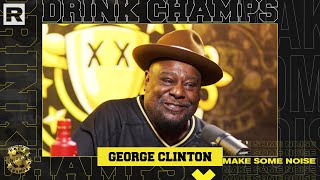
 2h 30m⏭ 1
 1h 32m
 1h 42m
 1h 49m⏭ 2
 1h 7m
1h 7m 1h 6m
1h 6m 1h 31m
 50m
50m 4h 49m
 1h 5m⏭ 1
 1h 9m
1h 9m 2h 41m⏭ 1
 1h 0m⏭ 1
 33m
33m 3h 59m⏭ 5
 46m
46m 3h 54m⏭ 7
 54m⏭ 1
 1h 13m
 54m⏭ 2
 9h 11m
 1h 26m
 45m⏭ 2
 58m⏭ 5