About this episodeLily Reinhart discusses the intense emotional and physical demands of acting, particularly her role in the non…AI summary
Lily Reinhart discusses the intense emotional and physical demands of acting, particularly her role in the nonlinear series 'Helen Harper,' revealing how she navigates dissociation, intimacy coordination, and the psychological aftermath of heavy scenes. She also opens up about her personal struggles with OCD and anxiety, explaining how horror movies and heavy metal music serve as coping mechanisms for her brain, while detailing the business challenges of selling an indie project in a risk-averse industry.
Key takeaways 5
Acting Emotional Aftermath: Physical intimacy scenes create a unique 'come down' where the body feels used or disconnected from the partner, requiring conscious reassurance that the experience was professional and safe, distinct from the relief felt after crying scenes.
Nonlinear Acting Strategy: For 'Helen Harper,' Reinhart treated her 9-year-old and present-day selves as two different people; the younger version was in a 'survival mode' dissociative state with no room for emotion, while the older version was emotionally available but codependent.
Industry Business Reality: Independent films are increasingly difficult to sell because streamers prioritize 'binge-able' content and established IP over deep, emotional storytelling due to fear of financial risk post-strike.
Coping Mechanisms for Mental Health: Reinhart uses horror movies and heavy metal music (like Slipknot) not for enjoyment, but as a form of stimulation that forces her brain to focus entirely on the external input, providing a necessary escape from internal anxiety and rumination.
Authenticity in Performance: Reinhart relies on her own lived pain and real-life emotional triggers to cry authentically on camera, avoiding artificial methods because she finds them less real and more performative.
Notable quotes 4AI-generated: wording and quote attribution may be wrong. Use the play link to verify.
“I find that weirdly enough for like an intimate sexual scene. It takes a little bit longer for my body to kind of calibrate... I kind of equated a sex scene to a one night stand because it really feels like you know you're putting your bodies together for however long and then you go home away from them you there's no like emotional connection.”
▶ 12:55Reinhart explains the psychological disconnect and physical calibration required after filming intimate scenes with co-stars who are not her partners.
“I think the idea with Harper is if she cracks at all she will she will break and not come back together... if you have if you lose your mother and you're forced to take care of your family because your father suddenly can't take care of you, you kind of just go into survival mode at that point.”
▶ 10:50Describing the psychological state of her character's younger self in 'Helen Harper,' who suppresses all emotion to survive.
“It's more stimulating for me than anything. Like it's captures my attention so well that I don't have to think about anything else. And that was very much the case for me when I was at sort of the depths of my depression... I was just kind of falling into the traps of that genre [horror], but I love the genre.”
▶ 34:47Explaining why she gravitates toward horror movies and heavy metal music as a way to quiet her anxious mind by forcing total focus on external stimuli.
“I don't think it's always been this way. I mean feels like it's crazy hard. It feels like right now in particular it's the hardest. Why do you think that is? Because right now it's a world of content and not necessarily film and television. It feels like content and something to just fill a slot.”
▶ 1:17:07Reinhart's critique of the current entertainment industry's preference for disposable content over meaningful storytelling.
Chapters & Sections (70)▼
0:00Childhood Movie Experiences and Influenceschapter5
0:00Childhood Memories of Watching Movies
1:48Appreciation for Period Dramas and Costume Design
3:12Origin of Collaboration and Project Selection
4:26Character Development and Actor Self-Discovery
6:00Crafting Character Development and Backstory
8:09Acting on a Complex Script Structurechapter2
8:09Processing Complex Script Structure and Character Development
10:04Childhood Trauma and Emotional Suppression
12:36Physical Intimacy in Acting: Emotional Aftermathchapter2
12:36Physical Intimacy in Acting and Emotional Aftermath
14:58Navigating Vulnerability in Intimate Scenes
16:43Acting Emotional Scenes and Comedown Experienceschapter2
16:43Acting Emotional Scenes and Post-Shoot Recovery
18:43Acting Techniques for Emotional Scenes
20:49Acting Emotionally: Authenticity and Vulnerabilitychapter3
20:49Acting Authenticity and Emotional Expression
22:20Benefits of Crying as a Release Mechanism
23:56Coming of Age and Rapid Maturation
25:40Struggling with Time Perception and Presencechapter3
25:40Struggling with Time Perception and Presence
27:29The Futility of Constantly Counting Down to Happiness
28:58Living with Mental Health Conditions
30:20Struggling with Mental Health and Finding Joychapter3
30:20Struggling with Mental Health and Finding Joy
32:04Finding Comfort in Creative Escapes and Companionship
33:28The Psychology of Horror Movie Consumption
35:29The Art of Special Effects Makeupchapter3
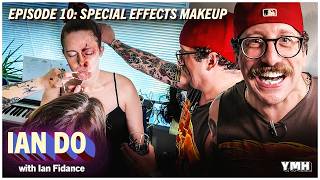
35:29The Art of Special Effects Makeup
37:12Creative Expression through Special Effects Makeup
38:44The Therapeutic Power of Aggressive Music
40:34Desire for Autonomy and Control in Lifechapter2
40:34Desire for Personal Autonomy and Control
43:02Living with Acne and its Emotional Impact
45:12The Vulnerability of Public Self-Presentationchapter2
45:12Vulnerability in Public Life and Social Media
47:22Struggling with Mental Health and Anxiety
49:36Physicality in Portraying Traumatic Childhood Experienceschapter2
49:36Physicality in Portraying Traumatic Childhood Experiences
51:49Physicality and Space in Acting Performances
53:59The Significance of Cereal in Storytellingchapter3
53:59The Significance of Cereal in Storytelling
55:28Separation from Characters after Long-Term Roles
56:43Portraying Complexity in Female Characters
58:53Actors' Emotional Connection to Characters and Roleschapter3
58:53Blurring Lines Between Character and Real Life
1:00:34Relationship Between Music and Film Performances
1:01:49Using Music in Emotional Storytelling
1:03:24Film Scores and Music in Storytellingchapter2
1:03:24Film Scores and Music in Storytelling
1:06:07Character Development and Actor's Preparation Techniques
1:07:38Importance of Personal Makeup Application in Actingchapter3
1:07:38Importance of Personal Space in Makeup Application
1:09:36Tattoos in Film and Makeup Considerations
1:10:57Makeup Techniques for Covering Tattoos
1:12:26The Process of Wearing Prosthetics and Makeupchapter2
1:12:26Tattoo Application and Makeup Process Challenges
1:14:15Artist Interpretations and Public Reception
1:16:28Challenges in the Current Entertainment Industrychapter3
1:16:28Challenges in Getting Content Made in Modern Industry
1:17:43Challenges of Independent Film Distribution
1:19:38Challenges of Film Development and Production
1:20:54Film Industry Risk Aversion and Commercial Successchapter2
1:20:54Film Industry Risk Aversion and Commercial Success
1:22:36Balancing Artistic Ambitions and Business Decisions
1:25:12Premieres and Public Screenings: Nerve-Wracking Experienceschapter4
1:25:12Premieres and Public Screenings Anxiety
1:26:54The Importance of Watching Movies with an Audience
 1h 26m
 1h 10m
 1h 0m
1h 0m 1h 10m
 1h 35m
 1h 25m
 24m
24m 1h 41m
 38m
38m 1h 13m
 29m
29m 1h 13m
 1h 20m
 2h 35m⏭ 2
 32m
32m 40m
40m 2h 21m⏭ 3
 40m
40m 57m⏭ 3
 1h 11m
 1h 34m
 56m
56m 1h 14m⏭ 4
 21m
21m 33m
33m 1h 0m⏭ 1
 3h 54m⏭ 7
 46m
46m 6h 26m
 54m⏭ 1
 3h 59m⏭ 5
 9h 11m
 1h 16m⏭ 2
 11h 54m
 54m⏭ 2
 11h 54m⏭ 8