About this episodeNeil deGrasse Tyson and Chuck Nice explore diverse astrophysical concepts including the ubiquity of photons, t…AI summary
Neil deGrasse Tyson and Chuck Nice explore diverse astrophysical concepts including the ubiquity of photons, the thermodynamic impossibility of extracting energy from absolute zero, and the mechanics of galaxy virialization. The conversation also addresses practical applications of unlimited energy, the nature of gravity versus the graviton, and Tyson's personal history with telescopes, highlighting how curiosity and access to tools can spark scientific passion.
Key takeaways 5
Photons are present everywhere, including dark rooms, because all objects above absolute zero emit radiation; visible darkness is merely the absence of visible light, not all photons.
Absolute zero cannot be reached or exploited for infinite energy because quantum fluctuations (zero-point energy) prevent particles from becoming completely stationary, and extracting energy requires a lower energy state to transition into.
Galaxy clusters that are not 'virialized' have not yet reached a mature state where energy is evenly distributed among members, meaning galaxies there move too fast to be gravitationally bound in a stable spherical envelope.
Gravity may not have a carrier particle (graviton) because it is described by General Relativity as the curvature of spacetime rather than a force mediated by quantum exchange particles.
The mass of the observable universe can be estimated by multiplying the mass of the sun by the number of stars in the galaxy and the number of galaxies, revealing that dark matter accounts for roughly six times more gravitational effect than visible matter.
Notable quotes 4AI-generated: wording and quote attribution may be wrong. Use the play link to verify.
“I'm so fast. I turn off the lights and I'm in bed before the room get dark.”
▶ 0:12Muhammad Ali quote used to illustrate that light exits a room instantly when a source is removed, but darkness is not a substance that enters.
“The universe is just electrons looking for a place to rest.”
▶ 7:30A biologist's summary of universal processes, used to explain that all activity is driven by electrons seeking lower energy states.
“Matter tells space how to curve. Space tells matter how to move.”
▶ 31:33John Archibald Wheeler's famous summary of General Relativity, used to discuss the nature of gravity.
“It's not safe for anyone until everyone has tested it.”
▶ 39:54A saying in the scientific field regarding dark matter detection, emphasizing that rare phenomena require large sample sizes (the whole universe) to be confirmed.
Chapters & Sections (29)▼
0:00The Nature of Photons and Light in Darknesschapter4
1:58Zero Point Energy and Thermodynamics
4:10Heat Management in Spacecraft Design
5:38Quantum Phenomena in Low-Temperature Regimes
6:51Zero Point Energy and Quantum Fluctuations Explained
8:59The Nature of Light and Photons in the Universechapter1
10:22The Relationship Between Temperature and Light Emission
12:41Alien Encounters and Human Readinesschapter3
14:33Newton's Law of Cooling and Its Significance
15:53Temperature Equilibrium and Heat Transfer Principles
18:10Harnessing Zero Point Energy and Solar Power
19:39Potential Applications of Unlimited Energychapter1
21:32Galaxy Motions and the Shape of the Universe
23:51Galaxy Virialization and the Nature of Gravitychapter1
25:28The Nature of Gravity and Space-Time Curvature
28:07Maximizing Scientific Potential with Increased Fundingchapter1
30:54The Nature of Time and Its Relationship to Space
33:23Calculating the Weight of the Universechapter2
34:57Cosmic Scales: Zero Point Energy and Universe Weight
35:57Measuring Mass and Dark Matter in the Universe
37:38Dark Matter Detection and Gamma Ray Significancechapter1
39:20The Importance of Large Sample Sizes in Scientific Research
42:11First Encounters with the Night Skychapter1
44:05Observing the Moon's Phases and Universe
46:29Childhood Experience with Telescopes and Astronomychapter4
48:43Early Life Experiences with Amateur Astronomy
50:14Personal Astronomical Equipment and Nostalgia
 1h 45m⏭ 1
 1h 17m
 1h 14m⏭ 1
 1h 43m⏭ 1
 1h 0m⏭ 1
 26m
26m 56m
56m 53m
53m 1h 7m
1h 7m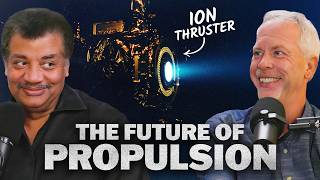 1h 6m
1h 6m 55m⏭ 1
 49m
49m 59m
59m 3h 40m⏭ 2
 58m
58m 2h 0m⏭ 2
 3h 10m
 2h 16m⏭ 2
 2h 25m
 3h 30m
 2h 19m
 1h 59m⏭ 2
 1h 11m
 1h 55m⏭ 2
 11h 23m⏭ 1
 33m
33m 3h 54m⏭ 7
 46m
46m 1h 0m⏭ 1
 48m⏭ 2
 1h 16m
 3h 59m⏭ 5
 1h 13m
 25m
25m 25m
25m 45m⏭ 2