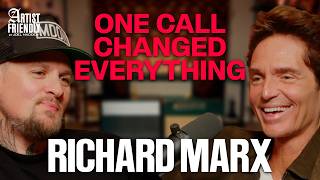
About this episodeRichard Marx discusses the organic evolution of his memoir 'Stories to Tell' from solo acoustic storytelling t…AI summary
Richard Marx discusses the organic evolution of his memoir 'Stories to Tell' from solo acoustic storytelling to a full narrative, highlighting the influence of his father's jingle-writing on his melodic craftsmanship. He shares pivotal career moments, including Lionel Richie's mentorship and the deceptive success of cynical hits like 'Don't Mean Nothing,' while contrasting the touring expectations of musicians versus comedians.
Key takeaways 6
Memoir Evolution: Marx's book began as a collection of funny anecdotes for solo acoustic shows but morphed into a memoir after securing a book deal, allowing him to balance self-deprecating humor with professional insights.
Songwriting Process: Marx's music typically comes first (melody/chords), with lyrics following later to avoid clichés; he records voice memos of melodies immediately to capture ideas before they fade.
The 'Really Okay' Trap: Both Marx and Oswalt identify the state of a song or joke being 'really okay' as more frustrating than failure, as it creates a false sense of progress that is hard to break through.
Touring Dynamics: Musicians are expected to play their new album hits, whereas comedians must perform entirely new material to avoid audience fatigue; Marx uses a 'broccoli and mac and cheese' approach, mixing new songs with familiar hits.
Lionel Richie's Mentorship: Richie provided Marx with access to his studio sessions as an informal masterclass, teaching him production and industry dynamics without formal obligation.
Political Stance: Marx frames his political views not as partisan (Democrat/Republican) but as a matter of basic decency and humanity, specifically opposing racism, bigotry, and sexism.
Notable quotes 5AI-generated: wording and quote attribution may be wrong. Use the play link to verify.
“You're now at a point where you're incapable of writing anything awful... you have a perspective now where anything that you're going to work on... is going to be something that you like in your head.”
▶ 25:02Marx's father explaining that experience prevents truly bad work, though it risks creating 'really okay' mediocrity.
“I call it vitamins. It's like a Z-pack for me... we get up on stage in front of people who paid to basically come and tell us that they love us.”
▶ 56:30Marx describing the energizing effect of live performance on his physical and mental well-being.
“If I lose fans over me railing against [racism, bigotry, sexism], don't let the door hit you in the ass by the way.”
▶ 1:05:37Marx's firm stance on prioritizing decency over fan retention regarding political/social issues.
“You don't have packages but you've got to have come on like that's how I try to do it... you have to have three bites of broccoli and then you can have the mac and cheese.”
▶ 52:16Marx's strategy for introducing new material to audiences by sandwiching it between familiar hits.
“It's not politics. It's decency. It's like do you want to be on the right side of humanity or do you want to be on the wrong side of humanity.”
▶ 1:05:08Marx distinguishing his moral compass from political party labels.
Chapters & Sections (49)▼
0:00Music Career Reflections and Memoir Writingchapter2
0:00Celebrity Memoirs and Music Industry Achievements
2:15Deciding to Write a Memoir
5:14Writing a Memoir vs. a Book of Storieschapter2
5:14Writing a Memoir vs. a Book of Stories
7:04Hair Care Routines in the Music Industry
9:26Influence of Classic Songcraft on Catchy Melodieschapter3
9:26Influence of Songcraft and Catchy Melodies
11:17Parental Influence on Musical Taste and Inspiration
12:50Childhood Memories and Influences on Career Choices
14:16Lionel Richie's Music Career and Philanthropychapter3
14:16Lionel Richie's Music Career and Songwriting Process
15:53Breakthrough in Music Industry through Mentorship
17:06Early Days of LA Music Scene in the 80s
18:44The Golden Age of Recording Studios in LAchapter4
18:44Recording Studio Experience in Los Angeles
20:14Loss of Creative Freedom in Modern Music Industry
21:57Importance of Collaboration and Idea Development
23:18Creative Block and Songwriting Frustration
24:37The Creative Process and Experience Over Timechapter2
24:37The Creative Process and Experience Over Time
27:12Authentic Storytelling and Humor in Memoirs
29:52Encountering Prince in the Recording Studiochapter3
29:52Recording Industry Etiquette and Celebrity Encounters
31:41Encountering a Celebrity in a Professional Setting
33:22Disconnect Between Pop Music and Darker Themes
34:54Collaboration and Early Songwriting Experienceschapter2
34:54Collaboration and Early Songwriting Experiences
37:00Songwriting Inspiration and Creative Process
39:14Author's Writing Influences and Creative Processchapter3
39:14Inspiration for Writing a Memoir
40:53Celebrating Underrated Songwriters and Their Impact
42:41Influential Books and Personal Growth Experiences
44:13Songwriting Inspiration and Creative Processchapter5
44:13Songwriting Inspiration and Creative Process
46:45The Unexpected Success of a Songwriting Experiment
48:18Touring Strategies for Musicians and Comedians
49:46Balancing New and Familiar Material in Performances
52:40Touring and Audience Expectations in Entertainment
54:46Author's Approach to Writing and Personal Lifechapter3
54:46Author's Approach to Writing and Personal Life
56:30The Physical Demands of Being a Musician
58:03Importance of Collaboration in Music Career
1:00:33Collaboration and Influences in Music Industrychapter2
1:00:33Collaboration and Influences in Music Industry
1:03:03The Intersection of Politics and Art
1:04:51Critique of Politicians and Societal Valueschapter2
1:04:51Defending Humanity in Politics
1:06:53Criticism of Politicians and Hollywood Elites
 1h 23m
 1h 9m
1h 9m 23m
23m 1h 9m
1h 9m 1h 7m
1h 7m 1h 16m
 1h 10m
 1h 2m
1h 2m 1h 28m
 1h 1m
1h 1m 1h 14m
 52m
52m 1h 37m
 1h 25m
 1h 40m
 1h 8m⏭ 2
 1h 7m
1h 7m 51m
51m 1h 44m⏭ 1
 1h 22m
 4h 31m⏭ 4
 29m
29m 2h 17m
 20h 40m⏭ 10
 2h 24m⏭ 2
 1h 23m
 1h 28m⏭ 2
 43m⏭ 1
 11h 23m⏭ 1
 1h 0m⏭ 1
 33m
33m 46m
46m 3h 54m⏭ 7
 3h 59m⏭ 5
 1h 13m
 54m⏭ 1
 25m
25m 45m⏭ 2
 1h 16m⏭ 2
 58m⏭ 5