About this episodeThe discussion details the extraordinary history of Colditz Castle (Oflag IV-C), a WWII prisoner-of-war camp w…AI summary
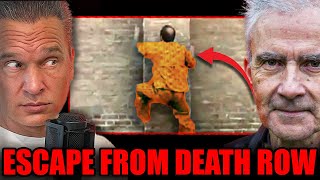
The discussion details the extraordinary history of Colditz Castle (Oflag IV-C), a WWII prisoner-of-war camp where Allied officers engaged in a relentless 'escape university' despite the facility's high security. The conversation highlights the ingenuity of escape methods, the complex social dynamics between nationalities and ranks, and the surprising civility that existed between guards and prisoners under the Geneva Convention.
Key takeaways 6
Colditz was structurally flawed for a prison, featuring 740 rooms, five sewage systems, and hidden tunnels, which prisoners exploited to create an 'escape university' where attempts occurred roughly every three days.
Escape attempts were highly sophisticated, including building a glider to catapult off the roof, digging a 150-meter tunnel with air conditioning and telephones, and smuggling in radios to listen to the BBC.
The camp was strictly class-stratified; officers had servants (other POWs) who were banned from escaping to prevent lethal reprisals if captured, creating a bizarre dynamic where officers could leave their servants behind.
Christopher Clayton Hutton, a British inventor and model for James Bond's Q, created specialized escape kits, including maps printed on mulberry leaf cotton that could be scrunched up and hidden in boot heels or buttons.
A secret radio was built by French prisoners in the attic using smuggled parts and household items, allowing them to know more about the war's progress than their German guards for over two years.
The German commandant, Reinhold Edgar, was not a Nazi but a former schoolteacher who maintained a code of honor, sometimes returning escaped prisoners' belongings or organizing cultural exchanges with British schools.
Notable quotes 5AI-generated: wording and quote attribution may be wrong. Use the play link to verify.
“It became almost an escape University everybody in it was competing with everybody else to get out of it”
▶ 0:00Describing how Colditz became a hub for competitive escape attempts among Allied officers.
“This wasn't about guns and bombs and bullets this was about imprisoned men trying to show that they were not going to be driven down by the experience of imprisonment”
▶ 0:39Explaining the psychological motivation behind the escapes at Colditz.
“The French managed to build a tunnel which was 150 M long... it even had its own sort of rustic air conditioning system made out of tin cans... they rigged up a telephone as a sort of early warning system”
▶ 14:57Detailing the engineering marvel of the French tunnel known as 'Le Metro'.
“They knew more about the progress of the war than their German guards”
▶ 0:32Highlighting the success of the secret BBC radio operation run by French prisoners.
“Only 16 people actually managed to get across the borders and back to their home country”
▶ 37:44Providing the stark reality that despite hundreds of attempts, successful escapes were rare.
Chapters & Sections (42)▼
0:00Escape from Colditz Castle During WWIIchapter2
0:00WWII Prisoners' Secret Radio in German Castle
1:52Historical Castle Description and Prison History
4:52Mass Escape Attempts at Concentration Campchapter3
4:52Mass Escape Attempts at German Prison Camp
6:47Career Criminals in Prison Create Chaos
8:01Escape Attempts at High Security Prison
9:48Daring Prison Escapes in World War Erachapter2
9:48Prison Escape Attempts in World War II
12:18International Competition Among Prisoners at CIT
14:32Escape Attempts at Alcatraz Prisonchapter3
14:32Escape Attempts at Alcatraz Prison
16:19British and French Prisoner of War Camps
18:04Polish Prisoners of War Brew Beer
19:33Distinguishing Between Nazi and German Soldierschapter3
19:33Distinguishing Between Nazi and German Soldiers
22:18Mutual Respect in War Camps
23:40Red Cross Parcels in Prison Camps
24:54Class Stratification in Prison Campschapter2
24:54British Class Stratification in Prison Camps
27:10WWII Prison Escape and German Honor Code
29:21Coincidence of Shared Educational Experienceschapter3
29:21German Guard's British Connection and Exchange Program
30:47Nostalgic Reflections on British German Exchanges
 1h 28m
 1h 37m
 1h 30m
 1h 22m⏭ 1
 1h 24m
 1h 22m
 1h 6m
1h 6m 1h 18m⏭ 1
 1h 12m⏭ 1
 1h 4m⏭ 4
 1h 20m
 1h 11m
 19m
19m 1h 46m⏭ 3
 2h 51m⏭ 2
 5h 34m⏭ 5
 5h 15m
 1h 35m⏭ 1
 1h 8m
1h 8m 2h 15m
 1h 10m
 2h 52m⏭ 2
 1h 51m
 1h 8m⏭ 1
 1h 43m⏭ 4
 11h 54m
 11h 54m⏭ 8
 1h 0m⏭ 1
 33m
33m 6h 26m
 9h 11m
 3h 54m⏭ 7
 3h 59m⏭ 5
 46m
46m 54m⏭ 1
 54m⏭ 2