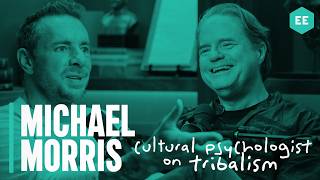
About this episodeThe video argues that tribalism is primarily an 'us' instinct for collaboration and solidarity rather than a '…AI summary
The video argues that tribalism is primarily an 'us' instinct for collaboration and solidarity rather than a 'them' instinct for hatred, driven by three evolutionary mechanisms: the peer instinct (conformity), hero instinct (status-seeking through sacrifice), and ancestor instinct (tradition preservation). Modern polarization is exacerbated by residential sorting and fragmented media that create echo chambers, but solutions exist through shared non-political activities and leveraging historical traditions to foster unity.
Key takeaways 7
Tribalism is 95% about in-group solidarity ('us') rather than out-group hostility ('them'), as early humans had low contact with other tribes and evolved to collaborate within their own groups.
The 'Peer Instinct' drives conformity; it is triggered by the audience and context (code-switching), allowing for seamless collaboration but also limiting independent thinking.
The 'Hero Instinct' motivates individuals to take risks and sacrifice for the group to gain status, often by emulating cultural heroes or engaging in shared suffering (e.g., military bonding rituals).
The 'Ancestor Instinct' preserves traditions and myths that may seem superfluous but serve adaptive functions, such as the Aboriginal flood myths that accurately predicted tsunami behaviors based on geological events 7,000 years ago.
Modern political polarization stems from residential sorting (liberals moving to coasts/college towns, conservatives to heartlands) and media fragmentation (cable news, social media), which creates ideologically inbred communities.
Threats (existential or collective) trigger the ancestor instinct, causing people to cling rigidly to traditions and become less open-minded, which can be dysfunctional in times requiring adaptation.
Cults exploit tribal instincts by isolating recruits from their existing networks, creating a monopoly on status and using daily ceremonies to dampen individual self-consciousness.
Notable quotes 5AI-generated: wording and quote attribution may be wrong. Use the play link to verify.
“95% of our tribal wiring is about us not about them... our evolutionary forbearers did not have that much contact with other tribes... what paid off evolutionarily was having traits and capacities that enabled you to collaborate effectively with the fellow members of your tribe.”
▶ 8:05Guest explains that tribal instincts are adaptations for collaboration, not inherent hatred of outsiders.
“The costs of virtue signaling have gone way down and the rewards have gone way up... compared to the old days where you had to actually go to a political rally and shout in someone's face and maybe get shoved.”
▶ 15:58Guest discusses how technology has lowered the barrier for expressing political views, reinforcing echo chambers.
“Babies are not racist... they don't judge you based on your race but they already judge based on your accent... they're already watching what you eat and your accent.”
▶ 28:25Guest cites studies showing infants prefer people who speak their dialect and eat the same food, highlighting language as a primary tribal marker over race.
“The Mystic chords of memory will yet swell the chorus of the Union... the best resource we have for healing the rift is our common Heritage our common history our common ancestors.”
▶ 1:31:44Guest references Abraham Lincoln's first inaugural address, suggesting that shared history and tradition can bridge political divides.
“If there was no reward for working that hard beyond the caloric input... why are you doing that? Is it just because you want to bestow your caloric excess surplus onto the group or is it because you think you're going to get laid or is it because you think that you're going to be your children are going to be better protected?”
▶ 39:45Guest questions the purely altruistic view of hunter-gatherer societies, arguing that status and reproductive benefits drive pro-social behavior.
Chapters & Sections (69)▼
0:00Evolution of Tribalism in Human Societychapter3
0:00Evolution of Tribalism in Human Society
1:43Tribalism and Human Evolutionary Instincts
4:04Human Nature and Tribal Instincts
5:17The Dangers of Dramatic Prophecies and Clickbaitchapter2
5:17The Dangers of Dramatic Prophecies and Clickbait
8:05Human Evolution and Tribal Instincts
9:35Human Instincts and Group Identitychapter2
9:35Human Instincts and Group Identity
11:51Causes of Modern Tribalism and Identity
13:57Impact of Technology on Polarized Communitieschapter3
13:57Impact of Media Fragmentation on Society
16:04Social Media's Impact on Political Beliefs
17:23Conformist Instincts Drive Political Tribalism
19:48Addressing Polarization and Tribalismchapter3
19:48Tribalism and Polarization in Modern Society
21:13Social Movements and Group Dynamics
22:24Ingroup vs Outgroup Messaging in Politics
24:34Tribal Instincts and Group Identity Formationchapter3
24:34Human Behavior and Tribal Instincts
26:18Language and Racial Bias Discussion
28:52The Power of Conformity and Collective Thinking
30:38Peer Instinct and Conformity in Team Dynamicschapter4
30:38Peer Instinct and Conformity in Decision Making
32:32Collaborative Creativity and Human Evolution
33:45Evolution of Human Behavior and Motivation
35:21The Power of Status Seeking in Innovation
36:42Anthropologists' Misconceptions about Hunter Gatherer Societieschapter2
36:42Anthropological Misconceptions about Hunter Gatherer Societies
38:41Hunter Gatherer Social Status and Incentives
41:24Human Motivation and Social Obligationchapter3
41:24Human Motivation and Social Obligation
44:14Social Status and Reward in Group Structure
45:32Social Capital and Heroic Action Scripts
47:27The Psychology of Courage and Braverychapter3
47:27The Psychology of Courage and Bravery
48:55Freedom Summer Voter Registration Program
50:24Social Network Influence on Commitment Decisions
53:25Terrorists Not Weird Deviants, But Popular Peoplechapter2
53:25Terrorists Not Weird Deviant Loners
55:33Benefits of Shared Suffering and Bonding
57:38Human Ancestor Instinct and Cultural Traditionchapter5
57:38Human Ancestor Instinct and Cultural Tradition
1:00:29Adaptive Learning through Reverence and Tradition
1:02:03Cultural Adaptations in Tsunami Warning Systems
1:03:30Ancient Flood Myths and Geological Evidence
1:04:49Comparing Myth and Scientific Explanation
1:07:17Challenging Traditional Notions of Human Naturechapter3
1:07:17Challenging Traditional Notions of Human Nature
1:09:07Cultural Identity and Tribal Motivation
1:10:52Cultural Identity and Speech Habits
1:12:15Cultural Symbols Trigger Hero Instincts and Unitychapter2
1:12:15Cultural Symbols Trigger Hero Instincts
1:14:04Cult Recruitment Techniques and Synchronous Behavior
1:16:48Cult Recruitment Techniques and Mind Controlchapter5
1:16:48Cult Recruitment Techniques and Retreatment
1:18:18Cult Mind Control and Social Influence
1:20:02Fear of Death and Collective Threat
1:21:33Polarization and Tribalism in Modern Society
1:23:00Columbia University Student Protests and Polarization
1:25:19Critique of Hate and Hostility in Politicschapter3
1:25:19Critique of Us vs Them Discourse
1:26:54Breaking Out of Partisan Conformity Loops
1:28:18Building Bridges Across Political Divides
1:30:00Overcoming Political Division through Shared Heritagechapter4
1:30:00Conversation vs Politics in Social Interactions
1:31:52Healing the Rift through Common Heritage
1:33:22National Tradition and Inclusive Populism
1:34:39Tribal Psychology and Human Accomplishments
 2h 15m⏭ 7
 2h 38m
 1h 12m
 1h 8m⏭ 2
 1h 37m
 2h 32m
 1h 5m
1h 5m 1h 23m
 1h 53m⏭ 5
 58m⏭ 2
 1h 53m⏭ 4
 1h 28m
 2h 19m
 1h 43m⏭ 1
 1h 0m⏭ 4
 2h 1m⏭ 4
 46m
46m 30m
30m 2h 14m⏭ 7
 2h 53m⏭ 2
 1h 2m⏭ 2
 2h 48m⏭ 3
 2h 6m⏭ 6
 2h 18m
 33m
33m 1h 0m⏭ 1
 11h 54m
 11h 54m⏭ 8
 9h 11m
 6h 26m
 46m
46m 3h 54m⏭ 7
 54m⏭ 1
 3h 59m⏭ 5
 54m⏭ 2
 1h 16m⏭ 2