About this episodeThe US Treasury, led by Scott Bessent, is shifting strategy from military strikes to comprehensive economic sa…AI summary
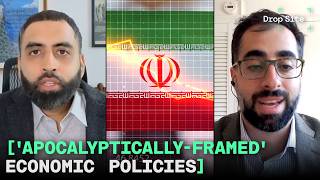
The US Treasury, led by Scott Bessent, is shifting strategy from military strikes to comprehensive economic sanctions against Iran, targeting the entire oil supply chain and financial intermediaries to cut off revenue. While past sanctions successfully reduced Iranian oil exports by 60% through international cooperation, current effectiveness is debated due to China's role as the primary buyer and Iran's regime indifference to civilian suffering.
Key takeaways 6
Strategic Shift: The US is moving from kinetic military strikes to 'economic suffocation,' with Secretary Rubio stating, 'we are moving away from strikes to sanctions.'
Targeting Mechanism: The Treasury has mapped Iran's network of nodes, facilitators, and shell companies used to evade sanctions, aiming to shut down wire transfers and access to the US dollar system rather than just freezing assets.
Historical Precedent: Previous sanctions campaigns resulted in a 40% decline in Iranian crude exports (from 2.5m to 1.5m barrels/day) and a 60% drop by 2014, costing Iran an estimated $160 billion in lost revenue.
China Dependency: 90% of Iran's crude goes to China; however, China only sources about 8% of its total oil imports from Iran, making it potentially replaceable, though Iran relies on China for fertilizer and food security.
Regime Psychology: The sanctions may fail if the Iranian leadership does not care about civilian suffering, as they have historically been willing to let citizens suffer rather than concede.
Enforcement Challenge: The success hinges on closing 'free trade zones' and clearing houses (like those in Montreal) where money laundering occurs, similar to the HSBC case where banks were targeted for facilitating cartel money movement.
Notable quotes 4AI-generated: wording and quote attribution may be wrong. Use the play link to verify.
“Imagine let's just say you were once married and you have a house and this house later on sells for like I don't know 5 million bucks or something like $6 million and that money was yours... And then you you have somebody like an ex or a father or a you know wife or somebody that's just suffocating all your finances that you can't do anything.”
▶ 0:06Host uses this analogy to describe the severity of the new US sanctions on Iran, comparing it to garnished wages for unpaid child support.
“We've done this before. Treasury contacted more than 120 financial institutions and regulators across 60 countries. Treasury says the overwhelming majority changed their practices rather than risk US financial access. The result were dramatic. Iranian crude oil exports fell from 2.5 million barrels a day to 1 and a.5 million barrels a day. That's a 40% decline. By 2014, it fell to 1.1 million barrels a day, 60%.”
▶ 20:09Host cites historical data to argue that previous sanctions campaigns were effective in reducing Iranian oil revenue.
“The only way Brian and this is not what we want. The only way to win in Iran is literally boots on and then blow them all up. There's no way.”
▶ 21:46Guest expresses deep skepticism that economic sanctions will force political change in Iran, suggesting military intervention is the only way to truly 'win'.
“If they truly close and are aiming at the Iranian bank pat, if they truly take them offline, then there's something. But until then, it's going to be treated as a tax by the financial markets.”
▶ 19:14Guest explains that unless the US actually shuts down specific banking channels (like HSBC was targeted), markets will view these threats merely as a cost of doing business.
Chapters & Sections (13)▼
0:00US Economic Warfare Against Iranchapter3
2:57US Threats Against Iran Allies
4:21China's Energy Dependency and Iran Strategy
5:42Treasury Mapping Iran Oil Networks
7:20US Iran Sanctions Enforcement and Effectivenesschapter1
9:19Sanctions Enforcement and Financial Intermediaries
 47m
47m ⏭ 1
⏭ 1 21m⏭ 1
 25m⏭ 1
 20m
20m 4h 5m⏭ 1
 1h 51m
 3h 2m⏭ 2
 3h 5m⏭ 1
 11h 54m
 4h 16m⏭ 4
 1h 23m
 2h 25m⏭ 2
 25m
25m 19m⏭ 2
 1h 14m⏭ 4
 1h 56m
 11h 23m⏭ 1
 33m
33m 1h 0m⏭ 1
 46m
46m 3h 54m⏭ 7
 3h 59m⏭ 5
 1h 13m
 54m⏭ 1
 58m⏭ 5
 25m
25m 45m⏭ 2
 1h 16m⏭ 2