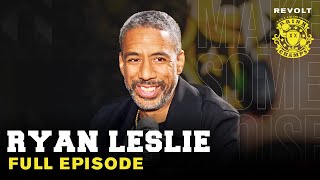
About this episodeRyan Leslie discusses his transition from a struggling music producer to a wealth manager, emphasizing that fi…AI summary
Ryan Leslie discusses his transition from a struggling music producer to a wealth manager, emphasizing that financial literacy and navigating financial markets are critical for long-term success. He distinguishes between high-risk trading and long-term investing, advocating for the S&P 500 and direct-to-consumer strategies while sharing his personal journey from homelessness to building a multi-generational wealth plan.
Key takeaways 5
Financial markets require specific skills; Ryan Leslie made $7,000 in 30 minutes through trading, illustrating the potential of high-skill financial activities compared to traditional hourly wages.
Long-term investing in the S&P 500 has a 0% chance of losing money over a 20-year period, covering major historical crises like the Great Depression and the 2008 crash.
Direct-to-consumer relationships are vital; Leslie built a platform where he shared his cell phone number with fans, leading to millions in revenue through direct sales and crypto transactions.
Small portfolios have a structural advantage; investors with under $10 million can potentially achieve 30-50% compounded returns, whereas large funds like Buffett's are capped at ~50%.
95% of traders lose money annually, highlighting the difference between gambling/trading and disciplined, long-term investing.
Notable quotes 4AI-generated: wording and quote attribution may be wrong. Use the play link to verify.
“If you hold [S&P 500] for 20 years you have a zero percent chance of losing money. It's never happened in the history.”
Leslie uses this statistic to dissuade fears about investing and emphasize the safety of long-term index investing.
“I hit rock bottom right after college... I ended up basically homeless in a garage behind a barber shop in Randolph Massachusetts.”
Leslie shares his personal struggle to illustrate that even successful people face financial crises without proper planning.
“The number one rule of investing don't lose money. Number two rule refer to rule number one.”
▶ 27:35Citing Warren Buffett, Leslie emphasizes that preservation of principal capital is more important than chasing profits.
“Mindset and mentality beats math and mechanics when it comes to money in the markets.”
▶ 29:34Leslie argues that psychological discipline is the primary driver of financial success in his mentorship program.
Chapters & Sections (23)▼
0:00Ryan Leslie's Music Legacy and Community Impactchapter3
0:00Ryan Leslie's Music Legacy and Philanthropy
2:29Navigating the Challenges of the Music Industry
3:58Financial Literacy and Wealth Creation Strategies
5:32Importance of Financial Literacy for Successchapter3
 1h 19m
 49m
49m 58m
58m 43m
43m 39m
39m 54m
54m 39m
39m 46m
46m 36m
36m 36m⏭ 1
 30m
30m 29m
29m
 44m⏭ 3
 1h 7m
1h 7m 1h 8m
1h 8m 1h 38m⏭ 5
 2h 19m⏭ 3
 1h 58m⏭ 6
 2h 1m⏭ 3
 2h 26m⏭ 3
 4h 24m
 1h 9m⏭ 1
 52m
52m 2h 31m⏭ 4
 1h 0m⏭ 1
 33m
33m 46m
46m 3h 54m⏭ 7
 3h 59m⏭ 5
 54m⏭ 1
 1h 13m
 54m⏭ 2
 58m⏭ 5
 45m⏭ 2
 1h 16m⏭ 2
 1h 26m