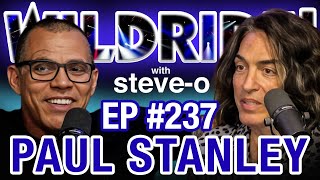
About this episodePaul Stanley reflects on the end of KISS's 50-year touring career, discussing the psychological impact of dopa…AI summary
Paul Stanley reflects on the end of KISS's 50-year touring career, discussing the psychological impact of dopamine withdrawal and the importance of finding alternative sources of fulfillment like painting and family. He shares insights on his early career, the deliberate decision to end the tour on a high note, and his transformative experience performing in 'The Phantom of the Opera', which helped him confront personal insecurities about his hearing impairment.
Key takeaways 5
Dopamine Distortion: Stanley explains that decades of touring create a 'warped sense of dopamine' where normal experiences (like dining at a nice restaurant) feel underwhelming compared to the adrenaline of performing for thousands. He compares managing this withdrawal to recovery groups, emphasizing the need to find new, sustainable sources of gratification.
Strategic Retirement: The decision to end KISS's tour was not impulsive but a practical calculation based on 'QTR' (Quality Time Remaining). They chose to conclude while still legendary rather than letting the career peter out, aiming to leave a lasting positive memory for fans.
Theater as Therapy: Performing in 'The Phantom of the Opera' was a pivotal moment for Stanley. The role of a disfigured character resonated with his own lifelong secret about being deaf in one ear. This experience allowed him to publicly share his story and connect with children facing similar physical challenges, turning a personal insecurity into a source of empowerment.
Vocal Technique Insight: Stanley highlights John Farnum as a master vocalist, noting that great singers 'sing down' to high notes by opening the throat and lowering the head, rather than straining upwards. He criticizes modern singers who focus on vocal acrobatics over lyrical understanding.
Early Career Grind: KISS built their foundation by playing small clubs (50-100 people) and learning their craft through repetition. Stanley recalls being stuck in San Francisco with no money, surviving on cheap food, yet maintaining a positive outlook that these struggles were the 'foundation' of future success.
Notable quotes 5AI-generated: wording and quote attribution may be wrong. Use the play link to verify.
“You have so much time in life... what do you want to do with it because you can't one thing you do precludes you from doing another... QTR quality time remaining.”
▶ 19:46Stanley explains the acronym he and his manager use to justify ending the tour, emphasizing that time is finite and must be spent on what truly matters.
“It's not about mimicking or the exterior of it... it's the heart of it... great song interpreters understand lyrics the way an actor understands a script.”
▶ 1:17:26Stanley discusses his approach to singing soul music and covers, arguing that emotional connection and lyrical understanding are more important than technical perfection.
“I'm not really a singer I'm an actress who sings... [Barbra Streisand] has to act it.”
▶ 1:26:58A lesson Stanley learned from Barbra Streisand, reinforcing his belief that singing is an act of interpretation and storytelling rather than just vocal production.
“The Phantom is the loneliest role... because he is on stage when everybody else is off... my dressing room became social central.”
▶ 1:07:48Stanley describes how he turned the isolation of his role into an opportunity to bond with the cast, contrasting with the character's loneliness.
“You sing down to a note you don't sing up to a note... that's where you have sinuses you have hollows here.”
▶ 1:32:19Stanley shares specific vocal technique advice he learned from John Farnum, explaining the physical mechanics of hitting high notes without strain.
Chapters & Sections (62)▼
0:00Sharing Personal Stories and Life Experienceschapter2
0:00Sharing Personal Stories and Life Experiences
2:56Behind the Scenes of a Podcast Series
5:22Life After Touring and Dopamine Withdrawalchapter3
5:22Life After Touring and the Dopamine Withdrawal
7:12The Challenges of Constant Performance and Gratification
8:33Finding Meaning and Balance in Life
11:04Finding Alternative Highs and Creative Expressionchapter3
11:04Finding Alternative Highs and Creative Expression
13:59Reflecting on a Year of Rapid Career Growth
15:26Coping with Loss and Grief
16:45Planning the End of a Long-Term Tourchapter2
16:45Planning a Final Tour and Legacy
18:26Deciding on a Finite Touring Schedule
22:52Balancing Life and Career in Midlifechapter2
22:52Balancing Life and Mortality in Midlife
24:58The Importance of Quality Over Quantity in Life
27:37The Evolution of KISS's Unique Visual Identitychapter2
27:37The Formation and Early Influences of KISS
30:04Authenticity in Music and Performance
32:23Rock and Roll Lifestyle and Early Successchapter2
32:23Rock and Roll Lifestyle and Debauchery
34:22Early Days of Music Career Development
36:53The Journey to Musical Success and Stardomchapter2
36:53The Journey to Musical Success and Stardom
38:45Early Days of a Music Career
41:21Luxury Purchases and Financial Responsibilitychapter2
41:21Early Financial Success and Spending Habits
43:29The Dangers of Materialism and Consumerism
46:01The Psychology of Fame and Personal Growthchapter5
46:01The Psychology of Fame and Self-Validation
47:32Taking Responsibility for One's Actions and Behavior
49:07Early Introduction to Therapy and Mental Health
50:40Importance of Therapy in High-Pressure Situations
52:03Benefits of Regular Self-Reflection and Therapy
54:38Recognizing Personal Judgment and Biaseschapter3
54:38Recognizing Personal Judgment and Biases
56:59Chiropractic Manipulation Risks and Personal Experiences
58:37Negative Experience with Chiropractic Care
1:00:21Overcoming Adversity and Achieving Success in Theaterchapter2
1:00:21Overcoming Adversity in Pursuing a Career in Entertainment
1:02:26The Challenges of Committing to a Theatrical Role
1:05:58Commitment and Discipline in Performing Artschapter4
1:05:58The Importance of Total Commitment in Performance
1:07:48Challenges of Playing Demanding Theater Roles
1:09:18Overcoming Adversity and Empowering Others with Differences
1:10:36Overcoming Adversity and Embracing Individuality
1:13:14Discovering Hidden Musical Talents and Influenceschapter3
1:13:14Discovering Hidden Musical Talents and Passions
1:14:58Influence of Classic R&B and Soul Music
1:16:25Capturing the Essence of Classic Songs
1:18:40Future Plans for Soul Station Tourchapter3
1:18:40Future Plans for Soul Station Music Tours
1:20:25Importance of Understanding Song Lyrics
1:22:23Sharing and Critiquing Music Discoveries
1:23:52Inspirations and Influences in Musicchapter2
1:23:52Inspirations and Influences in Music
1:26:08Importance of Savoring and Understanding Song Lyrics
1:28:20Appreciation for Underrated Singer John Farnhamchapter3
1:28:20Appreciation for John Farnham's Vocal Talent
 1h 40m
 1h 37m
 1h 15m
 1h 50m
 1h 18m
 1h 47m
 1h 9m
1h 9m 1h 41m
 1h 27m
 1h 50m
 1h 50m
 1h 17m
 1h 24m⏭ 4
 58m⏭ 2
 54m⏭ 2
 1h 57m
 2h 30m⏭ 1
 1h 32m
 1h 42m
 1h 49m⏭ 2
 1h 7m
1h 7m 1h 6m
1h 6m 2h 8m
2h 8m 1h 16m⏭ 2
 2h 39m⏭ 5
 1h 18m⏭ 1
 1h 35m⏭ 1
 2h 15m⏭ 2
 1h 0m⏭ 1
 33m
33m 3h 54m⏭ 7
 54m⏭ 1
 3h 59m⏭ 5
 54m⏭ 2
 46m
46m 6h 26m
 1h 13m
 1h 16m⏭ 2
 9h 11m
 1h 26m