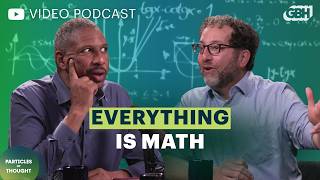
About this episodeZubin Garammani argues that true AI intelligence requires explicit probabilistic representation of uncertainty…AI summary
Zubin Garammani argues that true AI intelligence requires explicit probabilistic representation of uncertainty (Bayesian methods) rather than just scale, as current models lack self-awareness and often fail with overconfidence. The discussion highlights that incorporating uncertainty improves safety in critical domains like weather forecasting and medical diagnosis, and enables essential capabilities like continual learning without catastrophic forgetting.
Key takeaways 5
Current large language models mimic confidence through next-token prediction but lack explicit probability distributions over their beliefs, leading to 'faking' uncertainty and susceptibility to adversarial examples (e.g., confidently misclassifying a modified school bus as a cheetah).
Bayesian updating provides a mathematical framework for continual learning, allowing systems to incorporate new evidence sequentially without suffering from 'catastrophic forgetting,' a major limitation of current static neural network training.
Weather forecasting models like GenCast demonstrate the value of uncertainty by using ensemble forecasts (diffusion models) to represent probability distributions over possible outcomes, which improves accuracy by accounting for sensor noise and chaotic dynamics.
There is a fundamental tension between hallucination and creativity; AI systems need to distinguish between factual grounding (where uncertainty should be low) and creative generation (where hallucination is desired), requiring intent inference.
The 'scale-only' approach to AGI is insufficient for high-stakes decision-making; architectural innovations that bake in humility and explicit uncertainty are necessary for reliable deployment in self-driving cars and medical diagnostics.
Notable quotes 4AI-generated: wording and quote attribution may be wrong. Use the play link to verify.
“We don't want systems that can be overconfidently wrong. Or can be fooled.”
▶ 8:41Discussing the failure of neural networks to distinguish between correctness and confidence, highlighted by adversarial examples.
“I would rather have an AI system that knows when it doesn't know than an AI system that is arrogant and overconfident.”
▶ 43:43Garammani's core philosophy on designing AI systems for human-centric problem solving.
“It's like trying to build the calculator just by showing it examples of addition and multiplication. But imagine you never show it a particular number. Then it might not generalize... You want a calculator that actually calculates. You want it to actually reason about the world that it's in.”
▶ 25:01Critiquing the reliance on data distribution (semantic entropy) as a proxy for true uncertainty, arguing for explicit reasoning over statistical mimicry.
“The thing is, I mean, I'm sort of sitting here agreeing with you. You're sort of you're also a Bayesian thinker. So, sort of this is very much my philosophy. Um but not everybody does.”
▶ 35:12Acknowledging the divide in the AI community between those who believe scale solves all problems and those who believe architectural changes (like Bayesian methods) are needed.
Chapters & Sections (19)▼
0:00Mathematics of AI Uncertainty and Decision Makingchapter1
2:25AI Uncertainty Types and Human Cognition
6:22AI Uncertainty, Confidence, and Historychapter2
7:46Adversarial Examples and AI Overconfidence
9:441980s AI: Expert Systems vs Neural Networks
11:34Early Neural Networks and Bayesian Uncertaintychapter1
14:25Probabilistic Uncertainty and Bayesian Inference
17:18AI Uncertainty and Bayesian Learningchapter1
20:01LLM Uncertainty and Hallucination Tension
22:33Model Uncertainty and Weather Forecastingchapter3
25:24Computational Challenges of Rational AI
26:53Gencast Diffusion Models for Weather Uncertainty
28:58Representing Uncertainty in AI Models
31:04Communicating AI Uncertainty in High-Stakes Decisionschapter2
32:50AI Uncertainty in Medical Decisions
34:58Data Scale vs. Uncertainty in AI
36:32Future AI Research: Continual Learning and Efficiencychapter2
38:33Energy Efficiency and Data Inefficiency in AI

 1h 46m⏭ 2
 1h 34m⏭ 1
 1h 2m
1h 2m 1h 7m
1h 7m 3h 3m⏭ 2
 1h 15m⏭ 1
 1h 1m⏭ 2
 1h 40m
 1h 20m⏭ 3
 2h 28m
 1h 28m
 56m
56m 1h 0m⏭ 1
 33m
33m 46m
46m 3h 54m⏭ 7
 3h 59m⏭ 5
 54m⏭ 1
 1h 13m
 54m⏭ 2
 58m⏭ 5
 1h 26m
 25m
25m 1h 16m⏭ 2