About this episodeThe Lindsay Clancy trial highlights systemic failures in mental health care, characterized by fragmented provi…AI summary
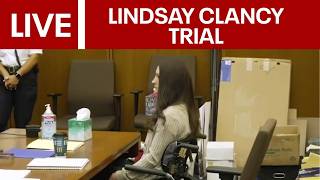
The Lindsay Clancy trial highlights systemic failures in mental health care, characterized by fragmented provider coordination, lack of shared medical records, and a reliance on trial-and-error prescribing without a central 'quarterback' for patient care. The discussion reveals that while postpartum psychosis is a severe condition, the medical system often fails to provide effective treatments like lithium or ECT, instead resorting to polypharmacy that can exacerbate symptoms. The case serves as a broader referendum on the psychiatric establishment, with experts noting that the DSM is outdated and the current model prioritizes quick prescriptions over holistic, coordinated care.
Key takeaways 6
Lindsay Clancy was prescribed 13 different medications across 30 total prescriptions in just four months (September 2022 to January 2023), illustrating a chaotic 'throwing pasta at the wall' approach to treatment rather than a coordinated strategy.
The mental health system lacks a central coordinating provider; Lindsay had no single primary care doctor or psychiatrist acting as a 'quarterback' to review her full medication list and prevent dangerous interactions or redundancies.
Privacy laws (HIPAA) and fragmented electronic health record systems (like Epic) prevent doctors from seeing each other's notes, leading to 'doctor shopping' where patients inadvertently receive conflicting treatments because providers cannot access prior psychiatric history.
Amoxapine (referred to as Amatrifolene/Amatitine in transcript) is identified as a potent, last-resort antidepressant with strong side effects, yet it was prescribed to Lindsay despite experts noting that Lithium and ECT are the most effective treatments for psychosis, which she never received.
The Edinburgh Postnatal Depression Scale is a standard screening tool where a score above 15-17 is alarming; Lindsay's scores increased to 23, yet this did not trigger adequate intervention or specialized postpartum psychosis care.
The DSM (Diagnostic and Statistical Manual of Mental Disorders) is criticized as antiquated, with the last major update in 2013, failing to keep pace with modern understanding of conditions like postpartum psychosis which are not explicitly detailed in the manual.
Notable quotes 5AI-generated: wording and quote attribution may be wrong. Use the play link to verify.
“It's actually worse than you said it was. Um, you know, it was 30 prescriptions in 4 months... She received 13 different medications. So that means a lot of the medications were the same and even given by different doctors or the same doctor who weaned her on off lower the dosage high increased the dosage.”
▶ 5:03Sarah Rahal clarifies the severity of the medication overload, emphasizing the rapid turnover and lack of stability in Lindsay's treatment plan.
“In so many instances uh people described it as like throwing pasta to the wall and seeing what sticks. Yeah. like it's not a perfect playbook and it really depends on the person.”
▶ 5:42Describing the trial-and-error nature of psychiatric prescribing where there is no guaranteed effective protocol.
“At the end you know it's about primary care physicians right there was no quarterback to this. you bring up a great point and that's kind of what led me to think who was in her corner, who looked at her holistically.”
▶ 7:29Identifying the critical lack of a central coordinator who could manage the complexity of Lindsay's multiple providers and medications.
“It's it's a teeter totter of like what is the right way to go about this and should you have a central system versus let's say you're really unhappy with one doctor's decision and you want to try something different. There just has to be one person who knows that you're going to a different doctor and you know and keeps keeps the record keeps keeps the tab of what you've been taking and when.”
▶ 9:46Highlighting the systemic gap where patient responsibility falls on managing their own complex medical history due to fragmented records.
“Amatitine. It's am I t r i p h p t t t t t t t t t t t t t t t t t t t t y l i n e. Um, and I could be pronouncing that really wrong with my Midwestern accent, but there it is. It is really the last resort. Um, and it's really important to note right now that this is not the common positive effect someone with psychosis um, should be receiving. I learned that lithium and uh, ETC... are the most effective treatments. and Lindsay wasn't given either of those two options.”
▶ 12:39Contrasting the potent, risky medication Lindsay received with the gold-standard treatments for psychosis that were unavailable or not prescribed.
 53m⏭ 2
 24m
24m 51m
51m 21m
21m 20m
20m 1h 12m⏭ 4
 52m
52m 18m
18m 29m
29m 21m
21m 17m
17m 15m
15m 1h 1m⏭ 1
 1h 42m
 1h 28m⏭ 2
 59m
59m 29m⏭ 1
 1h 36m⏭ 2
 1h 35m
 2h 51m⏭ 1
 1h 33m
 1h 31m⏭ 2
 1h 50m⏭ 5
 3h 13m
 33m
33m 1h 0m⏭ 1
 3h 54m⏭ 7
 6h 26m
 54m⏭ 1
 3h 59m⏭ 5
 46m
46m 54m⏭ 2
 1h 13m
 1h 26m
 1h 16m⏭ 2
 9h 11m