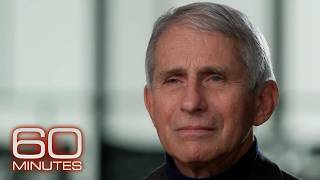
About this episodeDr. Anthony Fauci reflects on his 54-year career in public health, tracing his path from childhood influences …AI summary
Dr. Anthony Fauci reflects on his 54-year career in public health, tracing his path from childhood influences to managing the HIV/AIDS crisis and the COVID-19 pandemic. He emphasizes the critical importance of maintaining scientific objectivity across political administrations, the transformative power of mRNA technology, and the urgent need to rebuild public trust in health institutions amidst growing societal divisiveness.
Key takeaways 6
Origin of Service Ethic: Fauci's commitment to public service was shaped by his father, a Brooklyn pharmacist who treated patients regardless of ability to pay, and his Jesuit education (Regis High School motto: 'Men for Others'), which combined his affinity for science with a desire to help people.
HIV/AIDS Trajectory: The HIV epidemic began in 1981 with CDC reports of opportunistic infections in young gay men. Despite initial lack of treatments leading to high mortality and Fauci's own post-traumatic stress, the development of combination therapies in 1996 transformed HIV from a fatal disease to a manageable condition where 'Undetectable = Untransmittable' (U=U).
Political Neutrality in Science: Fauci served seven presidents (Reagan through Biden) by remaining strictly apolitical. He notes that while ideological differences exist, respect for institutions allowed for productive collaboration, citing President George W. Bush's bipartisan support for the PEPFAR program in Africa as an example of effective, non-divisive leadership.
COVID-19 Vaccine Speed: The rapid development of mRNA vaccines was possible due to prior investment in basic research, which accelerated the timeline by approximately 15 years. The vaccine design was created just 5 days after the viral sequence was released in January 2020, with Phase 3 trials completing in 11 months.
Asymptomatic Transmission Challenge: Early CDC protocols failed because they relied on symptomatic contact tracing. Since 50-60% of COVID-19 transmission comes from asymptomatic individuals, widespread testing was necessary from the start, a lesson that highlights the need for adaptable public health strategies.
Social Media and Trust Erosion: Fauci attributes the breakdown in public trust largely to social media amplifying radical views without editing or context. He contrasts this with the civil discourse seen during previous crises like WWII or the Anthrax attacks, warning that tribalism and echo chambers prevent unified responses to future pandemics.
Notable quotes 4AI-generated: wording and quote attribution may be wrong. Use the play link to verify.
“Science is a mechanism whereby you gain information, evidence, and data, and then you can make your decision or not... You don't mix up things when you're dealing with a moving target.”
▶ 58:23Fauci explains why public health guidance changed during the pandemic, clarifying that scientists were not 'flip-flopping' but adapting to new data about viral transmission and variants.
“If you put someone on therapy and got the level of virus below detectable and durably... virtually impossible for that person to spread the virus to their sexual partner.”
▶ 12:31Fauci describes the medical milestone of U=U (Undetectable = Untransmittable), noting it removes stigma and is one of the most impactful medical advances of his lifetime.
“The trouble is in answer to Sean's question that things went awry when social media amplified radical views where someone who's a minority but very vocal can have that amplification with no editing of an opinion.”
▶ 17:26Fauci identifies social media as a primary driver of the current crisis of trust in public health institutions, contrasting it with the civility he experienced working with presidents from both parties.
“I gave it 110% every day and I left it all on the table.”
▶ 1:09:28Fauci's reflection on his proudest achievement, emphasizing his total dedication and integrity over his 54-year career rather than specific medical discoveries.
Chapters & Sections (50)▼
0:00The Importance of Service to Otherschapter3
0:00The Importance of Cellular Service to Others
2:35Early Life Influences on Career Choices
4:01Career Path in Medicine and Public Health
5:51Early Detection of a New Disease Outbreakchapter3
5:51Early HIV/AIDS Research and Discovery
8:04Discovery of a New Disease in Young Gay Men
9:37The Emotional Toll of Chronic Grief and Trauma
10:54Advancements in HIV Treatment and Managementchapter2
10:54Advancements in HIV Treatment and Management
13:52Addressing Breakdown of Trust in Public Health
15:52Maintaining Objectivity in Public Health Decision-Makingchapter3
15:52Maintaining Objectivity in Public Health Decision Making
17:26Global Health Equity and Moral Responsibility
18:55Global Health Initiatives and Disease Prevention
21:00Accelerated Vaccine Development and MRNA Technologychapter3
21:00Leadership and Divisiveness in Politics
22:43Development of mRNA Vaccine Technology
24:13Development of COVID-19 Vaccine
25:34Vaccine Effectiveness and Lives Savedchapter3
25:34Vaccine Effectiveness and Lives Saved
27:17Receiving News of Vaccine Efficacy Results
28:56Personal Reflections on Life and Health Crises
30:34The Life and Legacy of Paul Farmerchapter4
30:34The Life and Work of Paul Farmer
32:41Personal Care and Devotion in Healthcare
34:10Overcoming National Divisiveness and Tribalism
36:09Criticism of Congressional Hearing Process
37:24Consequences of Polarized Social Media Discoursechapter2
37:24Consequences of Polarized Social Media Discourse
39:46Challenging Institutionalized Testing and Regulatory Systems
41:57Transmission Dynamics of COVID-19chapter2
41:57Transmission of COVID-19 through Asymptomatic Carriers
43:45Early COVID-19 Testing Strategies and Contact Tracing
46:12Relationship Between Science and Politicschapter2
46:12Relationship Between Trump and COVID-19 Response
48:16The President's Misinformation on COVID-19 Treatment
50:52Emerging Infectious Diseases and Global Threatschapter3
50:52Emerging Infectious Disease Threats and Pandemics
52:51Bird Flu Pandemic Risks and Prevention Measures
54:33Global Health Equity and Vaccine Distribution
56:00Navigating Uncertainty in Public Health Criseschapter2
56:00Navigating Uncertainty in Public Health Crises
58:37Evolving Nature of Viruses and Public Perception
1:00:22Importance of HIV Stigma Reduction and Treatmentchapter5
1:00:22Importance of HIV Stigma Reduction and Medication
1:02:24Presidents' Actions on HIV/AIDS Research and Policy
1:04:34Transition from Trump to Biden Administration
1:06:09Evaluating the Effectiveness of Pandemic Shutdown Measures
1:07:34Lessons Learned from Public Health Mandates
 1h 23m
 1h 9m
1h 9m 23m
23m 1h 9m
1h 9m 1h 7m
1h 7m 1h 16m
 1h 10m
 1h 2m
1h 2m 1h 28m
 1h 1m
1h 1m 1h 14m
 1h 30m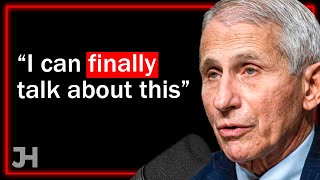
 3h 7m⏭ 1
 2h 22m⏭ 1
 2h 33m⏭ 2
 1h 42m
 2h 50m⏭ 5
 1h 49m
 1h 28m⏭ 1
 2h 42m⏭ 3
 49m
49m 2h 23m
 1h 15m⏭ 2
 1h 42m⏭ 1
 1h 0m⏭ 1
 33m
33m 3h 59m⏭ 5
 3h 54m⏭ 7
 46m
46m 54m⏭ 1
 1h 13m
 54m⏭ 2
 9h 11m
 1h 26m
 58m⏭ 5
 6h 26m