About this episodeDirector Jan Eliasberg and actor Tony Shalhoub discuss Eliasberg's transition from directing to writing her de…AI summary
Director Jan Eliasberg and actor Tony Shalhoub discuss Eliasberg's transition from directing to writing her debut novel 'Hannah's War,' which intertwines the real-life stories of physicist Lise Meitner and Nazi scientist Werner Heisenberg. The conversation highlights the historical erasure of women in science, the ethical dilemmas of the Manhattan Project, and the creative tension between commercial Hollywood demands and personal artistic expression.
Key takeaways 5
Historical Erasure of Women in Science: Lise Meitner, who theoretically discovered nuclear fission, was excluded from the Nobel Prize awarded to her partner Otto Hahn, a pattern of erasure that also affected Rosalind Franklin regarding DNA structure.
The 'Pygmalion' Narrative in Modern Media: Eliasberg identifies a recurring theme in her work where characters (like Mary J. Blige or Jennifer Lopez) face pressure to assimilate their speech and culture to fit mainstream templates, raising questions about identity and authenticity.
Heisenberg's Ambiguity: The novel explores the mystery of why Werner Heisenberg did not successfully build the atomic bomb for Hitler, using the anecdote of him playing piano while under arrest to suggest he may have been subtly sabotaging the Nazi effort.
Creative Identity Crisis: Eliasberg experienced a 10-15 year tension between her lucrative career directing television (which required conforming to studio formulas) and her desire to write complex, character-driven fiction, eventually resolving this by pursuing an MFA in fiction.
Scientific Compulsion vs. Ethics: Scientists at Los Alamos were driven by an intellectual compulsion to solve problems, often conflicting with their moral objections to using the bomb on human beings, leading to internal petitions and sedition within the project.
Notable quotes 4AI-generated: wording and quote attribution may be wrong. Use the play link to verify.
“Those blessed with a brilliant mind and a gift for science have a higher duty that comes before discovery: a duty to humanity. Science can be used for good or evil, so it is incumbent upon scientists to ensure that their work makes the world a better place.”
▶ 1:04:39Lise Meitner quote used by Eliasberg to frame the ethical responsibility of scientists in 'Hannah's War'.
“I will discover the atomic bomb as a professor. I will not discover the atomic bomb as a colonel.”
▶ 59:15Physicist Hans Bethe's refusal to wear a military uniform, highlighting the tension between academic integrity and military control at Los Alamos.
“Every woman I know has sat in a meeting, had a great idea, raised their hand, said their idea, and people don't really... thank you very much. And then a guy raises his hand or doesn't just interrupt you know ten minutes later and it becomes his idea.”
▶ 40:47Eliasberg comparing the professional experience of women in Hollywood to Lise Meitner having her scientific discovery credited to Otto Hahn.
“If you're from New York you know you get up on Sunday and you read the Sunday New York Times Book Review and like this is what an artist is. If you're an artist you know you publish a novel.”
▶ 19:25Eliasberg explaining her personal motivation and cultural expectation that drove her to write a novel despite her successful directing career.
Chapters & Sections (50)▼
0:00Early Career Experiences and Collaborationschapter4
0:00Early Career Experiences and Collaborations
2:33Discovering and Developing an Actor's Talents
4:05Building and Nurturing Professional Relationships
5:35The Manhattan Project in Film and Television
6:55Weaving Historical Figures into Fictional Storylineschapter3
6:55Weaving Historical Figures into Fictional Storylines
9:57Theatre Influences and Career Development
12:14Transition from Theater to Film Career
13:49Breaking into Hollywood as a Female Directorchapter3
13:49Breaking into the Film Industry as a Woman Director
15:23Breaking Taboos in Television Storytelling
16:55The Evolution of Television and Film Industry
18:23Creative Career Tensions and Identity Crisischapter3
18:23Creative Tension in Early Career
19:48Balancing Creative Writing and Professional Career
21:28Breaking into the Entertainment Industry
23:07Blending Cultural Identity in Music and Artchapter2
23:07Blending Cultural Identity in Creative Expression
25:50The Atomic Bombing of Hiroshima and Secrecy
27:43The Erasure of a Female Scientific Pioneerchapter2
27:43Discovery of a Female Scientist's Role in WWII
29:44Historical Omissions in Scientific Obituaries and Recognition
32:32Comparing Historical and Contemporary Human Rights Abuseschapter2
32:32Gradual erosion of human rights through incremental laws
34:21The Persecution of Jewish Scientists during WWII
38:00Discovery of Nuclear Fission and its Implicationschapter3
38:00Discovery of Nuclear Fission and Its Implications
40:17Systemic Erasure of Women's Scientific Contributions
41:51Historical Figures in Fictionalized Literary Works
43:32Atomic Bomb Development and Wartime Concernschapter3
43:32Atomic Bomb Development and Wartime Concerns
45:28Development of the Atomic Bomb Efforts
47:16German Scientists' Hiding and Recruitment Efforts
49:07German Scientists' Interrogation and House Arrestchapter3
49:07Atomic Bomb Development and Technical Challenges
50:30Internment and Surveillance of Scientists
52:03Heisenberg's Reaction to the Atomic Bomb
53:57The Mystery of Secrecy in Historical Eventschapter2
53:57Secrets and Deception in Wartime Scientific Projects
56:17Paranoia and Secrecy in Scientific Research
58:40Scientists' Moral Conflict with Military Involvementchapter2
58:40Scientists' Moral Conflict with Military Involvement
1:01:15Scientists' Compulsion for Truth and Objectivity
1:03:30Scientists' Duty to Humanity and Social Responsibilitychapter5
1:03:30Scientists' Responsibility to Humanity and Society
1:05:18Honoring Historical Figures in Fictional Portrayals
1:06:59Sequels and Thriller Story Development
1:09:04The Female Perspective in Art and Science
1:10:28Scientist's Obligation to Use Discoveries Responsibly
 1h 23m
 1h 9m
1h 9m 23m
23m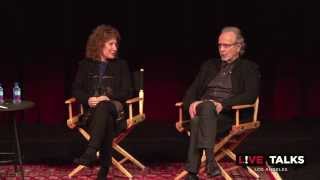 1h 9m
1h 9m 1h 7m
1h 7m 1h 16m
 1h 10m
 1h 2m
1h 2m 1h 28m
 1h 1m
1h 1m 1h 14m
 52m
52m 1h 35m⏭ 1
 1h 13m⏭ 2
 1h 53m⏭ 3
 1h 14m⏭ 3
 55m⏭ 1
 57m⏭ 2
 19m⏭ 1
 39m⏭ 1
 2h 0m⏭ 6
 34m⏭ 1
 1h 16m
 2h 20m⏭ 4
 11h 23m⏭ 1
 33m
33m 3h 54m⏭ 7
 1h 0m⏭ 1
 46m
46m 48m⏭ 2
 3h 59m⏭ 5
 1h 13m
 25m
25m 45m⏭ 2
 54m⏭ 1
 58m⏭ 5