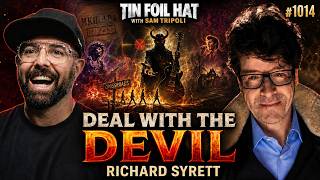
About this episodeThe video debunks the pervasive myth that musicians make deals with the devil, tracing the origin of these sto…AI summary
The video debunks the pervasive myth that musicians make deals with the devil, tracing the origin of these stories to a psychological pattern where unexplained talent, tragic events, and marketing create supernatural narratives. It highlights that many famous 'devil' legends, such as Robert Johnson's crossroads pact, are misattributed or fabricated rumors, while others like Led Zeppelin's occult fascination were exploited by media and fans to create conspiracy theories like backmasking.
Key takeaways 6
The 'Devil in Music' myth follows a specific formula: an artist becomes unbelievably talented, behaves mysteriously (often just being an artist), experiences tragedy, and observers invent a supernatural explanation because they cannot comprehend the skill level.
The Robert Johnson crossroads legend is largely a myth; the story was likely pinned on him by Tommy Johnson (who claimed he met a mysterious man at the crossroads) and amplified by Robert's sudden improvement after practicing with Isaiah Zimmerman near a cemetery.
Nicola Paganini's reputation as a 'demon violinist' was partly self-managed marketing; he understood that his pale appearance and impossible technique made people believe he was possessed, so he leaned into the theatricality.
Backmasking hysteria (e.g., Led Zeppelin's 'Stairway to Heaven') relies on pareidolia, where humans find patterns in ambiguous sounds when told what to listen for, rather than actual hidden messages.
The 'Hotel California' satanic panic is false; Don Henley confirmed the song is about the dark side of the American dream, excess, and the music industry, not Satan or the Church of Satan.
The 'Paul is Dead' Beatles conspiracy theory is a prime example of confirmation bias, where fans interpret innocent details (like bare feet or license plates) as evidence after being told to look for them.
Notable quotes 4AI-generated: wording and quote attribution may be wrong. Use the play link to verify.
“I think that Robert Johnson just got really good that time away. He just got really good. He worked really hard to become a great musician. And because he was so good, people started to go, there's no way that blues player without much of an education could be that good.”
▶ 6:07Explaining the likely reality behind the Robert Johnson crossroads myth.
“The devil is not in music, but the devil's going to get you if you're not good. So, eat your vitamins. Say your prayers and be thankful I didn't put an artist on episode 666 of the Bobby cast because if so probably would have ended tragic.”
▶ 31:28The host's concluding humorous summary of the video's theme.
“Humans are really good at finding patterns. So once somebody tells us what we're supposed to hear, we go and find it, even if it's not really there.”
“It's about the dark side of the American dream excess basically decadence... The line you can check out anytime you like, but you can never leave. Man, it's way more interesting if it's Satan's Hotel, isn't it? Like it just makes you go dang.”
▶ 23:30Don Henley's explanation of Hotel California's true meaning versus the satanic interpretation.
Chapters & Sections (13)▼
0:00Robert Johnson Crossroads Myth Analysischapter2
2:45Robert Johnson Crossroads Legend Details
5:11Robert Johnson Myth Origins and Reality
7:30Myth of Robert Johnson and Paganinichapter1
10:40Paganini's Theatrical Demon Persona
12:29Early Devil in Music Myths and Led Zeppelinchapter2
15:17Jimmy Page's Occult Fascination
17:25Led Zeppelin Devil Pact Mythology
18:52Backmasking and Satanic Panic Mythschapter1
20:32Psychology of Backmasking and Hotel California Myths
24:23Music Conspiracy Theories and Satanic Panicchapter2
 1h 14m
 51m
51m 1h 7m
1h 7m 1h 8m
1h 8m 1h 10m
 32m
32m 1h 2m
1h 2m 21m
21m 25m
25m 33m
33m 42m
42m 2h 5m⏭ 2
 1h 22m
 1h 27m⏭ 6
 2h 30m⏭ 2
 1h 31m
 1h 47m⏭ 4
 4h 41m
 2h 19m⏭ 5
 1h 10m⏭ 1
 2h 15m
 1h 15m⏭ 1
 1h 52m⏭ 2
 1h 0m⏭ 1
 33m
33m 3h 59m⏭ 5
 3h 54m⏭ 7
 46m
46m 54m⏭ 1
 1h 13m
 54m⏭ 2
 9h 11m
 1h 26m
 58m⏭ 5
 25m
25m