About this episodeThe panel argues that Argentina's new Ministry of Human Capital must shift from fragmented, technocratic educa…AI summary
The panel argues that Argentina's new Ministry of Human Capital must shift from fragmented, technocratic education policies to a holistic, skill-based approach starting in early childhood. Speakers emphasize that non-cognitive skills, family environment, and health insurance are more critical determinants of social mobility and economic growth than formal schooling or test scores alone.
Key takeaways 6
Skill gaps open up very early (by age 3) and are maintained through adulthood; they are not primarily genetic but shaped by family and environment.
Early childhood interventions (like Perry Preschool and Jamaican home visits) yield high returns (10% annual ROI) and break the intergenerational transmission of disadvantage, reducing crime and improving health outcomes decades later.
Argentina's current education system suffers from low PISA scores, high dropout rates, and inefficient spending (over 1% of GDP on universities with low graduate output), while subsidizing the rich via free public university tuition.
40% of Argentina's population lacks health insurance, creating a bottleneck for human capital development; the public hospital system is inefficient, costing 10% of GDP with results equivalent to countries spending 6%.
Labor market rigidity and high non-wage costs push workers into informality, where skills are undervalued and on-the-job training is minimal (20% vs 50% in developed nations).
The Argentine educational curriculum is criticized for promoting conflict-based narratives and indoctrination rather than fostering agency, creativity, and understanding of market-based cooperation.
Notable quotes 5AI-generated: wording and quote attribution may be wrong. Use the play link to verify.
“Skills are not set in stone at Birth they solidify as people age they evolve and can be shaped”
▶ 5:58James Heckman arguing against genetic determinism and for the malleability of human capital through early intervention.
“About 20% of the actors account for about 80% of the social problems”
▶ 12:12Heckman citing longitudinal studies to justify early prevention over late-stage remediation for social issues like crime.
“We are subsidizing the rich to go to private universities... we are not being very efficient in having people from poor backgrounds finishing University”
▶ 39:49Carola Pino highlighting the inefficiency of Argentina's universal free university policy which disproportionately benefits higher-income students.
“Mind is not a glass to be filled it is a spark or a fire that we should [ignite]”
▶ 1:24:17Martin Krauss quoting Plutarch to critique the current Argentine educational model as indoctrination rather than fostering independent thought.
“The formal sector is half and the informal sector is half... on-the-job training and learning by doing is about 50% of human capital here is 20% at most”
▶ 46:00Carola Pino explaining how labor market rigidity destroys human capital by pushing workers into informal sectors with low skill development.
Chapters & Sections (55)▼
0:00Human Capital Development and Social Mobilitychapter7
0:00Human Capital Development and Social Mobility
2:16Expert Panel Discussion on Social Mobility
3:36Argentina Needs Skill-Based Learning Policy
5:21Genetics and Socioeconomic Skill Gaps
7:22Early Childhood Skill Formation and Education
8:47Promoting Agency and Engagement in Society
10:22Early Intervention in Social Policy
12:12Importance of Early Childhood Development Skillschapter3
12:12Importance of Early Childhood Development
13:57Importance of Parenting and Child Development
15:44Thought Experiment on Resource Allocation
17:21Early Intervention Program Successchapter2
17:21Early Intervention and Intergenerational Benefits
20:04Effectiveness of Enriched Family Environments
22:47Intergenerational Transmission of Disadvantage in Argentinachapter3
22:47Intergenerational Transmission of Disadvantage in Argentina
24:41Critique of Education Schools in the US
26:04Development Theory and Skill Formation in Argentina
28:39Early Childhood Education and Economic Outcomeschapter2
28:39Early Childhood Education and Prevention Policy
30:58Argentina's Low Pizza Scores and Education Gap
33:42Economic Case for Universal Early Childhood Educationchapter3
 1h 18m
 1h 25m
 1h 17m
 1h 28m
 1h 31m
 1h 26m
 24m
24m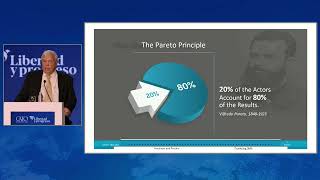 1h 24m
 23m
23m 1h 1m⏭ 1
 1h 24m
 59m
59m 2h 12m
 2h 0m
2h 0m 3h 9m⏭ 4
 2h 21m
 2h 27m⏭ 3
 1h 21m
 1h 56m⏭ 2
 3h 2m⏭ 2
 1h 53m
 1h 14m⏭ 1
 1h 54m⏭ 2
 1h 20m⏭ 2
 33m
33m 1h 0m⏭ 1
 11h 54m⏭ 8
 11h 54m
 9h 11m
 6h 26m
 3h 54m⏭ 7
 46m
46m 54m⏭ 1
 3h 59m⏭ 5
 54m⏭ 2
 1h 16m⏭ 2