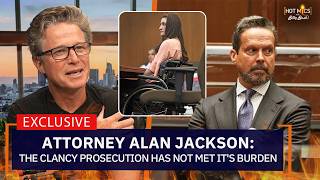
About this episodeThis video captures the closing arguments and jury instructions in the Commonwealth vs. Lindsay Clancy murder …AI summary
This video captures the closing arguments and jury instructions in the Commonwealth vs. Lindsay Clancy murder trial, where the defense argues the defendant was not criminally responsible due to postpartum psychosis, while the prosecution contends she acted with deliberate premeditation and knew right from wrong. The judge provides detailed legal instructions on murder degrees, manslaughter, and the burden of proof, emphasizing that the Commonwealth must prove beyond a reasonable doubt that the defendant was not suffering from a mental disease or defect at the time of the killings.
Key takeaways 6
Legal Standard for Criminal Responsibility: The Commonwealth bears the burden to prove beyond a reasonable doubt that the defendant did not suffer from a mental disease or defect, or if she did, that she retained the substantial capacity to appreciate the criminality/wrongfulness of her conduct or conform her conduct to the law.
Prosecution's Timeline Argument: The prosecution argues that the timeline of events (Patrick leaving at 5:15 PM, phone calls at 5:33-5:38 PM, body discovery at ~6:00 PM) proves deliberate premeditation, as there was insufficient time for Lindsay to kill three children, attempt suicide, and have Patrick discover them if she acted on a sudden voice command after he left.
Defense's Psychosis Evidence: The defense highlights that Lindsay googled medication side effects, kept detailed journals until January 18th (stopping when she decided to stop trying), and had a history of seeking help, arguing these indicate a rational person in distress rather than a psychotic break.
Prosecution's Manipulation Narrative: The prosecution argues Lindsay manipulated evidence by lying to doctors about homicidal ideation, hiding her true state from family, and orchestrating Patrick's errand to create a window for the murders, citing her calm demeanor during phone calls as evidence of control.
Jury Instructions on Extreme Atrocity or Cruelty: The judge instructs jurors to consider factors such as indifference to suffering, prolonging conscious suffering, and whether the means used were excessive and out of proportion to what was needed to kill.
Suicide Attempt Credibility: The defense argues the suicide attempt was genuine and severe (slitting throat, jumping from window), countering earlier prosecution claims it was fake or superficial, noting she took multiple medications and sustained paralysis.
Notable quotes 5AI-generated: wording and quote attribution may be wrong. Use the play link to verify.
“The burden is on them right here. Prove to you that at the time of the killing... that she was suffering from a disease or defect... And it's their burden, not ours.”
▶ 1:16:19Defense attorney Kevin Remington summarizing the legal burden of proof regarding criminal responsibility.
“She knew what she did was wrong. She could conform her behavior to the law and chose not to. And she didn't expect to have any consequences because she expected to die with her children.”
▶ 2:14:14Assistant District Attorney Jennifer Sprag arguing that Lindsay's actions demonstrated knowledge of wrongfulness and intent.
“Dr. Resnik's article... indicates that 38% of almost a thousand people that were examined report voices from inside their head... You're going to buy that guy yesterday? He doesn't know what he's talking about.”
▶ 1:27:48Defense attorney challenging the prosecution's expert witness regarding the location of hallucinated voices.
“It's not enough for the Commonwealth to establish a probability, even a strong probability, that the defendant is more likely to be guilty than not guilty. That is not enough. Instead, the evidence must convince you of the defendant's guilt to a reasonable and moral certainty.”
▶ 15:13Judge William Sullivan instructing the jury on the definition of proof beyond a reasonable doubt.
“She killed them and she left them there on the floor with the bands around their necks. She didn't bring them up to their beds... No, she left them discarded on the basement floor like broken toys because she was done playing the game.”
▶ 2:24:40Prosecution describing the manner in which the children were killed as evidence of extreme atrocity or cruelty.
Chapters & Sections (77)▼
5:15Jury Instructions and Closing Arguments Processchapter5
7:41Jury Instructions and Closing Arguments Overview
9:30Jury Instructions Delivery and Purpose
11:20Criminal Responsibility and Mental Disease
13:38Mental Disease Defect Legal Standards
15:43Criminal Responsibility and Commitment Procedures
18:51First and Second Degree Murder Instructionschapter3
22:25Deliberate Premeditation and Mental Impairment
24:07Murder Elements: Causation and Intent
25:59Proving Intent in Murder Cases
28:19Legal Instructions on Murder and Manslaughterchapter3
30:01Extreme Atrocity and Murder Second Degree Elements
31:52Manslaughter Elements and Definitions
34:00Defining Wanton or Reckless Conduct
35:48Closing Arguments and Burden of Proofchapter2
37:46Prosecution Closing: Burden of Proof and Victim Impact
40:07Medical Care and Mental State Defense
42:03Psychosis, Suicide Attempt, and Medication Evidencechapter1
44:09Suicide Attempt Severity and Medication Research
47:46Suicide attempt defense and knot evidencechapter1
50:31Knotting evidence and throat injury
52:56Police Investigation and Medical Treatment Critiquechapter1
55:07Nursing Advocacy and Medical Trauma
58:08Police Investigation Flaws and Evidence Analysischapter1
1:00:12Questioning Seized Evidence and Wish Jar
1:03:18Witness credibility and manipulation allegationschapter2
1:05:23Psychologist credibility and command hallucinations
1:07:19Witness credibility and support evidence
1:11:07Psychiatric Expert Testimony and Insanity Defensechapter2
1:13:19Expert Testimony on Lindsay's Psychosis
1:15:12Critiquing Government Psychiatric Experts
1:16:52Postpartum Depression and Psychosis Expert Critiquechapter1
1:20:00Challenging Postpartum Psychosis Timeframe and Expert Validity
1:22:35Psychosis Defense and Digital Evidence Analysischapter2
1:24:50Googling Time Frames and Psychosis Defense
1:26:53Evidence Analysis and Psychosis Defense
1:28:19Mental Illness Defense and Medication Compliancechapter3
1:31:05Abundance of Support and Care
1:32:44Medication Compliance Discrepancies and Insomnia
1:34:56Medication Noncompliance and Impatience
1:38:04Mental Health Treatment Rejection and Deceptionchapter1
1:41:08Deception of Mandated Reporters
1:44:04Medication trials and postpartum psychosis diagnosischapter2
1:45:44Medication clearance and discharge reasoning
1:47:06Evidence of mental stability and normal behavior
1:49:33Defendant's Calm Behavior and Medication Adherencechapter1
1:52:37Dr. Tus's Cautious Medication Dosing
1:54:39Evidence of Premeditated Planning and Deceptionchapter3
1:56:24Planning Errands for Murder Timeline
1:58:39Normal Errand Request Deception
2:00:21Timeline of Events and Victim's Statement
2:01:50Timeline and Phone Call Evidencechapter1
2:04:48Phone Call Contradicts Compulsion Defense
2:07:19Closing arguments on timeline and mental illnesschapter5
2:09:01Timeline Impossibility of Strangulation and Escape
2:10:39Mental Illness vs Child Abuse
2:12:12Mental illness and deliberate choice
2:14:36Expert testimony on postpartum psychosis red flags
2:16:27Inconsistencies in voice commands and suicide attempts
2:19:33Prosecution argues premeditation and crueltychapter1
2:22:24Strangulation duration and child victims' dreams
2:24:48Jury Instructions on Murder and Reasonable Doubtchapter7
2:27:20Presumption of Innocence and Reasonable Doubt
2:29:58Judge's Role and Jury Duties
2:31:42Jury Instructions on Fairness and Impartiality
2:33:19Jury Instructions on Evidence and Objections
2:35:30Defining Evidence Types and Weight
2:38:59Evaluating Witness Credibility and Prior Statements
2:42:33Jury Instructions on Psychiatrist Statements and Post-Incident Conduct
2:44:50Jury Instructions on Expert Witnesses and Evidencechapter1
2:46:47Defendant's Right Not to Testify and Exhibit Weight
2:50:22Jury Deliberation Instructions and Procedureschapter2
2:54:13Jury Communication and Deliberation Rules
2:55:45Alternate Juror Selection and Instructions
2:57:49Jury Instructions and Deliberation Processchapter2
 8h 9m
8h 9m 2h 35m
 4h 7m
4h 7m 56m
56m 58m
58m 59m
59m 34m
34m 25m
25m 25m
25m 1h 50m
 24m
24m 40m
40m 2h 29m
 6h 26m
 3h 27m
 6h 22m
 5h 27m
 56m⏭ 1
 7h 29m
 44m⏭ 1
 11h 54m
 43m⏭ 1
 55m⏭ 1
 51m
51m 11h 23m⏭ 1
 1h 0m⏭ 1
 33m
33m 46m
46m 3h 54m⏭ 7
 3h 59m⏭ 5
 48m⏭ 2
 37m⏭ 2
 38m
38m 54m⏭ 2
 1h 13m