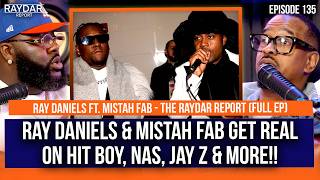
About this episodeThe hosts analyze the Lil Durk trial to discuss street loyalty versus family responsibility, arguing that blac…AI summary
The hosts analyze the Lil Durk trial to discuss street loyalty versus family responsibility, arguing that black men often prioritize gang codes over familial obligations despite the financial burden on families. They debate Eminem's place in hip-hop history, concluding he operates under different racial rules and should not be ranked equally with black artists who faced different industry pressures. Finally, they examine the evolution of the music business, contrasting the high-pressure album model with the freedom of mixtapes, and discuss the resurgence of physical media and the decline of corporate giants like Nike.
Key takeaways 6
Street Loyalty vs. Family: Black men are uniquely expected to prioritize gang loyalty over family, yet when legal trouble arises, families (mothers/wives) bear the financial burden (mortgaging homes) while 'brothers' protect themselves. Durk is praised for protecting his family's wealth during his trial.
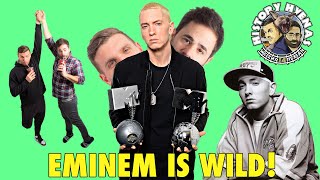
Eminem's Different Rules: Eminem is compared to Shaq (physical presence advantage) rather than Kobe (skill). He did not have to produce 'girl records' or 'club records' to sell, unlike black artists like Jay-Z or Nas. His success is attributed to white privilege and Dr. Dre's mentorship, making direct comparisons unfair.
Mixtapes vs. Albums: Mixtapes were originally marketing tools with $30k budgets vs. $500k for albums. Streaming blurred this line, but mixtapes still offer creative freedom without A&R pressure for singles, as seen with Future's return to form after 'Honest'.
Physical Media Resurgence: CD sales are up 16% because consumers realize they do not own streamed content (licensing model). Physical items are tangible assets that appreciate in value.
Nike's Decline: Nike is struggling because Gen Z consumers have fragmented identities and access to diverse brands (Off-White, Louis Vuitton), unlike previous generations tied to parental influence. Nike also lost key cultural connectors like Kanye West and lacks a premier young athlete anchor.
Stephen A. Smith Defense: Black leaders in power (like Stephen A. Smith) are unfairly criticized by their own community for not immediately prioritizing black interests. The hosts argue leaders must first establish competence and power before they can effectively help their community.
Notable quotes 5AI-generated: wording and quote attribution may be wrong. Use the play link to verify.
“We're the only group of people that is expected to be more loyal to the people outside our house and the people in our house. We're the only people that are expected to once we join a gang now. The gang rules matter more than what my dad says.”
▶ 5:46Don Pia discussing the societal expectation for black men to prioritize street loyalty over family responsibility.
“Eminem is Shaq. Shaq is my second favorite basketball player... Why don't everybody put Shaq in their top 10? Because Shaq didn't have skills like Kobe. He was bigger than everybody... Eminem's physical presence helps him. He don't have to play by all he has to do is respect the craft... and every time he gets a chance, put black people in position and big us up.”
▶ 16:08Ray Daniels explaining why Eminem should not be ranked above black rappers like Nas or Jay-Z due to different racial advantages.
“If I'm a fan of somebody, I want something physical... You can't sign a stream... Things that are in the physical form tend to gain asset... they appreciate.”
▶ 49:48Discussion on why physical media (CDs, vinyl) is making a comeback due to ownership and asset value.
“I don't have power. I have responsibility... We don't as black folks sometimes don't understand what power is or how to use it because we don't have we didn't come from it.”
▶ 44:48Don Pia recounting Tuma's advice about the nature of power in leadership positions.
“Nike's biggest mistake was losing Kanye... They don't have a premier young athlete... They're still hanging on LeBron... They don't have a story behind them right now.”
Analysis of why Nike's stock and cultural relevance are declining compared to competitors.
Chapters & Sections (33)▼
0:00Lil Durk Trial Analysis and Public Opinionchapter2
2:19Trial Decisions Based on Facts Not Public Opinion
4:13Jury Independence vs Public Opinion
5:46Street Loyalty vs Family Responsibilitychapter2
7:32Impact of Street Rules on Families
8:59Gun Laws and Street Survival
12:16Eminem's Different Rules in Hip-Hopchapter2
13:55Eminem's Unique Position in Hip-Hop
16:08Eminem's White Privilege in Hip-Hop
18:38Eminem's Role in Hip Hop and Racial Dynamicschapter1
20:04Eminem's Privilege vs Black Artists Struggles
23:09Mixtapes vs Albums Business Modelchapter2
24:33Mixtape vs Album Budgets
26:12Mixtapes as Marketing Tools
27:56Mixtapes vs Albums and Marketing Evolutionchapter2
29:49DJ Role in Mixtape Era
31:10Old School Street Marketing Tactics
32:30Music Promotion Evolution and Future's Honest Albumchapter1
34:02Future's Honest Album and Relationship Dynamics
36:59Managing Expectations and Black Leadershipchapter2
38:40Proving Competence Before Identity
40:09Black Media Success and Community Criticism
41:33Black Power Responsibility and Unitychapter2
43:02Cost of Leadership and Public Criticism
44:10Black Power Responsibility and Unity
46:22Stephen A Smith Racism and Physical Mediachapter2
48:22Jay-Z HBO Documentary and Physical Media
49:48Value and Appreciation of Physical Media
51:09Lucky's Performance Dispute and Nike's Declinechapter4
52:23Lil Durk Case Marketing Analysis
53:45Generational Shift and Nike's Decline
55:10Corporate Expansion vs Product Creation
57:02NFL Pro Bowl Cancellation and Reebok Shaq Collaboration
 1h 8m
1h 8m 1h 26m
 1h 26m
 2h 51m⏭ 2
 1h 30m
 1h 17m
 57m
57m 1h 7m
1h 7m 21m
21m 4h 16m
 1h 16m
 1h 40m
 1h 8m
1h 8m 58m
58m 1h 15m⏭ 3
 3h 24m
 3h 12m⏭ 2
 5h 59m⏭ 8
 1h 31m
 27m
27m 2h 7m
2h 7m 2h 54m⏭ 1
 1h 17m⏭ 4
 3h 12m⏭ 1
 33m
33m 1h 0m⏭ 1
 3h 54m⏭ 7
 46m
46m 6h 26m
 54m⏭ 1
 3h 59m⏭ 5
 11h 54m
 11h 54m⏭ 8
 9h 11m
 1h 16m⏭ 2
 54m⏭ 2