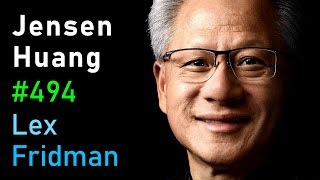
About this episodeJensen Huang outlines Nvidia's evolution into an AI factory company, emphasizing disaggregated inference, the …AI summary
Jensen Huang outlines Nvidia's evolution into an AI factory company, emphasizing disaggregated inference, the rise of agentic AI, and the strategic necessity of open-source models alongside proprietary ones. He argues that AI compute consumption will grow exponentially (1 millionx), creating massive economic opportunities in physical AI, robotics, and digital biology, while advising entrepreneurs to focus on deep vertical specialization.
Key takeaways 6
Nvidia has shifted from a GPU company to an 'AI factory' company, utilizing disaggregated inference across heterogeneous hardware (GPUs, CPUs, networking processors, Grock LPUs) to handle complex agentic workloads.
The industry is moving from generative AI to agentic AI, where computation needs have increased by 10,000x in two years; agents perform work rather than just generating tokens, driving massive consumption growth.
Open source models are critical for enterprise domain expertise and control, with Nvidia advocating for an 'A and B' strategy where both proprietary and open models thrive; startups are increasingly 'open source first' before fine-tuning for specialization.
Physical AI (robotics, autonomous vehicles) is a $50 trillion industry inflection point; Nvidia provides the full stack (training, simulation, evaluation, and edge computing) to enable any car or robot manufacturer to build autonomous systems.
AI regulation should not stifle innovation; Huang warns that excessive fear and 'doomerism' could cause the US to lose the global AI race to countries like China, advocating for balanced governance that allows rapid adoption.
The cost of an AI factory is justified by throughput efficiency; a $50B factory producing 10x the throughput of a cheaper alternative results in lower cost per token, making raw chip price less relevant than system-level efficiency.
Notable quotes 5AI-generated: wording and quote attribution may be wrong. Use the play link to verify.
“We have 43,000 employees. You know I would say 38,000 are engineers... If that $500,000 engineer did not consume at least $250,000 worth of tokens, I am going to be deeply alarmed.”
▶ 24:01Huang explains Nvidia's internal adoption of AI agents, highlighting that top talent should spend half their compensation cost on compute resources to maximize productivity.
“You're not going to lose your job to AI. You're going to lose your job to somebody using AI.”
▶ 59:38Huang's famous prediction about job displacement, emphasizing that the competitive advantage lies in how effectively humans leverage AI tools.
“The enterprise software industry is limited by butts and seats. It's about to get a hundred times more agents banging on those tools.”
▶ 30:43Huang argues that enterprise software will not be destroyed but will see massive growth as AI agents interact with existing tools (SQL, Photoshop, CAD) at scale.
“We understand a lot of things about this technology... It is not a biological being. It is not alien. It is not conscious. It is computer software.”
▶ 18:07Huang's stance on AI regulation and public perception, urging policymakers to avoid fear-based legislation and recognize AI as a tool rather than a sentient threat.
“Deep specialization. I believe that these models they're going to have general general models... but many of those models are specialized sub-agents that they've trained on their own.”
▶ 58:14Advice for entrepreneurs on building moats in an AI world: focus on deep vertical domain expertise rather than trying to compete on general model capabilities.
Chapters & Sections (34)▼
0:00Building the Future with AI Native Infrastructurechapter4
1:59Disaggregated Inference and AI Computing Evolution
4:06Rise of Agent-Based AI Workloads and Infrastructure
5:51The Rise of AI Infrastructure and Inference
8:17Evaluating Cost Efficiency in Data Center Operations
11:58The Future of Digital Biology and AIchapter1
14:33Rise of Open-Source AI Computing Models
16:34Regulating AI: Governance and Policy Challengeschapter2
18:39Addressing AI Perception and Adoption Concerns
20:10AI Industry Moderation and Responsibility
22:45Exponential Growth of AI Compute and Consumptionchapter2
24:52The Value of Token-Based Compensation for Engineers
26:16The Future of AI Development and Collaboration
27:49Accelerating AI Research with AutoMLchapter1
29:40The Rise of Open-Source AI Models
32:28The Future of AI: Open Models and Proprietary Productschapter2
34:14Global AI Technology Diffusion and Market Share
35:45Importance of Domestic Technology Industry for National Security
37:30Supply Chain Risks and Global AI Expansionchapter2
40:08Autonomous Vehicle Strategy and Open-Source Platforms
41:33Nvidia's AI Ecosystem and Competitor Landscape
44:06Nvidia's Market Share Growth and AI Infrastructurechapter2
46:06AI Market Growth and Industry Skepticism
47:22The Future of Data Centers in Space
49:18AI in Healthcare: Revolutionizing Diagnosis and Treatmentchapter2
51:27The Rise of Agent-Based Robotics in Healthcare
52:49Robotics Industry Growth and Future Prospects
55:13Robotics and AI-Driven Infrastructure Developmentchapter2
56:35AI Revenue Growth and Infrastructure Unlocking
58:14The Rise of Vertical Expertise in AI
59:38Job Displacement and the Future of Workchapter3
1:01:04Future of Chauffeurs and Job Transformation
1:02:32Guiding AI Innovation with Artistry and Expertise
1:03:51AI in Healthcare: Revolutionizing Medical Diagnosis
 1h 23m
 1h 33m⏭ 1
 1h 4m
1h 4m 28m
28m 1h 18m⏭ 1
 27m
27m 1h 27m
 1h 43m⏭ 1
 1h 31m
 1h 9m⏭ 2
 1h 10m
 50m
50m 2h 28m⏭ 2
 2h 25m⏭ 1
 56m
56m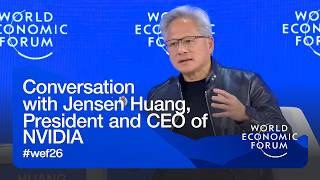 34m
34m 41m
41m 2h 41m⏭ 1
 1h 3m
1h 3m 1h 6m
1h 6m 2h 47m⏭ 4
 3h 9m⏭ 3
 56m
56m 1h 13m
 1h 19m⏭ 5
 1h 13m
 2h 53m⏭ 5
 2h 38m⏭ 1
 11h 23m⏭ 1
 33m
33m 3h 54m⏭ 7
 46m
46m 1h 0m⏭ 1
 48m⏭ 2
 1h 16m
 3h 59m⏭ 5
 1h 13m
 25m
25m 54m⏭ 1
 25m
25m