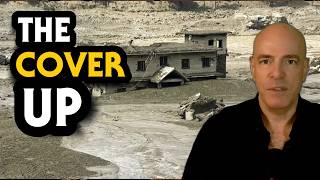
About this episodeThe hosts analyze a catastrophic flash flood in Nepal caused by a rock/ice avalanche that dammed and then burs…AI summary
The hosts analyze a catastrophic flash flood in Nepal caused by a rock/ice avalanche that dammed and then burst a river, creating a wave traveling at 111 mph. They contextualize this modern event within a broader framework of paleohydrology, comparing the discharge rates to massive prehistoric megafloods (like the Missoula floods) and citing ice core data to argue for rapid, catastrophic climate shifts in Earth's history.
Key takeaways 5
Nepal Flood Mechanics: A rock/ice avalanche on the Nepal-Tibet border dammed the Lang Tang river, creating pressure that burst through, sending a flood wave traveling 168 km in 7 minutes (approx. 150 km/h or 111 mph). All upstream gauges were destroyed before transmitting data.
Discharge Comparisons: The measured peak discharge at Devghat was 5,850 cubic meters/second. The hosts estimate the source discharge was likely 12,000-15,000 cubic meters/second. This is dwarfed by prehistoric megafloods like the Missoula floods (estimated 22 million cubic meters/second or ~800 million cubic feet/second).
Climate Change Narrative Critique: The host argues that current warming trends are part of a natural cycle starting from the Little Ice Age (mid-1800s) and challenges the singular focus on CO2, citing the saturation effect of CO2 on heat absorption and the role of solar variability.
Ice Core Evidence: Analysis of Greenland ice cores shows rapid climate shifts (3-5 degrees Celsius) occurring in just 3-5 years during the transition out of the last ice age (Younger Dryas/Bølling-Allerød), suggesting civilization is vulnerable to similarly rapid shifts.
Global Flood Traditions: The discussion connects geological evidence of mega-floods (Scablands, Finger Lakes, Himalayas) with universal flood myths found in over 340 cultures, suggesting these are memories of actual historical catastrophes rather than local events.
Notable quotes 5AI-generated: wording and quote attribution may be wrong. Use the play link to verify.
“111 miles an hour... No time to prepare.”
▶ 0:35Describing the speed of the Nepal flood wave, highlighting the lack of warning time for victims.
“The mountain falls at 8:37... 7 minutes later, the Gai wrong port is destroyed... averaging more than 150 km an hour... Six more minutes from the border post. Sia Bezi is hit. Still at around 140 km an hour.”
▶ 4:49Detailed timeline of the Nepal flood's progression and destruction of monitoring infrastructure.
“Twice shifted from glacial to interglacial conditions over an astonishingly quick 3 to 5 years... If it shifted into glacial conditions in 5 years, civilization is gone. We are right back in the stone age.”
▶ 1:03:10Host discussing ice core data showing rapid climate transitions, emphasizing the fragility of modern civilization against such events.
“Planetary scale movement of water has been a major agent in shaping the landscape of our planet.”
▶ 1:07:13Quote from paleohydrologists regarding Pleistocene cataclysmic floods in Eurasia.
“Every tribe has related to me more or less distinctly their traditions of the deluge... I have found distinct traditions of three successive cataclysms, two by water and one by fire.”
▶ 1:10:38George Catlin's observations on Native American flood traditions, used to support the idea of global catastrophic flooding.
Chapters & Sections (33)▼
0:01Nepal Flood Wave Speed and Timelinechapter2
3:06Langtang River Location and Source
4:52Seismic Monitoring Failure and Alert Delays
7:31Nepal Flood Location and Mechanism Analysischapter2
11:26Nepal Flood Mechanism Clarification
13:02Nepal Flood Location Coordinates
15:20Nepal Flood Location and Discharge Datachapter
19:24Nepal Flood Hydrology and Discharge Analysischapter1
22:01Flood Discharge and Velocity Dynamics
25:39Nepal Flood Gradient and Discharge Analysischapter1
29:19Nepal Flood Damage and Missoula Comparison
32:07Missoula Flood Scale and Climate Change Narrativechapter1
34:55Glacial Retreat and Climate Change Data
37:04Glacial Melt and Climate Historychapter1
39:02Climate History and Fossil Fuel Impact
42:21Carbon Dioxide Saturation and Solar Influencechapter2
44:29Solar Variability and Climate History
46:11Glacial Shrinkage and 1970s Cooling Fears
49:15Climate Change Narrative and Ice Core Sciencechapter1
51:57Ice Core Layering and Oxygen Isotope Analysis
55:15Greenland Ice Core Climate Historychapter1
57:20Climate Variability and Past Warm Periods
1:00:29Rapid Climate Shifts and Younger Dryaschapter1
1:02:53Glacial to Interglacial Shifts in 5 Years
1:05:24Catastrophic Floods and Global Deluge Traditionschapter2
1:07:13Planetary Flood Scale and Survival
1:10:23Native American Flood Traditions and Cataclysms
1:13:22Finger Lakes Seismic Stratigraphy and Flood Evidencechapter1
1:17:35Finger Lakes Seismic Stratigraphy and Heinrich Events
1:20:37Finger Lakes Flood Geology and Global Mythschapter3
 1h 11m
 1h 46m⏭ 3
 1h 33m⏭ 2
 3h 11m
 41m
41m 2h 57m
 2h 11m⏭ 2
 2h 31m
 28m⏭ 1
 2h 1m⏭ 1
 1h 31m
 11h 54m
 11h 54m⏭ 8
 1h 37m
 33m⏭ 2
 3h 29m⏭ 1
 1h 37m⏭ 2
 33m
33m 1h 0m⏭ 1
 3h 54m⏭ 7
 46m
46m 6h 26m
 54m⏭ 1
 3h 59m⏭ 5
 54m⏭ 2
 1h 16m⏭ 2
 9h 11m
 1h 26m
 31m
31m