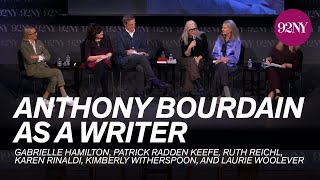
About this episodeThis panel discussion with six acclaimed crime fiction authors explores the intersection of genre writing, lit…AI summary
This panel discussion with six acclaimed crime fiction authors explores the intersection of genre writing, literary merit, and social commentary, emphasizing that compelling storytelling transcends rigid genre boundaries. The authors share formative experiences in bookstores, discuss the psychological depth of crime fiction as a vehicle for exploring human transgression and justice, and provide practical advice for aspiring writers focused on discipline and craft.
Key takeaways 5
Crime fiction serves as a moral framework where consequences are enforced, providing readers with a sense of justice often absent in real-world legal and political systems.
The distinction between 'literary' and 'genre' fiction is increasingly porous; authors like Walter Mosley and Attica Locke integrate heavy social and racial themes naturally into character-driven narratives without feeling didactic.
Writing is defined by the daily act of writing itself, not by external validation or academic study; consistency and prose quality are more critical than having a 'great idea'.
Independent bookstores play a crucial role in the literary ecosystem, offering authentic advice and community support that chain stores cannot replicate.
Authors are influenced by a diverse range of sources, from classic mystery writers like Raymond Chandler and Dashiell Hammett to literary giants like Toni Morrison and Georges Simenon.
Notable quotes 5AI-generated: wording and quote attribution may be wrong. Use the play link to verify.
“In the real world he almost never see justice rich people get away the powerful people are never punished for what they do but in our books most of the time people who do bad things suffer the consequences of their choices”
▶ 43:15David Baldacci explaining why crime fiction resonates with readers seeking moral order.
“I don't think any that's true I think that you know writers have stories they need to tell writers are guys who hang out on you know on street corners you know telling you know wild stories about stuff”
▶ 1:05:41Walter Mosley debunking the idea that formal literary study is required to become a writer.
“if you write everyday you'll be a writer write everyday it's gonna happen you don't write everyday it likely won't happen”
▶ 1:06:04Walter Mosley's core advice on the necessity of daily practice over sporadic effort.
“I just want to write the best story or the best book that I can and let others sort of define what it is because again it's a losing argument to make is we just look like we're whiny your defense if you know you sell a million copies what do you care if you're not reviewed”
▶ 35:13Harlan Coben's pragmatic view on ignoring critical gatekeeping in favor of storytelling.
“my unconscious starts to fill in all kinds of interesting stuff that you didn't really set out to do my latest book ended up being a treatise on forgiveness”
▶ 53:57Attica Locke discussing how deeper themes emerge organically during the writing process.
Chapters & Sections (44)▼
0:02Supporting Independent Bookstores During Pandemicchapter4
0:02Crime and Thriller Book Recommendations
1:42Bookstore Experiences and Memories Shared by Authors
2:57Experiences with Unsettling Fan Interactions
4:19Author's Early Experiences with Book Signings
6:27The Power of Reading and Writing Inspirationchapter2
6:27The Power of Reading and Writing Inspiration
9:26Celebrated Authors in Crime Fiction Genre
10:55Challenges of Being a Published Authorchapter2
10:55Challenges of Publishing and Public Reception
12:58Author's Bookstore Memories and Writing Inspiration
15:22Choosing a Publisher for Literary Successchapter2
15:22Choosing a Publisher for Literary Success
17:29Influence of Classic Detective Fiction on Writing
19:43Influences on Crime Fiction and Writingchapter2
19:43Influences on Crime Fiction and Writing
21:55Influential Books in Crime Fiction Genre
23:59Interpretation of Crime Fiction in Literaturechapter4
23:59Interpretation of Crime Fiction in Literature
27:16Writing Process and Influential Literary Works
28:29Influential Books in Early Writing Career
30:10Blurring the Lines between High and Low Literature
31:59Blurring Boundaries Between Literary and Genre Fictionchapter2
31:59Blurring Boundaries Between Literary and Genre Fiction
34:04Defining Genre in Crime Fiction Writing
36:48The Psychology of Human Crime and Obsessionchapter2
36:48Human Psychology and the Fascination with Crime
38:43The Creative Process and Personal Obsessions
41:22The Blurred Lines of Literary vs Commercial Fictionchapter2
41:22The State of Literary vs. Commercial Fiction
42:52Justice System Inequality and Corruption
45:49Racial Profiling and Police Interactions in Los Angeleschapter2
45:49High-Value Asset Ownership and Police Interactions
47:34Racial Politics in Fictional Storytelling
50:56Writing Morality in Crime Fiction Novelschapter2
50:56Writing Crime Fiction with Moral Complexity
53:04Personal Morality and Politics in Creative Work
55:55Inspiring Readers to Write Crime Fictionchapter3
55:55Inspiration and Advice for Aspiring Writers
57:40The Writing Process and Overcoming Creative Fears
59:18The Challenges of Writing Professionally
1:02:46The Challenges of Writing as a Lifestylechapter2
 1h 23m
 1h 9m
1h 9m 23m
23m 1h 9m
1h 9m 1h 7m
1h 7m 1h 16m
 1h 10m
 1h 2m
1h 2m 1h 28m
 1h 1m
1h 1m 1h 14m
 52m
52m 1h 6m⏭ 1
 20h 40m⏭ 10
 1h 36m⏭ 1
 1h 41m⏭ 2
 2h 4m⏭ 2
 2h 47m
 57m⏭ 1
 1h 55m
 54m⏭ 2
 1h 40m⏭ 5
 1h 6m
1h 6m 55m
55m 11h 23m⏭ 1
 33m
33m 1h 0m⏭ 1
 46m
46m 3h 54m⏭ 7
 48m⏭ 2
 3h 59m⏭ 5
 1h 16m
 1h 13m
 54m⏭ 1
 25m
25m 38m
38m