About this episodeThe speakers argue that AI moats remain critical but have shifted from pure technology to workflow ownership, …AI summary
The speakers argue that AI moats remain critical but have shifted from pure technology to workflow ownership, context, and scale. While AI lowers the barrier to creating software, defensibility now relies on becoming the system of record and deeply embedding within customer operations, particularly in markets where incumbents have overshot or where new labor-cost dynamics create massive opportunities.
Key takeaways 6
AI is primarily a tool for differentiation, not defensibility; true moats come from owning the end workflow, having network effects, and becoming the system of record.
The market opportunity for software has shifted from IT spend to labor, as AI allows companies to 'hire' software for a dollar to perform tasks previously too expensive for human labor.
Data network effects and scale-based defensibility are often invisible at small scales (0 to 1) but become evident only at mega-scale (e.g., seeing billions of fraud cases vs. a few).
Incumbents are not necessarily threatened by AI because they can add AI features to existing systems of record, whereas startups must build momentum to reach the scale required for defensibility.
The 'Goldilock zone' of irrelevance (e.g., janitorial services, payroll) creates stable moats because switching costs and complexity outweigh marginal improvements, while 'green field' opportunities require patient entrepreneurs targeting new company creation.
The AI era is 'consensus-like,' meaning incumbents are actively embracing the technology rather than scoffing at it, unlike previous shifts like mobile or cloud where incumbents missed the boat.
Notable quotes 5AI-generated: wording and quote attribution may be wrong. Use the play link to verify.
“The thing that is fundamentally different about this product cycle is that the software itself can actually do the work and therefore the market opportunity for software today is no longer just IT spend. It's largely labor.”
▶ 00:00Explains the fundamental shift in how software creates value by replacing expensive human labor rather than just digitizing IT processes.
“I think AI is an incredible tool for differentiation... but the source of that capability... is not a source of defensibility. It is just so consensus like cloud was not consensus mobile was not consensus and that's why the incumbents kind of screwed up.”
▶ 00:43Distinguishes between features that make a product better (differentiation) and structural advantages that protect it (defensibility), noting that AI adoption is universal unlike previous tech waves.
“If I could hire somebody for a dollar to do this task, I would 100% do that. I've never been able to hire somebody for a dollar. Now I can hire software for a dollar.”
▶ 00:15Illustrates the economic impact of AI on labor markets, suggesting that tasks previously deemed too costly for humans will now be automated.
“You're pitching me a gold brick that's like 100 feet away... we have gold bricks all around us... I'm just not going to do that one right there.”
▶ 30:40A Facebook executive's explanation for why large incumbents ignore certain startup opportunities, focusing instead on their core massive revenue streams.
“It's not like all the jobs will go away. I actually think that's not going to happen at all... there are a lot of things where if I could hire somebody for a dollar to do this task, I would 100% do that.”
▶ 00:10Counters the narrative of mass unemployment, arguing that AI will expand the volume of tasks performed by creating abundance in low-cost labor.
Chapters & Sections (119)▼
00:00The Evolution of AI Moats in Softwarechapter4
00:00The Impact of AI on Labor Market Opportunities
00:32Impact of Decreased Barrier to Software Creation
01:01Evolution of AI Moats in Modern Era
01:29The Importance of AI Moats in Software Development
02:10Software Moats and Network Effectschapter2
02:10The Evolution of Software Market Opportunities
02:52Data Network Effects in Business
03:38AI Moats and Scale in Businesschapter2
03:38The Importance of AI Moats at Scale
04:34Challenges of Building AI Moats at Scale
04:58AI Moats and Defensibility in the Digital Agechapter3
04:58Challenges of Building AI Scale and Moats
05:38AI Moats and Defensibility in the Modern Era
06:00Challenges of Per Seat Pricing Models
06:32Impact of AI on Software Pricing and Saleschapter2
06:32Impact of AI on Software Pricing Models
06:58Impact of AI on Software Company Defensibility
07:56Why AI Moats Remain Crucial in Softwarechapter4
07:56The Problem of Feature Overload in Software
08:30The Limitations of Bundling and Vibe Coding
08:58The Importance of AI Moats in Software Development
09:22AI Moats and Customer Dependence
10:04AI Moats and Competitive Market Irrelevancechapter3
10:04The Value of AI Moats in Business Strategy
10:35Maintaining Competitive Advantage in Business
11:02The Irrelevance of Traditional Janitorial Services
11:40Examples of Companies with Sustainable Competitive Advantagechapter2
11:40AI Moats and Competitive Advantage
12:04Payroll Complexity and Industry Dominance
12:54Rationalizing Software Costs for Businesseschapter2
12:54Rationalizing Software Costs for Business Efficiency
13:45Rationalizing Software Spend and Pricing Models
14:32Barriers to Entry in New Software Marketschapter3
14:32AI Moats and Competitive Advantage
14:58Barriers to Entry in New Markets
15:34Barriers to Entry in EHR Systems
16:03The Importance of AI Moats in Modern Marketchapter3
16:03The Importance of AI Moats in Modern Business
16:45Importance of AI Moats in Competitive Markets
17:08Evolution of AI Moat Strategies in Vertical Applications
17:35Applying AI Technology in Industry Context Matterschapter2
17:35Importance of Context in AI Development
18:12Applying AI Technology in Legal Workflows
19:08Characteristics of Businesses with Sustainable AI Adoptionchapter2
19:08Benefits of AI Adoption in Business Models
20:05Benefits of Economies of Scale and Network Effects
20:52Defensibility in AI-Driven Markets and Competitionchapter3
20:52Building a Sustainable Competitive Advantage
21:21Defensibility in AI Era Business Models
21:51The Evolution of AI Market Opportunities
22:25The Evolution of AI Moats in Businesschapter2
22:25The Evolution of AI Moats in Business
22:56AI Moats and Competitive Advantage
23:49Defining Product, Feature, and Company Valuechapter2
23:49Defining Products, Features, and Sustainable Companies
24:21The Value of AI Features in Business
25:09Maintaining Competitive Advantage in Feature-Driven Marketschapter2
25:09Maintaining Competitive Advantage in Software Development
26:07Importance of High-Demand Features in AI
26:32AI Moats and Platform Competition Dynamicschapter3
26:32AI Moats and Market Focus Strategies
26:57Impact of Platform Limitations on Application Development
27:25Risks of Building on Someone Else's Platform
28:02The Importance of AI Moats in Market Dominancechapter3
28:02The Importance of AI Platform Dominance
28:49The Risks of Platform Dominance in AI
29:11The Significance of AI Moats in Modern Industry
29:57The Value of AI Moats in Business Strategychapter3
29:57The Evolution of AI Moats in Business
30:20The Value of Established Market Dominance
30:52Evaluating AI Moat Strategies and Priorities
31:18The Importance of AI Platform Dominancechapter2
31:18Importance of AI Moats in Platform Development
32:00Early Software Development Business Strategies
32:41AI Moats and Enterprise Application Opportunitieschapter3
32:41AI Moats and Consumer Brand Dominance
33:29Emergence of Horizontal AI Applications
33:58Enterprise Adoption of AI Technology
34:27AI Moats and Enterprise Adoption Strategieschapter3
34:27Impact of AI on Business Efficiency
34:50Evolution of AI Moats in Business
35:12AI Moats and Industry Consolidation Dynamics
35:46Market Consolidation and Competitive Pricing Dynamicschapter3
35:46Market Dynamics and Competitive Consolidation
36:33Benefits of Achieving Scale in Business
36:57The Limitations of Loss Leader Business Models
37:24AI Moats and Market Competition Dynamicschapter3
37:24The Importance of AI Market Dominance
38:16The Cutthroat Nature of AI Model Competition
38:42AI Model Specialization and Market Expansion
39:13Defining Features and Products in Software Developmentchapter3
39:13The Evolution of Product Features and Value
39:33Defining Product vs Feature in AI Development
39:57The Importance of AI Moats in Business
40:30The Importance of Platform Moats in Businesschapter4
40:30The Importance of Platform Irrelevance in AI
41:09The Impact of Platform Dominance on Competition
41:38The Importance of AI Moats in Business
42:13Importance of AI Moats in Business Competition
42:36AI Wedge Strategy in Enterprise Softwarechapter2
42:36The Importance of AI Data Integration Strategies
43:03AI Moats and Downstream Workflow Disruption
43:54The Impact of AI on Business Modelschapter4
43:54The Evolution of AI-Driven Business Opportunities
44:28The Evolution of AI Moats in Business
45:06AI Moats and Their Impact on Business
45:33Identifying Emerging Opportunities in AI
46:10Challenges of Disrupting Established Business Modelschapter2
46:10Challenges of Disrupting Established Business Models
46:51The Importance of Distribution in Business
47:29AI Moats and Their Impact on Businesschapter3
47:29Benefits of AI Integration in Business Partnerships
47:55Impact of AI on Incumbent Companies
48:20Benefits of AI Moats in Business Strategy
48:57Impact of AI on Job Market and Taskschapter3
48:57Automation of Low-Skilled Labor Tasks
49:32Benefits of Abundant and Affordable Technology
 56m
56m 1h 4m
1h 4m 53m
53m 58m
58m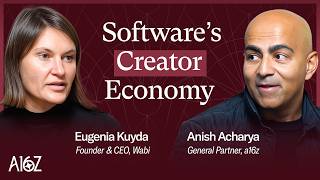 50m
50m 47m
47m 45m
45m 1h 3m
1h 3m 1h 3m
1h 3m 1h 8m
1h 8m 29m
29m 56m
56m 1h 39m⏭ 3
 1h 54m⏭ 2
 1h 51m⏭ 4
 1h 2m⏭ 2
 1h 20m
 1h 5m⏭ 1
 1h 12m
 49m
49m 1h 43m
 1h 13m
 2h 11m⏭ 5
 5h 13m⏭ 3
 1h 43m⏭ 4
 11h 54m
 1h 0m⏭ 1
 11h 54m⏭ 8
 6h 26m
 3h 59m⏭ 5
 33m
33m 3h 54m⏭ 7
 9h 11m
 5h 27m
 3h 15m⏭ 1
 7h 50m