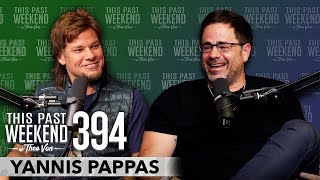
About this episodeChris and Yanis recount their impromptu Civil War history tour through Virginia and Pennsylvania, blending his…AI summary
Chris and Yanis recount their impromptu Civil War history tour through Virginia and Pennsylvania, blending historical facts with comedic anecdotes about visiting Gettysburg, Antietam, and Harpers Ferry. The conversation highlights the brutal reality of Civil War combat, the psychological strategies of key figures like Robert E. Lee and John Brown, and the regional differences between Union and Confederate soldiers.
Key takeaways 8
Gettysburg was the bloodiest battle of the Civil War with 53,000 total deaths over three days, surpassing all previous American wars combined at that time.
The Battle of Antietam holds the record for the single bloodiest day in American history with 23,000 casualties in one day, and was the first battlefield photographed before bodies were buried.
Robert E. Lee invaded the North at Gettysburg primarily for psychological reasons; he knew the South lacked resources and manpower, hoping a major victory on Northern soil would force Lincoln to negotiate peace.
John Brown's 1859 raid on Harpers Ferry was a failed suicide mission by 21 men to seize an armory, but his martyrdom galvanized the North and terrified the South, accelerating the path to war.
West Virginia seceded from Virginia (the Confederacy) in 1863 to join the Union, creating a unique 'double secession' scenario where the state fought for the North despite its parent state's allegiance to the South.
Civil War medical care was primitive; without anesthesia or understanding of germs, amputations were performed with saws, leading to high death rates from gangrene and infection rather than direct combat wounds.
Southern soldiers often had more military experience, particularly in cavalry skills due to rural backgrounds, while Northern soldiers were often city-dwellers who had to march long distances to fight.
General George McClellan failed to pursue and destroy the Confederate army after winning at Antietam in 1862, allowing the war to drag on for three more years despite having a strategic advantage.
Notable quotes 5AI-generated: wording and quote attribution may be wrong. Use the play link to verify.
“At that time at the time of the Battle of Gettysburg more people had died more Americans died in the Battle of Gettysburg alone than all of the wars America had had up until that point combined”
▶ 10:43Chris highlighting the unprecedented scale of death at Gettysburg compared to previous US conflicts.
“I think it was Robert E. Lee... he just could not take the thought of invading his homeland his own homeland he that's how much of a Virginian he was”
▶ 10:57Explaining Lee's motivation for joining the Confederacy despite being personally opposed to slavery and secession.
“John Brown... I'm positive I'm paraphrasing now... I'm putting it in Bay Ridge boy terms... his sins of this land will only be expunged or gotten rid of by blood”
Chris paraphrasing John Brown's final note before execution, predicting that slavery could only be ended through violent conflict.
“Antietam... was the first battlefield that was a photograph before the dead were buried”
Yanis noting the historical significance of Antietam as the first time photography captured the reality of war casualties before cleanup.
“West Virginia... they went they went both ways it seems they play both so that's why we call them bisexual state”
Chris jokingly describing West Virginia's unique political stance of seceding from Virginia to join the Union.
Chapters & Sections (48)▼
0:00History Hyenas Wild Tales from the Southchapter4
0:00Music Tour in the Southern United States
1:52Wild Weekend and Historical Battlefield Visit
3:45Civil War Reenactment in Winchester Virginia
5:12Crash Course Team Spontaneous Gettysburg Adventure
7:23Parking and Coffee in Gettysburgchapter1
7:23Parking and Coffee in Gettysburg, New York
11:39Ghost Encounters at Gettysburg Battlefieldchapter3
11:39Ghost Encounter at Gettysburg Battlefield
13:35Vandalism at Historic Battlefields
15:07Civil War Battle Urination and Human Nature
16:26Civil War Soldiers' Humorous and Sarcastic Perspectivechapter2
16:26Civil War Soldiers' Humorous and Sarcastic Perspective
18:15Civil War Soldiers and Northern Battles
21:07Civil War Soldier Background and Regional Differenceschapter2
21:07Civil War Soldier Background and Regional Differences
23:09Civil War Military Leaders Comparison
25:17Pickett's Charge and Confederate Moralechapter2
25:17Pickett's Charge and Confederate Morale
28:30Veterans Honoring Retired Military Dogs
29:52Sherman's March and American Historychapter3
29:52Sherman's March and American History
31:14Farting and the Battle of Gettysburg
32:33Lee's Psychological Attempt at Major Victory
34:22The Turning Point of the American Civil Warchapter3
34:22The Turning Point of the American Civil War
36:19Battle of Antietam Historical Account
37:34Civil War Soldiers Bury Dead After Battle
39:12Unmarked Graves and Battlefield Historychapter3
39:12Civil War Battlefield Description and History
41:27Civil War Eyewitness Accounts and Observations
43:06George McClellan's Inaction During the American Civil War
44:24Civil War Medicine and Amputationschapter2
44:24Civil War Medicine and Clara Barton
45:55Civil War Experiences and Historical Significance
49:09Masturbation and Homosexuality in the Civil Warchapter3
49:09Masturbation and Homosexuality in the Civil War
51:02Winchester Virginia and Harpers Ferry Discussion
52:46West Virginia's History and Stereotypes Debunked
55:17John Brown's Abolitionist Activities Leading Upchapter3
55:17John Brown's Abolitionist Activities Leading War
 1h 17m⏭ 3
 1h 14m⏭ 5
 1h 11m⏭ 1
 1h 7m⏭ 1
 1h 12m⏭ 4
 49m
49m 1h 12m⏭ 1
 1h 10m⏭ 1
 1h 17m⏭ 3
 45m⏭ 1
 1h 12m⏭ 3
 1h 17m⏭ 3
 1h 54m
 1h 32m
 2h 45m⏭ 1
 1h 36m⏭ 2
 1h 10m
 1h 51m⏭ 1
 1h 0m
1h 0m 1h 51m⏭ 3
 2h 3m⏭ 2
 2h 57m
 2h 57m⏭ 1
 2h 21m⏭ 2
 33m
33m 1h 0m⏭ 1
 3h 54m⏭ 7
 6h 26m
 54m⏭ 1
 3h 59m⏭ 5
 46m
46m 54m⏭ 2
 1h 16m⏭ 2
 1h 26m
 9h 11m
 31m
31m