About this episodeThe bond market is experiencing significant volatility driven by concerns over US debt sustainability, governa…AI summary
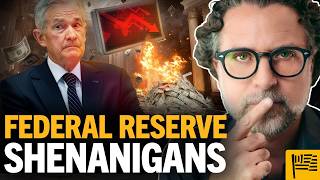
The bond market is experiencing significant volatility driven by concerns over US debt sustainability, governance competence, and the Federal Reserve's lack of clear communication under Chair Kevin Warsh. Treasury Secretary Scott Bessent's attempt to intervene via an unscheduled buyback program backfired, causing rates to rise and highlighting a strategic conflict between the Treasury and the Fed. Investors are increasingly wary, viewing the bond market as a critical disciplinarian that may force painful fiscal reforms.
Key takeaways 5
Treasury Secretary Scott Bessent's unscheduled bond buyback intervention was perceived as 'feckless' and 'half-baked,' causing rates to dip briefly before rising again, which reinforced investor skepticism about administrative competence.
There is a visible philosophical conflict between the Treasury (seeking lower rates via buybacks) and the Federal Reserve (under Kevin Warsh, who prefers shrinking the balance sheet and raising long-term rates), creating market confusion.
The US benefits from its status as the world's reserve currency ('the cleanest dirty shirt'), allowing it to avoid immediate consequences for unsustainable debt, but this insulation is eroding as central banks globally dump treasuries during governance jitters.
Kevin Warsh's strategy of minimal communication is increasing market volatility, as participants 'freak out' due to uncertainty about Fed actions, contrasting with the need for robust strategic communication.
The bond market serves as the 'only fiscal disciplinarian' left; rising yields are a signal that the 'wolf' of unsustainable debt and governance issues is no longer a future possibility but a present reality.
Notable quotes 4AI-generated: wording and quote attribution may be wrong. Use the play link to verify.
“The long-term Treasury yield is the most important price in the world. It is also the only fiscal disciplinarian the US has left.”
▶ 17:12Stanley Druckenmiller's op-ed warning that suppressing yields without addressing underlying fiscal issues ignores the critical alarm bell signaling economic danger.
“We're the cleanest dirty shirt.”
▶ 21:12Katherine Rampel describing the US position in global finance; while other options are unattractive, the US remains the least bad choice for reserve currency, though this hubris may be fading.
“It's like putting a band-aid on a gunshot wound.”
Market reaction to Bessent's buyback plan, illustrating that small-scale interventions cannot solve deep-seated issues regarding debt, governance, and competence.
“Maybe that future is the present now.”
▶ 23:50Rampel's conclusion that warnings about bond market crises are no longer theoretical but are currently manifesting in rising rates and investor anxiety.
Chapters & Sections (11)▼
0:00Bond Market Volatility and Fed Communicationchapter1
3:00Fed Communication and Governance Concerns
6:04Treasury Buyback Intervention and Market Reactionchapter3
8:08Treasury Buyback Scale and Market Impact
9:45Backfired Buyback and Mentor Rebuke
11:30Treasury Buyback vs Fed Policy Clash
14:17Fed Treasury Conflict and Bond Market Signalschapter4

 1h 23m⏭ 1
 28m
28m 2h 48m⏭ 4
 2h 14m⏭ 2
 1h 2m⏭ 1
 57m⏭ 1
 27m⏭ 1
 30m
30m 1h 34m⏭ 1
 1h 0m⏭ 3
 1h 57m⏭ 1
 28m⏭ 1
 11h 23m⏭ 1
 1h 0m⏭ 1
 33m
33m 46m
46m 3h 54m⏭ 7
 3h 59m⏭ 5
 48m⏭ 2
 40m
40m 56m
56m 1h 13m
 38m
38m 54m⏭ 2