About this episodeOscar-winning actor Troy Kotsur discusses his acting process, emphasizing how physical props, costumes, and en…AI summary
Oscar-winning actor Troy Kotsur discusses his acting process, emphasizing how physical props, costumes, and environment dictate sign language choices and character physicality. He shares insights on navigating different directorial styles, the technical challenges of filming with cameras and continuity, and the importance of analog filmmaking techniques over CGI.
Key takeaways 5
Props and costumes directly influence sign language mechanics: In 'CODA', thick gloves reduced finger flexibility, requiring broader gestures and index-finger pointing, while holding a gun required one-handed signing to maintain safety and realism.
Camera movement requires specific actor adjustments: When the camera zooms in during a monologue, the signer must move their hands closer to their face to keep the signing within the frame without cutting off the visual communication.
Continuity is critical for multi-shot scenes: Actors must memorize prop placement and hand positions across multiple takes to ensure seamless editing, whereas single-take scenes allow for more improvisation.
Stage projection differs from screen acting: On stage, deaf actors should sit in accessible front seating rather than projecting excessively to the back row, as volume is indicated by the size of the sign, not vocal loudness.
Character development involves deep environmental immersion: For 'CODA', Kotsur spent time with real fishermen to observe their physical behavior, tool usage, and gait, creating a specific 'fishing sign language' based on their environment.
Notable quotes 4AI-generated: wording and quote attribution may be wrong. Use the play link to verify.
“Imagine you're holding a cup of water and the glass of water is full and then signing with one hand without spilling that glass of water... A gun is very sensitive. A trigger is extremely sensitive. So imagine that control where one of your hands is on a gun.”
▶ 07:29Kotsur explains the physical discipline required when playing a villain who must sign while holding a weapon, ensuring realism and safety.
“I think it's so important is the mood without sound it's the visual communication the audience has to feel... if there's a deaf actor that has a monologue you have two options one is the camera has to be wider to give more room to the sign language or you can zoom in and as a signer I can start signing closer and closer to my face.”
▶ 27:13Kotsur discusses the technical dance between actor and camera operator to maintain visual clarity during emotional scenes.
“Hollywood really owed the deaf community because at that time there was a lot of deaf actors and the audience could also enjoy silent films... And then when the talkis came into play, the deaf community was left out of that theatergoing experience for almost a hundred years.”
▶ 57:20Kotsur reflects on the historical exclusion of deaf audiences with the advent of sound film and praises modern accessibility efforts like open captioning.
“That's real acting. That's a real actor. Today, it's like, oh, we use AI. We threw it in CGI. It's different... When the building falls down and he's in the open door... you're emotional because that will affect you as an audience member watching an actor put himself in that danger.”
▶ 59:11Kotsur contrasts the visceral impact of Buster Keaton's practical stunts with modern CGI, highlighting his preference for analog filmmaking.
Chapters & Sections (127)▼
00:00Childhood Influences on Career Choices in Filmchapter4
00:00Troy Kotsur's Career and Recent Projects
00:46Childhood Movies that Inspired Personal Growth
01:13Childhood Influence of Science Fiction Films
01:51Breaking Down Barriers in Film Storytelling
02:17Childhood Experiences with Sign Language and Theaterchapter3
02:17Sign Language in Film and Storytelling
02:53Childhood Collectibles and Memories
03:20Early Experiences with Broadway Theater
03:45The Importance of Stage Projection Techniqueschapter2
03:45Collecting Movie Tickets and Early Stage Work
04:21Theater Performance and Audience Projection Techniques
05:16Acting Techniques for Deaf Characters and Accessibilitychapter2
05:16Accessible Theater Seating for Deaf Community
05:57Acting Techniques for Emotional Storytelling
07:03Acting Challenges in Deaf Character Portrayalchapter3
07:03Acting with Facial Expressions and Body Language
07:37Controlling Hand Movement in Sign Language
08:04Creating Characters in Film and Theater
08:32Trust in Audience to Interpret Deaf Character's Actionschapter2
08:32Immersive Storytelling through Subtlety in Film
09:27Directing and Acting in TV and Film
10:12Working with Multiple Directors on a TV Showchapter3
10:12Maintaining Consistency Across Multiple Directors
10:44Maintaining Consistency in Collaborative Acting Projects
11:15Balancing Acting and Directing on Set
11:51Collaboration and Consistency in Film Storytellingchapter2
11:51Maintaining Consistency in Film Storytelling
12:26Actor's Physicality and Character Development Techniques
 1h 26m
 1h 10m
 1h 10m
 1h 35m
 1h 25m
 24m
24m 1h 41m
 1h 31m
 38m
38m 1h 13m
 29m
29m 1h 13m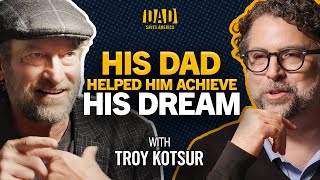
 1h 20m
 2h 35m⏭ 2
 32m
32m 40m
40m 2h 21m⏭ 3
 40m
40m 1h 16m⏭ 4
 46m
46m 51m
51m 1h 16m⏭ 2
 21m
21m 1h 18m
 11h 23m⏭ 1
 1h 0m⏭ 1
 33m
33m 46m
46m 3h 54m⏭ 7
 3h 59m⏭ 5
 48m⏭ 2
 37m⏭ 2
 38m
38m 56m
56m 54m⏭ 2
 40m
40m