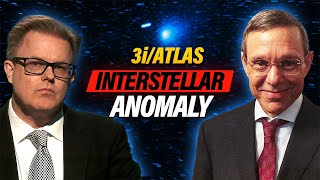
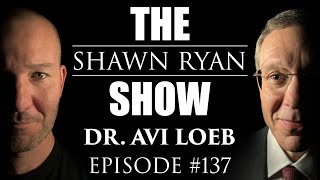
About this episodeAstrophysicist Avi Loeb argues that the interstellar object '3I/Atlas' exhibits anomalies suggesting it may be…AI summary
Astrophysicist Avi Loeb argues that the interstellar object '3I/Atlas' exhibits anomalies suggesting it may be technological, criticizing the scientific community's refusal to investigate non-natural explanations. He advocates for a paradigm shift in space exploration, emphasizing the need for autonomous AI probes for deep space missions and the development of large-scale space habitats to preserve humanity beyond Earth's 1-billion-year habitability window.
Key takeaways 6
Human Connection in Sports and Art: People value human competition and creation over superior AI/robotic performance because the 'risk' and 'human spirit' are integral to the experience; AI cannot substitute for this emotional connection.
Evidence of Human Presence on the Moon: The presence of retro-reflectors placed by Apollo missions, which are used to bounce laser beams to measure lunar distance with extreme precision, serves as irrefutable evidence of human presence that cannot be explained by aliens or machines.
Autonomous Space Probes and AI: Current space missions are 'helicopter parented' by Earth-based engineers, which is impossible for distant targets due to light-speed delays; future probes must have autonomous AI brains to make real-time decisions.
Space Colonization Strategy: Loeb argues against terraforming Mars, advocating instead for building rotating space platforms with nuclear energy and artificial gravity, funded by reallocating a fraction of the $2.4 trillion annual global military budget.
3I/Atlas Anomalies: The object '3I/Atlas' is 1,000 times more massive than previous interstellar objects, moves in the plane of the planets (1 in 500 chance), and shows an 'anti-tail' pointing toward the sun, suggesting potential technological thrusters rather than natural sublimation.
Scientific Gatekeeping: The academic community is described as an 'echo chamber' that suppresses innovation by rejecting ideas outside established training data, similar to how string theory has persisted without experimental evidence while dismissing anomalous data.
Notable quotes 5AI-generated: wording and quote attribution may be wrong. Use the play link to verify.
“If you arrive late to the play and you're not at the center of stage, the play is not about you. It's a very simple conclusion and you better find other actors to ask them what the play is about.”
▶ 10:39Loeb discussing humanity's late arrival in cosmic history and the need to seek out other civilizations.
“Science is the humility to learn not the arrogance of expertise. The problem in academia is the arrogance of expertise: 'It is because I'm the expert. You don't know anything on the subject.'”
▶ 01:20:03Critique of the scientific community's resistance to considering technological origins for anomalous objects.
“We are very shortsighted because if you look right now we are engaged mostly in conflicts... territorial apes... investing most of our time in either shortening the lifespan of other humans or preventing them from shortening ours.”
▶ 13:44Loeb's argument for why humanity must become an interstellar species to ensure its long-term survival and legacy.
“If we stay on this planet... we might survive another million years, maybe a billion years, but not more than that because the sun will brighten up in a billion years... If not nobody would know the fact that we died.”
▶ 12:26The urgency of building interstellar monuments or habitats to preserve human history.
“Imitation is the sincerest form of flattery. So in that context... I don't need them to say to give me credit. I just realize that when they do what I do, it's actually a compliment.”
▶ 14:35Loeb responding to SETI scientists eventually adopting his research methods regarding interstellar objects.
Chapters & Sections (118)▼
00:05Human Connection in Sports and Artchapter
02:04Human Touch and Risk in AI Developmentchapter
03:44Evidence of Human Presence on the Moonchapter3
03:44Evidence of Human Placement of Retro Reflectors
04:15Evidence of Human Presence on the Moon
04:51Space Exploration Challenges and AI Limitations
05:42Autonomous Space Probes and Artificial Intelligencechapter
07:32Space Colonization and Human Preservationchapter
09:35The Possibility of Ancient Advanced Civilizationschapter2
09:35The Possibility of Ancient Life on Mars
10:43Limitations of Human Knowledge of Cosmic History
11:16The Impermanence of Civilizations in the Galaxychapter
13:04Humanity's Shortsightedness and Need for Inspirationchapter
14:52Interstellar Objects and Technological Significancechapter
16:50Habitability of Mars in Earth's Pastchapter
19:51Mars' Past Habitability and Potential Nuclear Activitychapter
22:03Impacts on Earth and Mars Comparedchapter2
22:03Impact of Small Asteroids on Earth's Atmosphere
22:47Searching for Technological Impacts on Mars
23:46Searching for Life on Mars and Interstellar Objectschapter
25:53Intercepting and Landing on Interstellar Objectschapter
29:21Scientific Objectivity vs Societal Implicationschapter
31:13Analysis of 3i/Atlas Phenomenonchapter
33:43Discovery and Analysis of Interstellar Object 3i/Atlaschapter
35:44Mass Estimates of Interstellar Object 3i/Atlaschapter
38:28Discovery of Interstellar Objects and Meteorschapter
41:55Origin of Gamma Ray Bursts Explainedchapter
44:04Formation of Neutron Stars and Black Holeschapter
46:10Gravitational Waves and Interstellar Object Confirmationchapter
50:16Mysterious Ocean Floor Material of Unknown Originchapter
52:49Analyzing Unconventional Materials from Space Impactschapter
54:23Identifying Artificial Objects in Spacechapter
56:14Daily Fantasy Sports and Prize Picks Appchapter
58:16Debunking Alternative Explanations for Anomalous Comet Behaviorchapter
59:50Challenges to the Comet Hypothesis for 3i/Atlaschapter
01:04:05Comet 3i/Atlas Trajectory and Gravitational Assistchapter
01:06:19Unconventional Plume Behavior in Space Object Imageschapter
01:08:14Interpretations of 3i/Atlas Ejected Dust Particleschapter
01:10:18Scientific Integrity in Astrophysical Anomaly Explanationchapter
01:11:43Prioritizing Search for Intelligent Life in Universechapter
01:13:15Prejudice Suppresses Innovation in Scientific Researchchapter
01:16:05Academic Pressure to Conform to Established Knowledgechapter
01:18:12Challenges in Academia and the Nature of Sciencechapter
01:20:59Foundational Principles of Quantum Mechanicschapter
 3h 3m⏭ 3
 2h 39m⏭ 2
 3h 10m⏭ 6
 2h 53m⏭ 3
 3h 57m⏭ 3
 2h 14m
 1h 40m
 1h 32m
 2h 14m⏭ 3
 1h 32m
 57m
57m 2h 26m
 53m⏭ 1
 45m
45m 1h 25m
 1h 0m
1h 0m 1h 34m
 52m
52m 1h 1m
1h 1m 58m
58m 33m
33m 2h 14m⏭ 2
 3h 40m⏭ 2
 3h 8m
3h 8m 1h 46m
 57m
57m 1h 34m⏭ 5
 25m
25m 24m
24m 3h 9m⏭ 3
 3h 3m⏭ 3
 1h 0m⏭ 1
 1h 28m⏭ 1
 46m
46m 1h 37m
 11h 23m⏭ 1
 1h 0m⏭ 1
 33m
33m 46m
46m 3h 54m⏭ 7
 3h 59m⏭ 5
 48m⏭ 2
 37m⏭ 2
 56m
56m 38m
38m 54m⏭ 2
 1h 13m