About this episodeGuest TD Barnes, a former NASA engineer and CIA contractor, details his work at Area 51 during the Cold War, d…AI summary
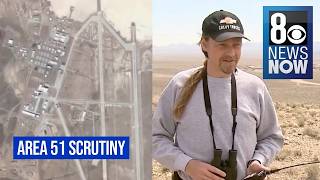
Guest TD Barnes, a former NASA engineer and CIA contractor, details his work at Area 51 during the Cold War, debunking alien conspiracy theories by attributing UFO sightings to classified military operations like radar spoofing, stealth testing, and electronic countermeasures. He reveals that the CIA pioneered modern stealth technology and electronic warfare, using captured Soviet equipment and advanced radar tracking to outmaneuver adversaries, while maintaining strict compartmentalization that kept even high-ranking officials and the public in the dark.
Key takeaways 7
Area 51 was primarily a testing ground for stealth technology and electronic warfare, not extraterrestrial research; the guest worked there from 1968 to 1973 tracking Mach 3 aircraft like the A12 (Blackbird) and testing radar cross-sections.
The 'Tic Tac' UAP incidents reported by modern pilots are likely the result of advanced radar spoofing tests using balloons or projections from submarines, similar to 'Project Palladium' where the guest helped evaluate Soviet 'Tall King' radar by deploying balloons and signals to confuse detection.
Bob Lazar's claims of working at Area 51 are false; the guest confirms that security was so tight that even the President required vetting and a 'need to know,' and Lazar was never on any security manifest.
The CIA pioneered the concept of stealth by experimenting with ion guns and plasma on the A12, but abandoned them due to the prohibitive weight of lead shielding required for pilots, leading to physical shaping solutions instead.
Project Red Flag and the formation of the 'Red Eagles' (MiG fighters) originated from the need to train US pilots against Soviet tactics after poor performance in Vietnam; this involved acquiring MiG-21s via Israel and training pilots to fly like Russians, including playing Russian national anthems.
The Apollo moon landings were technically feasible with 1960s technology; film was protected from Van Allen radiation using lead-lined containers, and the guest notes that unmanned missions could have been performed earlier if not for political funding requirements.
Atmospheric nuclear tests (like Starfish Prime) were conducted for EMP research, capable of wiping out electronics across vast distances, a capability that remains a significant modern threat.
Notable quotes 5AI-generated: wording and quote attribution may be wrong. Use the play link to verify.
“We built the spy planes to spy on Russia using Russian titanium.”
▶ 19:51Explaining the supply chain challenges for building A12 Blackbirds, where inferior domestic titanium led to sourcing materials from the USSR through third parties.
“No one ever went on Area 51 that they wasn't cleared first of all and everybody and their name wasn't recorded. It just didn't happen to get into Area 51. I don't care even the president he had to be vetted.”
▶ 57:57Debunking Bob Lazar's story by emphasizing the extreme security protocols and manifest requirements at the facility.
“We were doing the same thing that we did during project palladium. They were spoofing that radar to see what its weak points were.”
▶ 1:07:34Explaining modern UAP sightings as likely military tests of new radar systems using spoofing technology, rather than alien craft.
“The only reason we put a man in it [the moon landing] was funding. You couldn't get money out of Congress unless you put a man in it.”
▶ 2:14:55Discussing why human astronauts were sent to the moon despite the technical capability to send unmanned probes earlier.
“If you got it inside of a tin building or something you're okay. It's looking for an antenna and it'll go wherever it once it gets in it travels everywhere.”
▶ 2:05:06Describing how an EMP device targets electrical grids and antennas, rendering modern electronics useless while leaving older mechanical systems intact.
Chapters & Sections (66)▼
0:07NASA, Apollo Testing, and CIA Stealth Projectschapter3
 3h 3m⏭ 3
 2h 39m⏭ 2
 3h 10m⏭ 6
 2h 53m⏭ 3
 3h 57m⏭ 3
 2h 14m
 1h 40m
 1h 32m
 2h 14m⏭ 3
 1h 32m
 57m
57m 2h 26m
 1h 53m
 27m
27m 42m
42m 2h 6m
2h 6m 37m⏭ 2
 1h 2m⏭ 1
 1h 11m
 3h 20m⏭ 4
 4h 9m⏭ 5
 3h 0m
3h 0m 1h 3m⏭ 3
 2h 24m⏭ 2
 11h 23m⏭ 1
 33m
33m 1h 0m⏭ 1
 46m
46m 48m⏭ 2
 3h 54m⏭ 7
 3h 59m⏭ 5
 1h 13m
 38m
38m 1h 16m
 54m⏭ 2
 10h 34m