About this episodeArthur Turl argues that accurate statistics are critical for societal decision-making but face challenges in t…AI summary
Arthur Turl argues that accurate statistics are critical for societal decision-making but face challenges in the modern service economy where traditional metrics fail. He demonstrates how AI can rescue statistical accuracy by automating data collection, predicting economic trends, and analyzing non-traditional data sources like satellite imagery and CCTV, though he cautions that AI is only as reliable as its training data.
Key takeaways 6
The Index of Multiple Deprivation uses hundreds of statistics (including broadband speed and thefts) to allocate government funding; errors in these numbers directly result in incorrect financial allocations for public services.
Measuring productivity in the modern economy is difficult because services (like poetry or legal advice) lack the tangible, standardized inputs/outputs of manufacturing widgets, making traditional survey methods less effective.
AI acts as pattern recognition: it excels at identifying common patterns (like wine glasses or people) but fails on ambiguous or rare items (like microphones or lamp posts) unless specifically trained on them.
The US Census Bureau now uses satellite imagery and AI segmentation models to count housing starts, which is faster, cheaper, and more accurate than traditional surveys sent to building firms.
During the COVID-19 pandemic, the UK Office for National Statistics used anonymized CCTV feeds from 1,500 cameras to track population movement every 10 minutes, providing immediate policy-relevant data that monthly surveys could not.
AI can predict regional economic growth up to 14 months before official statistics are published by matching national patterns to regional data, allowing for earlier policy intervention.
Notable quotes 4AI-generated: wording and quote attribution may be wrong. Use the play link to verify.
“A decision on the wrong kind of data is like a house built on quicksand.”
▶ 7:14Arthur Turl explaining why accurate statistics are fundamental to government policy and public life.
“AI is only stupidly smart. It's extremely smart in the situations that it knows about and it finds it somewhat difficult otherwise.”
▶ 30:45Describing the limitations of AI when encountering data outside its training set, such as a microphone being misidentified as a tennis racket.
“Most people would prefer to watch Netflix than fill in a 30-page official statistics survey.”
▶ 23:56Highlighting the declining response rates in traditional statistical surveys.
“We're probably only kind of seeing the very very tip of the iceberg of the kind of applications that there will be.”
▶ 55:56Arthur Turl's conclusion on the potential impact of AI on statistics and the economy.
Chapters & Sections (25)▼
0:05Importance of Accurate Statisticschapter3
3:04Navigating Obstacles with Directional Commands
4:32False Information Leads to Bad Decisions
7:21Speaker Background and AI in Statistics
9:41Importance of Statistics and Economic Historychapter2
12:10Economic Growth and Historical Impact
15:55Black Death Impact on Wages
18:19Measuring Modern Service Economy Productivitychapter2
20:02Valuing Intangible Creative Works
21:52Challenges Measuring Modern Service Economy
24:26AI Pattern Recognition and Statistical Challengeschapter1
27:11AI Pattern Recognition Examples
29:54AI Applications in Science and Statisticschapter2
31:54AI in Nuclear Fusion and Weather Forecasting
33:32AI for Automating Job Classification
36:34AI Applications in Official Statisticschapter3
 1h 11m
 58m
58m 59m
59m 59m
59m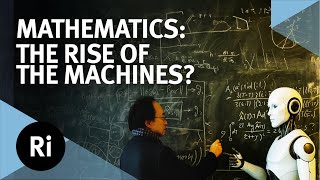 1h 4m
1h 4m 52m
52m 39m
39m 57m
57m 2h 53m
 1h 10m⏭ 3
 2h 52m
 2h 45m⏭ 1
 1h 3m
1h 3m 3h 2m⏭ 5
 2h 29m⏭ 2
 21m⏭ 1
 3h 3m⏭ 3
 24m⏭ 1
 1h 2m
1h 2m 2h 10m⏭ 4
 2h 35m
 1h 0m⏭ 1
 11h 23m⏭ 1
 3h 54m⏭ 7
 33m
33m 48m⏭ 2
 3h 59m⏭ 5
 37m⏭ 2
 46m
46m 38m
38m 54m⏭ 2
 58m⏭ 5